

Memory has always been influenced by our priorities and has never just been about remembering information. These days, our digital behaviors are gradually but profoundly changing that system of priorities. According to recent brain scans, social media is actively changing how memory is formed and what is recalled, not only altering attention spans. This change is taking place during one of the most impressionable stages of neurological development, especially in teens.
The prefrontal cortex, which is in charge of focus and decision-making, and the amygdala, which is known to process emotions, are both changing as a result of digital exposure. One study, which was remarkably thorough in JAMA Pediatrics, tracked teenagers over a number of years and found that those who often checked their feeds had increased reward center sensitivity. Addictive behavior activates the same brain networks. It has to do with the molecular calibration of memory and attention, not merely habit.
Users begin to reinforce memory through emotional salience rather than necessarily importance when they continually interact with systems designed to provide quick emotional feedback. It’s frequently what caused a dopamine spike rather than what is remembered. This gradually tilts the architecture of memory away from prolonged, introspective contemplation and toward emotional confirmation. I know this because I can remember a humorous meme better than a profoundly thought-out article I read that same day.
Table: Key Facts – Social Media and Memory Formation
| Aspect | Key Detail |
|---|---|
| Brain Areas Affected | Amygdala, prefrontal cortex, ventral striatum |
| Core Finding | Social media rewires memory formation via attention shifts and reward loops |
| Memory Effect | Promotes transactive memory and digital amnesia |
| Structural Brain Impact | Alters grey matter volume, impacts cognitive control |
| Sleep & Memory Link | Disrupted sleep hinders memory consolidation |
| Emotional Triggers | Dopamine spikes, fear of missing out (FoMO) |
| Particularly Vulnerable Group | Adolescents and young adults |
| Scientific Source Example | JAMA Pediatrics, Nature, Frontiers in Cognition |
Transactive memory—the notion that we no longer store facts internally but instead remember how to find them—is one of the more avant-garde ideas arising from this change. Although it is highly adaptable for short tasks and teamwork, long-term memory consolidation is weakened when it is utilized as the default mode of recall. We practice usernames and URLs rather than facts.
The impacts are amplified during late-night scrolling sessions. Melatonin is delayed by blue light, which breaks up REM cycles, which are essential for memory embedding. The biggest reductions in cognitive consolidation occur in teenagers, who frequently fall victim to the bedtime scrolling trap. Some studies even demonstrate that before to sleep, digital stimulation drastically reduces memory retention for learning tasks. The brain’s nocturnal filing system is subject to an unseen tax.
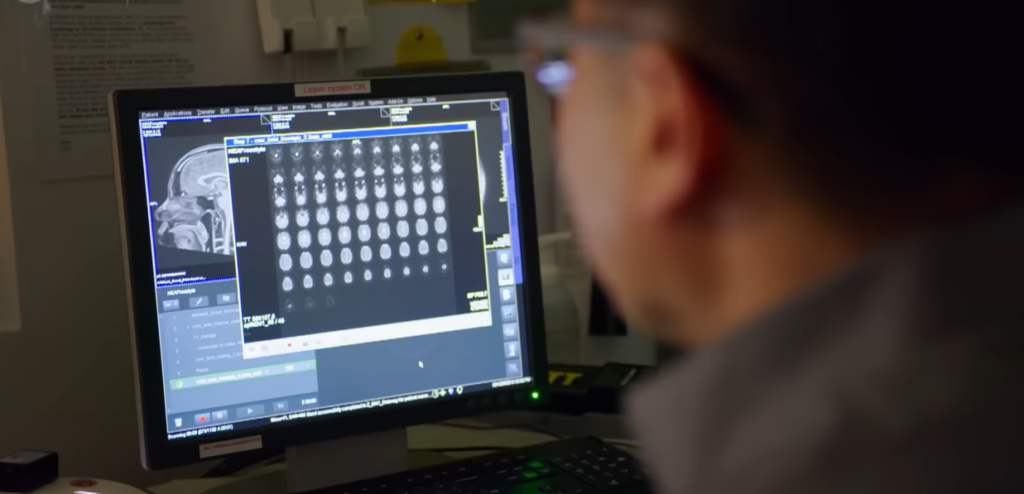
This change in memory is physiological rather than merely theoretical. MRI scans of heavy social media users have shown significant reductions in grey matter density in areas related to attention regulation. It gets harder to maintain concentrate during mentally taxing tasks the more time is spent navigating notifications. This causes lectures to become more hazy for pupils, and tests to feel more like guesswork than memory.
However, the fact that this change is emotionally reinforced makes it very worrisome. Constant interaction, such as likes, reactions, and retweets, is rewarded by dopamine loops. The brain is trained to value external validation above introspection by these micro-validation cycles. I’ve witnessed younger coworkers automatically take screenshots of events to share them online instead of paying attention to them in real time. Instead of the moment, the remembrance becomes the post.
Conversely, our brains are learning to adapt at a rate that was previously unthinkable because to these digital habits. Behavioral changes are now being compressed into months by the cerebral plasticity that once allowed humans to evolve over generations. This is amazing yet dangerous at the same time. We are becoming remarkably adept at selecting, navigating, and remembering external stuff, but we are far less adept with internal subtlety retention.
Below the surface, a layer of mild emotional exhaustion is also developing. Nothing stands out when everything is intended to be striking, unexpected, or emotionally charged. Contrast and novelty are essential for memory formation, but the brain flattens the peaks when each scroll offers a flood of information. It is overloaded rather than incompetent, which is why it remembers less.
Researchers have begun to differentiate between digital memory replacement and support in recent years. Support might be especially helpful in the form of reminders or photo backups. However, replacement creates fragility since we never encode the memory in the first place. We lose sight of meaning in addition to facts when there is no emotional or personal context. Without the emotion of that day, a preserved image becomes into a pixel rather than a memory.
We are not destined to forget everything because of this. Instead, it’s an opportunity to reconsider how memory works in tandem with technology. We may support apps that encourage introspection rather than response, foster digital wellness in schools, and create room for cognitive rest by strategically recalibration. Even basic techniques, like keeping a journal or shutting down electronics an hour before bed, have been shown to significantly boost memory in both adults and teenagers.
Although social media is a demanding companion, it is not memory’s enemy. It favors loudness over depth and immediacy over reflection. We need to start designing for contemplation rather than just participation if we want to preserve a balanced cognitive environment. That starts with optimism as well as awareness. After all, the human brain is incredibly flexible. It can purposely rewire itself if it can do so once.
