

A company called Factorial Energy spent more than ten years in a lab outside of Boston failing at something that everyone in the battery industry told them was almost impossible to manufacture at scale. Co-founded by Siyu Huang and Alex Yu, the team’s goal was to create a solid-state battery that would replace the combustible liquid electrolyte found in modern lithium-ion cells with a solid substance and be able to manufacture enough of them to fit inside a moving vehicle. For years, the factory yield was around 10%. In other words, nine out of ten of the cells they constructed were flawed. That isn’t a product. It’s a costly scientific experiment.
Then something changed. Factorial increased its yield to 85% and installed its battery inside a Mercedes EQS sedan with support from Mercedes, Hyundai, Stellantis, and LG Chem. The vehicle moved. That accomplishment—a solid-state battery road-tested in a production vehicle chassis—was noteworthy enough to appear in the New York Times in 2025. Not because it resolved every last issue, but rather because it demonstrated that the technology could withstand interaction with the outside world.
| Field | Details |
|---|---|
| Technology Name | Solid-State Battery (SSB) |
| Current Dominant Technology | Lithium-ion batteries |
| Lithium-Ion Energy Density | Below 300 Wh/kg (Tesla cells typically under 300 Wh/kg) |
| Solid-State Energy Density | 400+ Wh/kg (Verge/Donut); Changan claims 400 Wh/kg |
| Claimed Range (Changan) | 1,500 km (~900 miles) per charge |
| Charging Time Improvement | 0–80% in ~12 minutes vs. 30–45 minutes (lithium-ion) |
| Fire Risk | Eliminated — no flammable liquid electrolyte |
| Cold Weather Performance | Dongfeng SSB retains 72% energy at -22°F; hybrid variant retains 85% at -29°F |
| Toyota Cycle Durability | 92%+ capacity retention after 2,500 full charge cycles (~300,000+ miles) |
| Current SSB Cost | Several times higher per kWh vs. lithium-ion ($100–150/kWh) |
| Cost Parity Projection | Early 2030s |
| First Production SSB Vehicle | Verge Motorcycles TS Pro (Finland, 2026) |
| Key Players | Toyota, Nissan, Factorial Energy, Changan, GAC, NIO, Verge Motorcycles |
| Factorial Energy Backers | Mercedes, Hyundai, Stellantis, LG Chem |
| Factorial Factory Yield | Improved from 10% to 85% |
| Expected US Commercial Launch | ~2027–2028 (limited); mainstream by early 2030s |
| Nissan SSB Target | In-house all-solid-state vehicles by 2028 |
| Key Reference — Daily Climate | Massachusetts startup takes major step toward making gas cars obsolete |
| Key Reference — EVWorld | The Quiet Battery Revolution That Is About to Rewrite the EV Story |
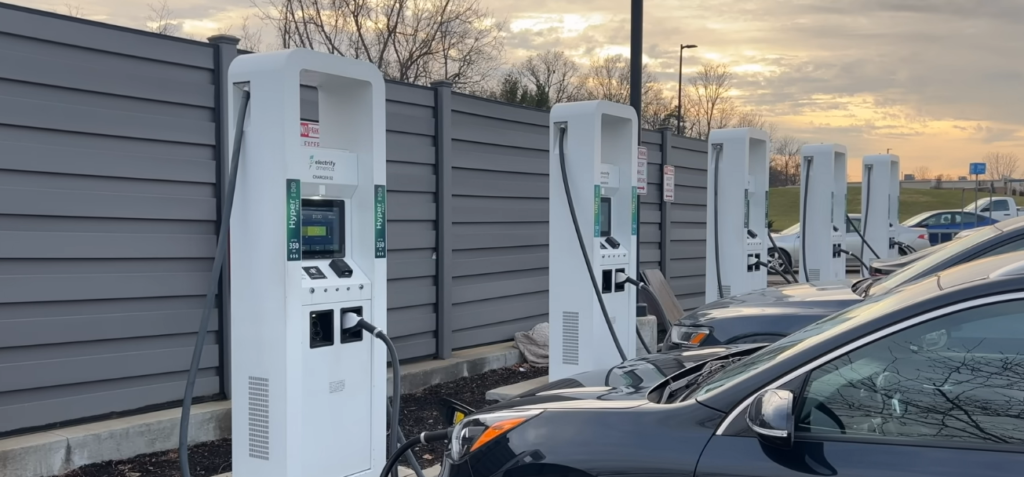
It may not seem important, but that proof is crucial. Even technically literate observers are wary of the timeline because solid-state batteries have been “five years away” for about fifteen years. Higher energy density, quicker charging, no fire risk, improved performance in cold weather, and a longer lifespan were all promises that were consistently outstanding. Even though these fires are statistically uncommon, current lithium-ion cells contain flammable liquid components that have generated numerous headlines about burning EVs. That issue is completely resolved by solid-state chemistry. According to a University of California, Riverside technical review, solid-state batteries could reduce the 0-to-80 percent charging window from 30 to 45 minutes to roughly 12. After 2,500 full charge cycles, or about 300,000 miles of driving, Toyota’s lab testing revealed 92 percent capacity retention.
In the meantime, Chinese manufacturers are already delivering semi-solid batteries to consumers, while Western automakers are still in the demonstration and road testing stage. According to Changan Automobile, solid-state cells with an energy density of 400 Wh/kg and a per-charge range of 1,500 kilometers—just under 900 miles—will be installed in production cars before the third quarter of 2026. GAC’s Hyptec SUV is undergoing a limited trial. For more than a year, NIO has been providing small-volume luxury models with hybrid solid-liquid battery packs. None of these are inexpensive, nor are they entirely solid-state in the strictest chemical sense. However, they are a type of battery that was just nonexistent in consumer cars two years ago.
The energy density comparison is the figure worth focusing on. With flagship models having a range of about 400 miles, Tesla’s current lithium-ion cells fall well short of the 300 Wh/kg threshold. If Changan’s stated 400 Wh/kg holds up in actual testing, the density would increase by about 35–40% before pack design efficiency is taken into consideration. This implies that you could either drastically increase range or reduce the battery pack; a lighter car results from a smaller pack, which increases range even more. The heaviest part of an EV is usually the battery pack. The engineering of the vehicle is affected in a compounding way when that weight is reduced.
As all of this picks up speed, there’s a sense that the automotive industry is getting close to one of those times when the gap between what a technology can do in theory and what’s in driveways starts to rapidly close. The TS Pro, the first production vehicle of any kind to carry one, is already being shipped by Verge Motorcycles in Finland with a real all-solid-state pack that delivers about 400 Wh/kg. It’s not a family SUV, but it’s a high-end motorcycle. It costs money. It travels. The claim that solid-state batteries are limited to laboratory settings is no longer valid.
The real barrier is still cost. At the pack level, lithium-ion batteries currently cost between $100 and $150 per kilowatt-hour, a price that was reached after two decades of scaling and manufacturing improvement. Since solid-state cells are still several times more expensive, the first US cars to use them, anticipated to be produced by Toyota and Nissan in 2027 or 2028, will be high-end, low-volume technology showcases rather than mass-market models. Manufacturing scale is a prerequisite for affordability, and it is currently unattainable. The precise moment when it will is still unknown.
Most analysts and automakers agree on the reasonable estimate, which places mainstream solid-state vehicles in wider production sometime in the early 2030s. It is anticipated that by then, the economics will have changed sufficiently to make solid-state packs either more affordable or competitive with lithium-ion. The calculations involved in purchasing a gasoline-powered vehicle change in a way that is hard to undo when that occurs, not if. If lithium-ion batteries are further improved with new electrode chemistries, they might continue to be competitive for a longer period of time than proponents anticipate. A modified lithium-based battery has reportedly been pushed to 700 Wh/kg in lab settings by Chinese researchers. The two technologies will probably advance more quickly as a result of competition than they would on their own.
It’s difficult to ignore the shift in the discussion surrounding EVs from “will they work” to “when will they be good enough to make everything else obsolete.” That question is getting closer to a definitive answer thanks to solid-state batteries. The technology is no longer theoretical. In Finland, it is traveling. Chinese SUVs are being equipped with it. It is charging inside a Mercedes sedan in a parking lot in Massachusetts. For the first time in a long time, the gap between what solid-state technology can accomplish and what people are actually driving is actually narrowing.
Disclaimer
Nothing published on Creative Learning Guild — including news articles, legal news, lawsuit summaries, settlement guides, legal analysis, financial commentary, expert opinion, educational content, or any other material — constitutes legal advice, financial advice, investment advice, or professional counsel of any kind. All content on this website is provided strictly for informational, educational, and news reporting purposes only. Consult your legal or financial advisor before taking any step.
