

Although electricity has historically been associated with advancement, it now also denotes fragility. Hackers are stealthily transforming power grids into virtual battlefields across continents, exploring flaws that the engineers who constructed them could never have imagined. Grids are now more efficient due to the transition to cleaner, smarter, and networked technologies, but they are also more vulnerable to cyber manipulation. The risks are really high since societies collapse along with energy.
In 2015, hackers with Russian support breached Ukraine’s grid, causing more than just a blackout—it served as a model for a new type of warfare. The BlackEnergy software gave hackers the ability to remotely take over substations and turn huge areas into blackouts. A year later, Industroyer used terrifying sophistication to extend the attack by directly tampering with automated control systems. These occurrences were early warning signs that resembled the simulated exercises that the U.S. Department of Defense and NATO currently conduct to evaluate resilience.
Energy flows have changed as a result of the growing reliance on digital control, specifically through Supervisory Control and Data Acquisition (SCADA) systems. Instead of manually switching switches, operators now keep an eye on real-time data dashboards that are driven by cloud-based analytics. Although operational efficiency has benefited greatly from this digital transition, millions of new avenues of entry for cyberattacks have also been made possible. Remote access was never intended for legacy infrastructure constructed decades ago, and updating such systems frequently creates new risks rather than addresses existing ones.
Unexpectedly, solar energy—once thought of as the dazzling icon of the green era—has emerged as a new cyber frontier. Every smart meter, panel, and inverter is a node in a huge network. Security experts discovered in 2025 that thousands of solar devices worldwide had software setups that were unsafe, with some of them lacking even the most basic authentication. A hacker could gain access to the wider grid using a single corrupted inverter. Clean energy’s defense was splintered by the same technology that made it more accessible.
Profile Summary: Energy Cybersecurity Experts
| Category | Details |
|---|---|
| Key Figures | Michael Razeeq and Camille Stewart Gloster |
| Expertise | Cybersecurity law, critical infrastructure protection, energy and national security |
| Affiliations | Just Security; Reiss Center on Law and Security, NYU School of Law |
| Special Focus | Cyber threats to energy grids, solar power infrastructure, and distributed energy systems |
| Key Contributions | Advocated for stronger state-level cybersecurity policies and supply-chain transparency in distributed energy systems |
| Notable Work | “Securing Solar: Why the Next Great Infrastructure Risk Is Distributed” |
| Impact Area | Policy, technology ethics, and energy resilience against cyber threats |
| Industry Significance | Their work highlights the intersection of clean energy expansion and cybersecurity vulnerability |
| Reference Source | Just Security – “Securing Solar: Why the Next Great Infrastructure Risk Is Distributed” |
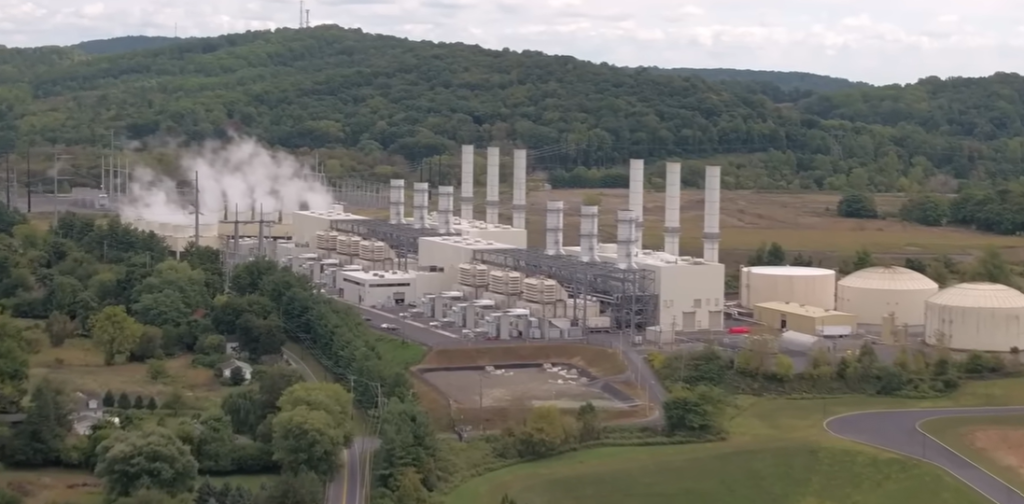
Investigators earlier that year found rogue communication modules—devices that could get past firewalls and grant remote access to vital systems—hidden in imported solar components. Because they impacted small-scale solar networks—systems that power homes, schools, and small businesses—these backdoors were especially concerning. The disclosure echoed worries expressed by specialists such as Camille Stewart Gloster, who pointed out that although distributed power generation is liberating, it has greatly increased vulnerability to cyberattacks.
The decentralization of the electricity infrastructure has been both exciting and risky. Smart grids and renewable energy offer sustainability and flexibility, but they depend on cloud interfaces, IoT sensors, and machine learning, all of which are vulnerable to abuse. Hackers can now easily corrupt data or change commands within linked systems, resulting in malfunctions that spread throughout networks, eliminating the need to knock down an entire grid. This is interdependence’s unsettling ability to transform strength into fragility in digital infrastructure.
This was painfully evident during the 2021 Colonial Pipeline ransomware assault. A criminal organization used encrypted code instead of physical sabotage to force a shutdown that interrupted fuel supplies in several states. The realization that operational technology and cybersecurity were now interchangeable served as a wake-up call. Hydropower facilities, wind farms, and solar power all follow the same trend. The attack surface grows as renewable capacity increases.
These changes highlight a more significant reality: cyber defense is becoming a crucial component of energy security. However, regulation is still disjointed. Large utilities are subject to critical infrastructure protection standards enforced by the North American Electric Reliability Corporation, but smaller distributed energy resources, which are frequently privately controlled, are not subject to the same regulations. Millions of internet-connected gadgets are pouring into national grids with no oversight as a result of this gap.
According to Michael Razeeq, energy policy needs to change to take this reality into account. He stresses that every level of system design and governance must incorporate cybersecurity; it cannot be an afterthought. Even though current grids operate more like complex webs where each node may both create and receive power, federal authorities still view electricity as a one-way flow from producers to consumers. The energy transition runs the risk of turning into a burden rather than a success in the absence of new frameworks.
However, there is cause for hope. Utility companies are beginning to anticipate and stop abnormalities before they become more serious by utilizing artificial intelligence. Compared to human operators, machine learning algorithms can detect anomalous data patterns—possible invasions or operational flaws—much more quickly. When properly maintained, these systems have the potential to significantly improve grid integrity. But that same intelligence can also be used against those who created it. In the wrong hands, an AI that can protect a network could learn to take advantage of it. Automation and accountability still need to be carefully balanced.
Ambiguity is a breeding ground for cyberwarfare. Digital attacks frequently don’t have fingerprints like physical attacks do. Bombs are not necessary for a blackout, and its cause may not be known for weeks. Retaliation is difficult because of this invisibility, which permits both states and non-state actors to test limits without overt escalation. A new aspect of psychological warfare is brought about by the fear of invisible conflict, where every lightbulb flicker could be interpreted as an intrusion.
Experts in energy refer to this as a “silent race” for supremacy. Countries make significant investments in both offensive and defensive cyber capabilities, surreptitiously monitoring each other’s energy networks. Instead of instantly taking advantage of weaknesses, each incursion maps them out in preparation for future fights. Since electricity is now measured in uptime rather than territory, the energy grid has effectively evolved into the chessboard of contemporary geopolitics.
Despite the enormous socioeconomic ramifications, public awareness is still low. Uninterrupted electricity is essential for financial organizations, transportation networks, and hospitals. Entire cities could become immobile due to a protracted blackout, which would turn technological advancements against their own people. The idea that a single rogue line of code could trigger the next major humanitarian calamity is not hyperbole.
Disclaimer
Nothing published on Creative Learning Guild — including news articles, legal news, lawsuit summaries, settlement guides, legal analysis, financial commentary, expert opinion, educational content, or any other material — constitutes legal advice, financial advice, investment advice, or professional counsel of any kind. All content on this website is provided strictly for informational, educational, and news reporting purposes only. Consult your legal or financial advisor before taking any step.
