

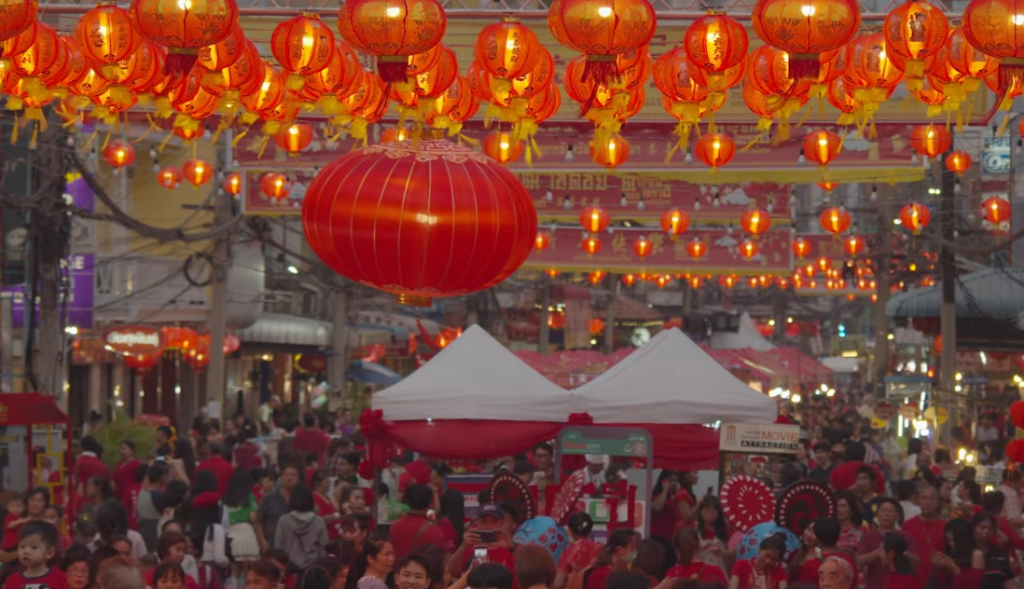
The first red lantern I saw was hanging over a small grocery store in Manchester, not in Beijing or Shanghai. For a time, the whole street seemed noticeably changed as it swayed softly in the February breeze and glowed against a slate sky. There was a certain ritual and assurance in that blaze of red.
The event has a very distinct feeling of rhythm because of the new moon that marks the start of the Chinese New Year. It occurs on February 17, 2026, marking the beginning of the Year of the Horse, which ends on March 3 with the Lantern Festival. Even in a time dominated by digital clocks, the moon, which silently controls the calendar, continues to be a very trustworthy source of information.
Interest in lunar customs has significantly increased outside of Asia in the last ten years, indicating a remarkably comparable yearning for ceremonies that ground contemporary life. However, the holiday has never been just a symbolic event for families in China and the diaspora. It is incredibly successful at reuniting geographically distant relatives and is both practical and emotional.
Houses are meticulously cleaned in the weeks leading up to the new moon, removing dust and symbolic bad luck. Cabinets are stocked, haircuts are planned in advance, and debts are paid off if feasible. As the year progresses, cleaning is frequently put on hold in order to carefully control incoming luck.
| Key Fact | Details |
|---|---|
| Also Known As | Spring Festival, Lunar New Year |
| Calendar Basis | Traditional Chinese lunisolar calendar |
| Start Date (2026) | February 17, 2026 (New Moon) |
| End Date (2026) | March 3, 2026 (Lantern Festival) |
| Zodiac Animal (2026) | Horse (Year of the Fire Horse) |
| Length of Celebration | Up to 15–16 days |
| UNESCO Recognition | Listed as Intangible Cultural Heritage of Humanity (2024) |
| Core Traditions | Reunion dinner, red envelopes, lanterns, lion dances, fireworks |
The loss of this movement was particularly noticed during the pandemic, when travel was drastically curtailed. Normally bustling train stops became abnormally quiet. Now that mobility has significantly increased, the yearly migration has resumed with a renewed vigor, bringing grandparents, workers, and students home.
The New Year’s Eve reunion dinner holds special significance. The purposeful round arrangement of tables represents wholeness. Fish is offered in abundance, along with sticky rice cakes that signify expansion and dumplings that are meticulously sculpted to resemble ancient gold ingots. Each meal uses flavor to communicate hope, almost like a secret message.
Before anybody sat down, I once observed a parent in Guangzhou reposition each bowl with a nearly ceremonial emphasis to ensure symmetry.
Fireworks burst with bold insistence at midnight. This tradition still carries the mythology of Nian, the legendary beast that is frightened by brilliant red and loud noise. Adults knowingly smile, children hide their ears as they giggle, and the night sky briefly takes on a dramatic quality.
Then come the red envelopes in the morning. Children and unmarried adults are given crisp bills with protection and prosperity inside. Because it conveys intention more than money, the gesture is nonetheless remarkably inexpensive in spirit, even in different economic situations.
The tradition has undergone particularly creative transformations due to technology. Families can now send digital red envelopes quickly by integrating mobile payment platforms, which streamlines operations and frees up human talent for conversation instead of logistics. Many elderly people still prefer paper packets because they value their tactile presence, even though they are more efficient.
An additional dimension of suspense is added by the zodiac cycle. Five elements—wood, fire, earth, metal, and water—intertwine with twelve animals in a 12-year pattern to create a 60-year cycle. As older relatives typically remember with great certainty, the Fire Horse in 2026 is the first time this coupling has appeared since 1966.
During this time, horoscopes are frequently circulated. Forecasts regarding professional advancement or romantic opportunities are interpreted with interest rather than blind faith. Instead than being deterministic scripts, they serve as reflective cues for many, promoting minor tweaks rather than significant changes.
On the first full moon of the year, the Lantern Festival brings the festivities to a close. In parks and courtyards, lanterns provide gentle halos against the chill of winter. To represent unity, they eat tangyuan, which are sweet rice balls floating in syrup. They complete a cycle that seems both old and subtly modern as their spherical form reflects the moon above.
In Singapore, I recall standing beneath a row of lanterns and observing how their light softly rippled across the pavement. I was struck by how powerfully this straightforward lighting was at bringing people together.
Parades have grown more complex in cities like San Francisco and Kuala Lumpur, incorporating synchronized drumming, LED technology, and lion dances. These gatherings are so adaptable that they appeal to both interested newcomers and heritage populations. They show how tradition can change while maintaining its essential elements.
A subtle role is also played by fashion. New clothes, frequently in crimson or gold, are worn to symbolize rebirth. Designers use vintage materials with contemporary tailoring to reimagine traditional designs in particularly creative ways. The outcome is strikingly modern in style and incredibly lasting in symbolism.
There are other taboos associated with the celebration. Arguments are not encouraged. Words related to loss are not used. Breaking a plate necessitates instantaneous linguistic rectification, turning mishap into luck with a little wording. These days, language turns into a tool for optimism.
The festival frequently serves as an identity anchor for younger generations who were reared overseas. Grandparents describing zodiac mythology, a little chapel in a suburban apartment, or folded dumplings at a kitchen table can all feel incredibly reassuring. These rites are so adaptable that they can be performed in Suzhou courtyard homes just as easily as in Toronto apartments.
Global awareness has significantly increased after the Spring Festival was designated as Intangible Cultural Heritage by UNESCO in 2024. These days, schools hold lantern-making events, museums arrange exhibitions showcasing the festival’s complex history, and cultural institutions host workshops. These initiatives are incredibly successful in overcoming cultural differences.
However, Chinese New Year is still fundamentally about coming together and starting again. January is a busy month on the Gregorian calendar, with a focus on personal goals and productivity. Before ambition, the lunar celebration, which comes later, promotes introspection, peacemaking, and communal eating.
