

The executive director of the Xerces Society, Scott Black, recalls summertime driving across Nebraska and Iowa with corn growing to the edge of shopping mall parking lots, climbing slopes that once supported trees, and stretching to the horizon in every direction. He also recalls something more subdued and difficult to describe: how spotless his rental car’s windshield was after driving for several hours. No insects smudged. Not even a trace. That absence is instantly apparent to anyone old enough to have driven through the American Midwest forty years ago. Back then, cleaning the glass was a necessary stop on a long summer drive. You don’t have to worry anymore.
| Topic | The Insect Apocalypse and Pollinator Decline |
|---|---|
| Scale of Decline | Over 40% of insect species at risk of extinction; insect biomass in Germany fell 76% over 26 years |
| Pollinator Dependency | 75–80% of flowering plants and 75% of global food crops depend on animal pollination |
| Crop Loss from Inadequate Pollination | 3–5% loss in fruit, vegetable, and nut production currently documented |
| Excess Deaths Annually | Estimated 427,000 deaths per year linked to reduced healthy food consumption from pollinator loss |
| Foods Most at Risk | Apples, almonds, blueberries, cherries, cocoa, coffee, soybeans, alfalfa |
| Projected Dietary Impact | Fruit supply could fall ~23%, vegetables ~16%, nuts and seeds ~22% with full pollinator loss |
| Vitamin A Risk | Over 70 million people in low-income countries could face new Vitamin A deficiencies |
| Monarch Butterfly | Western population down more than 99% since the 1980s |
| Rusty Patched Bumble Bee | Down over 90%; first continental U.S. bee listed under the Endangered Species Act (2017) |
| Primary Causes | Habitat loss, pesticide use, climate change, invasive species, light pollution |
| Key Research | Harvard T.H. Chan School of Public Health, Krefeld Society (Germany), Xerces Society |
| Reference Links | Harvard Chan School – Pollination Loss and Human Health · Xerces Society – Insect Apocalypse: What Is Really Happening |
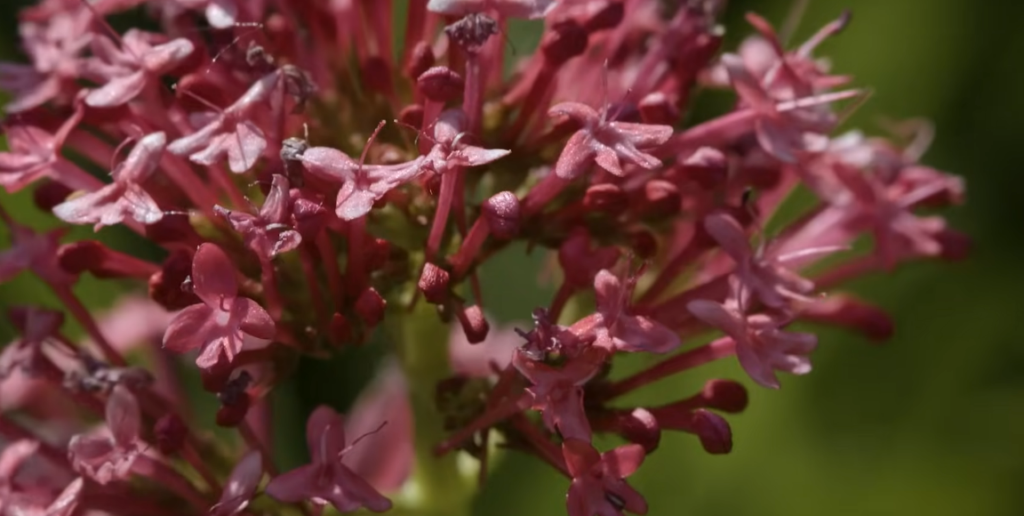
Scientists are wary of relying too much on that specific observation, which they refer to as the “windshield effect” because it is anecdotal. However, it keeps coming up because it suggests something genuine. The total biomass of flying insects in their network of traps decreased by 76% over a 26-year period between 1989 and 2014, according to a long-term study conducted by a group of German entomologists. The decline was even more pronounced in midsummer, when insect activity peaked, at 82%. When those figures were released, it was nearly impossible to accept them. It had happened so quickly and with such severity that hardly anyone had noticed.
In ways that are frequently overlooked in more abstract ecological discussions, the effects of what people eat are clear-cut and quantifiable. Three-quarters of the world’s food crops and about 75% of all flowering plants rely on animal pollination, mostly from insects. The grains that make up the majority of diets around the world, wheat, rice, and corn, are wind-pollinated and mostly unaffected. However, a diet that is truly varied and nutrient-dense depends heavily on pollinators. apples. Almonds. blueberries. cherries. coffee. Cocoa. Livestock were fed soybeans. Researchers estimate that a complete collapse of pollinator services could result in a nearly 23% reduction in global fruit supplies, a 16% reduction in vegetable supplies, and a 22% reduction in nuts and seeds.
Researchers at the Harvard T.H. Chan School of Public Health published a study in late 2022 that put a more precise figure on what is already occurring. An estimated 427,000 extra deaths per year are attributed to inadequate pollination, which is already causing a 3 to 5% loss in fruit, vegetable, and nut production worldwide. This decline is not a future scenario. These deaths are not directly related to starvation, but rather result from diets low in fruit, vegetables, and micronutrients, which raise the risk of heart disease, stroke, diabetes, and some types of cancer. It is a slow, diffuse type of harm that is massive overall but invisible in any one mortality statistic. According to Samuel Myers, the lead researcher, it functions on a scale similar to other significant global health risk factors, such as substance use disorders and prostate cancer.
It’s difficult to ignore how this harm’s geographic distribution contradicts conventional wisdom regarding the victims of environmental degradation. Lower-income nations, which rely more heavily on pollinator-dependent crops for both calories and income—in some cases accounting for 10 to 30% of total agricultural value—are where the losses in food production are concentrated. However, middle-income nations with sizable populations—such as China, India, Indonesia, and Russia—are disproportionately affected by the health consequences of those losses. The most serious health effects occur in areas where non-communicable diseases are already on the rise and where a move away from nutritionally varied diets toward less expensive, grain-heavy alternatives occurs.
Although the precise relative importance of these factors is still up for debate, the causes of pollinator decline are well documented. Large areas of diverse terrain, such as meadows, hedgerows, and the edges of woodlands, have been transformed into monocultures by industrial agriculture, providing virtually nothing for insects to live on. Herbicides that eradicate the flowering weeds that bees rely on, among other pesticides used on those crops, do not remain in the fields. They float, build up in the soil, and appear in the pollen of nearby wildflowers that are purportedly untreated. An additional layer of disruption is brought about by climate change, which causes a mismatch between the time that flowers bloom and the emergence of the insects that pollinate them, leaving bees looking for food that isn’t yet available.
Since the 1980s, the monarch butterfly population in the west has decreased by over 99%. Once widespread in the Midwest and Northeastern United States, the rusty patched bumble bee has lost more than 90% of its population and was the first bee in the continental United States to be listed under the Endangered Species Act in 2017. These are not marginal, obscure species. The majority of Americans over fifty can recall seeing these animals on a regular basis.
In some policy circles, there is still a perception that this is an environmental problem that is distinct from priorities related to the economy or health. It’s getting harder to defend that framing. Because the wild bee populations that used to pollinate apple orchards for free have mostly vanished, apple orchards in some parts of China are already being pollinated by hand using small brushes. It’s costly, labor-intensive, and a sneak peek at what real farming without pollinators looks like. Decisions that have not yet been made will determine whether or not that future can be prevented.
Disclaimer
Nothing published on Creative Learning Guild — including news articles, legal news, lawsuit summaries, settlement guides, legal analysis, financial commentary, expert opinion, educational content, or any other material — constitutes legal advice, financial advice, investment advice, or professional counsel of any kind. All content on this website is provided strictly for informational, educational, and news reporting purposes only. Consult your legal or financial advisor before taking any step.
