

Most people have a mental image of the American wildfire: smoke columns rising above the Cascades in August, ponderosa pines burning orange in Colorado, and drought-baked hillsides in California. Told in desert tones, it is a western tale. That doesn’t apply to New Jersey. The majority of people associate it with the Turnpike and the Shore rather than with smoke warnings and evacuation orders, and it is the most populous state in the nation. Nevertheless, the New Jersey fire department had already responded to 214 fires spanning 514 acres by the start of March this year. 21 acres and 69 fires occurred during the same time in 2024. That math is startling.
| Topic | New Jersey Wildfire Season 2026 — Early Onset and Climate Context |
|---|---|
| Region | New Jersey, primarily the Pine Barrens (Pinelands), Ocean County, South Jersey |
| Traditional Season | Mid-March to mid-May (spring); secondary risk in fall |
| 2026 Season Start | Fires recorded as early as January; 214 fires burning 514 acres by March 3, 2026 |
| Comparison: Same Period 2024 | 69 fires burning just 21 acres (January 1 – March 3) |
| Notable Recent Fire | Jones Road Fire (April 2025): 15,300 acres, Ocean County, two weeks to contain |
| Drought Context | October 2024 was the driest month in NJ in 130 years; drought warning active since November 2024 |
| New Infrastructure | Veterans Fire Tower, Jackson Township — 133-foot galvanized steel tower, $2 million, opened March 2026 |
| Prescribed Burns Planned | 25,000 acres, primarily Pine Barrens, 2026 season |
| Homes at Risk | Over 200,000 homes in Ocean and Monmouth counties within fire tower coverage area |
| State Fire Warden | Bill Donnelly, New Jersey Forest Fire Service |
| Climate Note | NJ warming winters extending fire season; increase in annual fire weather days documented |
| Reference Links | WHYY – NJ Wildfire Season 2026 · Scientific American – Why New Jersey Has Major Wildfire Risk |
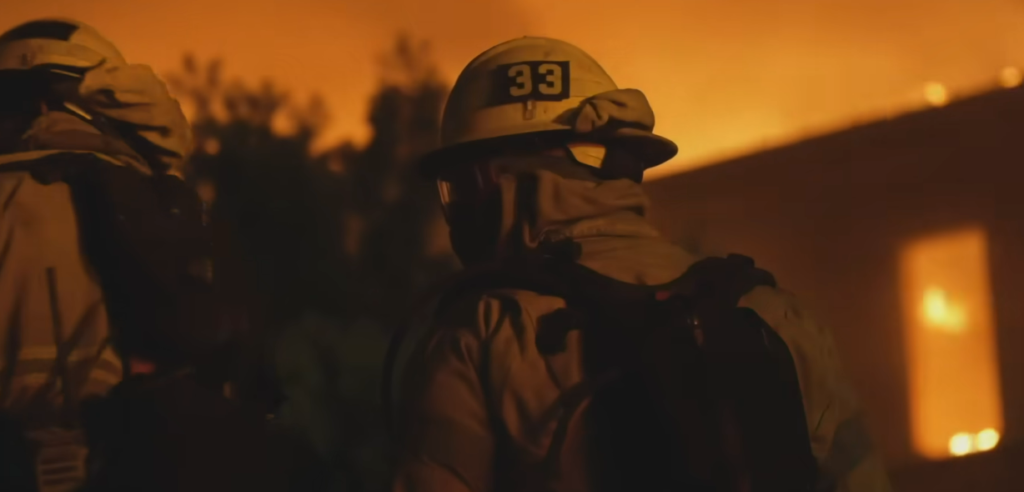
Stretching across Ocean County and into Burlington, Atlantic, and Cape May counties, the Pine Barrens—officially known as the Pinelands—occupy a sizable portion of southern New Jersey. Sandy soil, dry leaf litter, pitch pines, and an ecosystem sculpted over centuries by fire. Pitch pine cones need extreme heat to open and release seeds because the trees themselves have adapted to it. It was always intended for the landscape to burn. The calendar, the frequency, and the intensity of the conditions preceding ignition have changed.
In 130 years, October 2024 was the driest month in New Jersey. The state was placed under a drought warning as a result, which was never completely lifted. Because loam soil retains moisture better than sandy soil in the Pinelands, two weeks without rain is sufficient to turn the ground cover into kindling. These conditions had been developing for months when the Jones Road Fire broke out in Ocean County in April 2025. It took two weeks to contain the 15,300-acre fire that threatened hundreds of homes, crossed the Garden State Parkway, and advanced toward the coast. It was, by most accounts, the worst fire the state had experienced in over ten years. At a press conference in March 2026, fire chief Bill Donnelly described the situation in a straightforward manner: “We’re continuing just where we left off last year.”
Because it represents a category of fire risk that most of the nation hasn’t fully accounted for, New Jersey’s situation is worth keeping an eye on outside of its own borders. Researchers refer to these fires as “interface fires” because they start at the boundary between suburban and exurban development and wildland. This issue is present in New Jersey at a density that is nearly unparalleled nationwide. Homes are frequently at risk from fires as small as one acre. A small fire can spread throughout a neighborhood in a matter of hours when wind gusts reach 25 miles per hour and embers begin spinning off the south-facing bark of dry pine trees, which curls and peels in spring sun, according to researchers, creating tiny ready-made torches.
Speaking with Northeastern climatologists and fire officials, there is a sense that the mental map of fire risk in the United States is about fifteen years old. The narrative used to be as follows: fire country was west of the Rockies, but not really east of them. That geography is disintegrating. In November 2024, there was a rapidly spreading brush fire in New York City. The fall 2024 season in the Northeast was active in several states. Longer intervals between rainstorms, warming winters that leave less snowpack to slow spring drying, and rising temperatures in the mid-Atlantic are all contributing to the emergence of fire weather conditions in previously unconsidered locations.
Most people are unaware of how long New Jersey’s Forest Fire Service has been handling this. The majority of the state’s 21 fire towers, which were constructed in the 1920s and 1930s, are manned all season long to offer early detection throughout the Pinelands. The first new tower in 78 years, a $2 million, 133-foot galvanized steel tower covering more than 200,000 homes in Ocean and Monmouth counties, opened in Jackson Township, Ocean County, in March 2026. In commemoration of the Declaration of Independence’s 250th anniversary, it was renamed Veterans Fire Tower. The older towers lack air conditioning and heating, but the new ones do. It’s a small but practical acknowledgement that the workers on these towers will be working longer hours and for longer periods of time than previous generations.
The long-term prediction that New Jersey will become somewhat wetter in a warming world with heavier rainfall occurring less frequently is still up for debate, but it’s unclear if this will eventually counteract the increased risk of fire due to faster-drying fuels and more fire weather days. Regardless of general trends in precipitation, the Pinelands in particular dry out very quickly, according to David Robinson, the state climatologist at Rutgers. Water cannot be retained by the sandy substrate. There is hardly any buffer in the ecosystem. In practical terms, this means that a two-week gap at the wrong time of spring can replicate the conditions that led to the Jones Road Fire, even in years with average rainfall. And those gaps appear to be arriving more consistently than anyone anticipated in a climate that is warming and becoming more unpredictable.
