

Germany, which is frequently praised for its base of precision-driven industry, is currently reviving its industrial strength by taking a much more experimental approach. Since a large portion of its economy has historically been dependent on exports and established supply chains, the current transition represents a generational turn, placing regional innovation at the center of national revitalization. The goal? to transform underperforming industrial areas into centers of nimble innovation, supported by billions of dollars in public and private commitments.
These new regional centers are emerging throughout Germany as interconnected, living labs rather than sterile technology parks, where the Mittelstand meets machine learning and heritage industries experiment with energy innovation. Accelerated support has been extended to over ten cities and industrial regions, each according to their industrial DNA. Hamburg is focusing on green port logistics, Ulm on digital health, and Saxony on battery technology. These wagers are not arbitrary. Each of these initiatives has its own portfolio of private investor interest, government incentives, and academic partnerships.
The plan’s financial foundation is remarkably audacious. Over €735 billion in private sector commitments have already been made as part of Germany’s “Made for Germany” campaign, and the federal government has also set aside an additional €4 billion to accelerate digital infrastructure. These investments show a global audience that Germany is committed to regaining its innovative advantage; they are more than just numbers.
| Item | Details |
|---|---|
| Country | Germany |
| Strategy | Regional Innovation Hubs, AI Offensive, Green Tech Investment |
| Investment Volume | €735 billion private + €4 billion public (2025 targets) |
| Key Focus Areas | Digitalization, Green Energy, Digital Health, SME Growth |
| Primary Goals | Reignite industrial growth, reduce bureaucracy, attract VC and talent |
| Notable Challenges | High energy costs, skilled labor shortages, regulatory hurdles |
| Supporting Agencies | Federal government, state governments, universities, major corporations |
| Timeline | 2025 onward, with milestones for 2030 AI and energy targets |
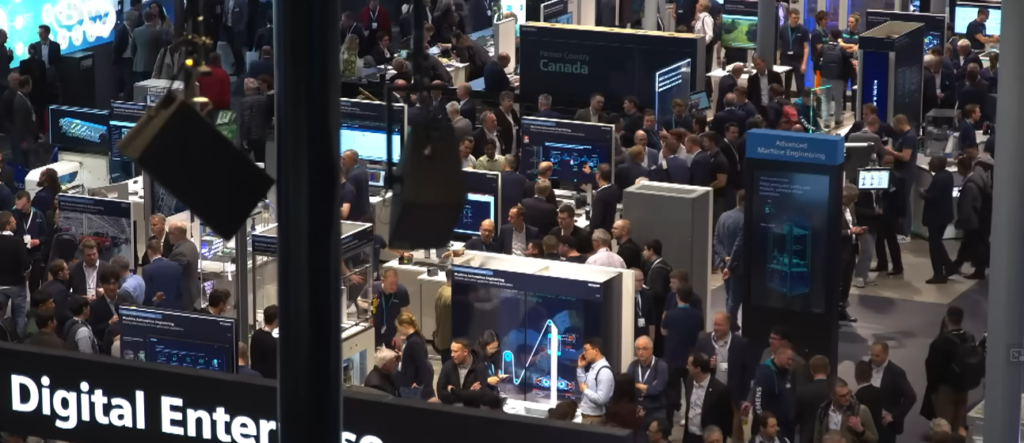
The so-called “AI Offensive” is very inventive. Germany is integrating AI directly into traditional industries rather than reserving it for consumer tech niches. Examples include digital twins for logistics optimization, machine learning for energy grid stabilization, and predictive algorithms in car manufacture. The objective is to make AI infrastructure as essential as roads or railroads, rather than just following trends. The government wants AI to contribute 10% of GDP by 2030. Five years ago, this objective would have seemed unrealistic, but it now seems shockingly doable.
The strategy’s design is incredibly flexible, as it include steps to link venture capital firms with local colleges and businesses with research institutes. It’s no accident that Germany is likewise simplifying intellectual property procedures and revising its tax code to facilitate venture-backed expansion. Additionally, this is an opportunity for the Mittelstand, the strong but frequently sluggish backbone of the German economy, to develop—not by abandoning its history, but by building innovation on top of it.
I clearly recall seeing a reorganized manufacturing floor west of Dortmund on a chilly November morning. Green hydrogen components were being produced by robotic arms and modular workstations in what had once been a dingy, fluorescent-lit car parts plant. The change was gradual, supported by regional funds, and driven by engineering students from nearby universities who commuted from the area. It served as a reminder of how opportune financing combined with quiet resilience can generate its own momentum.
This discussion will inevitably touch on energy policy. Due to both geopolitics and the challenges of the energy transition, Germany’s manufacturing sector is still plagued by disproportionately high electricity costs. However, grid upgrading is accelerating. Germany hopes to greatly lessen its reliance on legacy imports by revamping local grids with AI-powered energy storage and control technologies. The goal of 80% of power consumption coming from renewable sources by 2030 seems more like a survival strategy than a political catchphrase.
Naturally, there will always be friction in any transformation of this magnitude. Bureaucracy continues to play a major role. Despite ongoing reforms, many entrepreneurs contend that regulations pertaining to licenses, permits, and data compliance frequently impede progress. The difficult issue of skill is another. Germany is experiencing a skilled labor shortage despite having a highly educated workforce, particularly in fields like advanced materials research, semiconductor design, and quantum computing. Although immigration procedures have been loosened, practical implementation is still difficult. The possible advantages, however, greatly exceed the increasing pains.
Many of these innovation hubs are establishing themselves through local pilot projects and strategic alliances. One of the fastest-growing semiconductor research facilities in Europe is currently located in Dresden. Cleantech startups are drawn to Karlsruhe, which was once thought of as an intellectual outpost. Instead of competing, these regional hubs work together to address exceptionally difficult problems. They frequently share research facilities, cloud technology, and even faculty from other universities.
A psychological reality is also acknowledged by the growing focus on regional ecosystems: people build better when they are near their homes. Germany is betting on identity by decentralizing innovation rather than just supporting infrastructure. With funding, coaching, and a mission to try new things, cities that felt left behind by globalization are suddenly being welcomed back to the economic table.
Younger entrepreneurs, many of whom had previously searched overseas for opportunities, seem to benefit most from this strategy. Germany is reminding them that you don’t have to leave to create something significant by putting its trust in these hubs.
The change will take time to manifest. It takes time to rewire an economy, frequently more time than political cycles permit. However, city by city, grant by grant, and prototype by prototype, the foundation is being laid. With the correct balance of strategic restraints and regulatory autonomy, these hubs may develop further, transforming Germany from a stagnant industrial giant into a highly flexible innovation leader.
The tone on the ground is the most optimistic. Yes, there is a sense of urgency, but there is also hope. Not the blind sort, but the kind based on preparation, perseverance, and the remarkably obvious knowledge that, like industry, invention thrives on structure rather than noise.
