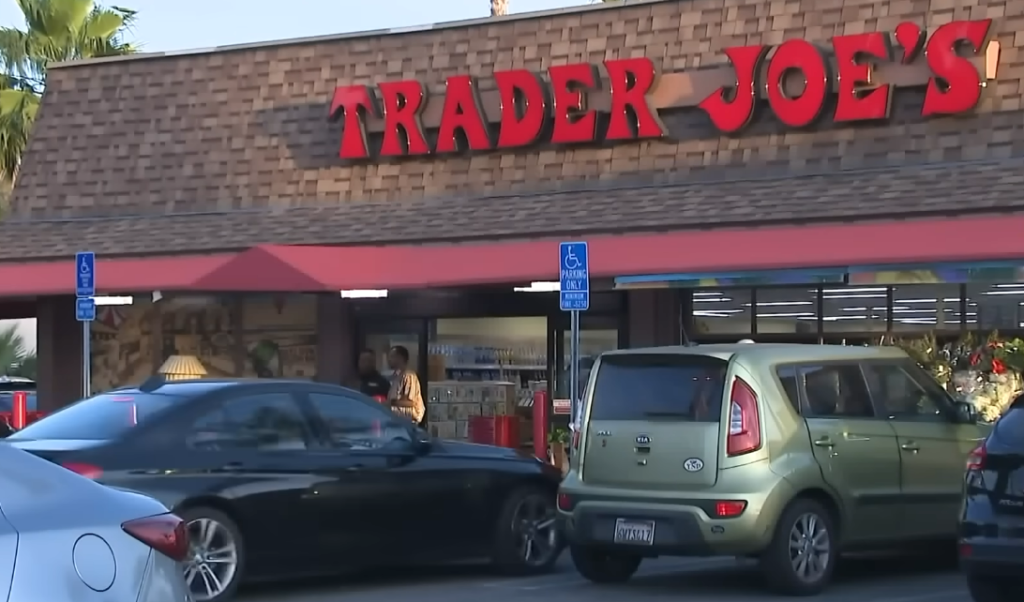
Imagine a warm July afternoon in 2019 at a Trader Joe’s in Palm Beach, Florida. After using his Visa debit card to complete a transaction and receiving his receipt, a customer named Brian Keim notices something strange. The first six and last four digits of his card number—ten of the sixteen digits—are printed in black ink on standard thermal paper, making them visible to any store employee who handed it over as well as anybody else who happened to look at it. Businesses are only allowed to print a customer’s last five card numbers under federal law. Something that wasn’t meant for Keim had been given to him. Seven years later, Trader Joe’s has consented to settle the ensuing class action lawsuit for $7.4 million.
The legal theory is fairly simple. This type of partial exposure, which falls short of a complete card number but still provides a fraudster with sufficient information when combined with other data, was specifically intended to be prevented by the Fair and Accurate Credit Transactions Act, or FACTA. The line drawn by the law is crossed when the first six and last four digits are printed. The disclosure “invaded his privacy by disclosing his private financial information” to anyone who might see that slip of paper, according to Keim’s lawsuit. Depending on how much identity theft you’ve personally experienced, that framing may seem a little too broad or perfectly reasonable.
From the beginning, Trader Joe’s has rejected the idea. In its settlement communications, the company stated that not all stores were impacted; only specific locations printed receipts in that format, and even within those stores, only a small percentage of transactions produced the problematic receipts. According to Trader Joe’s, no customers have actually reported identity theft related to this problem. The company claims that rather than acknowledging any wrongdoing, the settlement was made to save time and money on additional litigation. That is not untrue; it is standard settlement language. A $7.4 million settlement is a reasonable way to end a seven-year case because litigation is costly.
Nevertheless, it’s intriguing to see one of America’s most meticulously developed grocery brands—Trader Joe’s, with its Hawaiian shirt-wearing employees, its renownedly welcoming in-store environment, and its loyal customer base that views the parking lot as a community gathering—find itself in this predicament due to a printing error in a point-of-sale system. The foundation of the brand’s identity is trust and approachability. A federal privacy lawsuit, no matter how technical, attaches itself to that image with a hint of irony.
The eligible window is limited to purchases made at a Trader Joe’s that issued the impacted receipts between March 5, 2019, and July 19, 2019, using a credit or debit card. A few qualified customers have already received emails or postcards informing them that they were affected, according to data from Trader Joe’s payment processing software. Others might not even be aware that they are eligible. The final amount will depend on how many valid claims are filed and how much is subtracted for administrative and legal fees. The estimated payout per claimant is $102.45, but that figure is a projection. The court’s final approval hearing is scheduled for August 10, 2026, and claims must be submitted by June 9, 2026. Checks with a 180-day validity period are anticipated to be issued within 10 business days of approval.
| Trader Joe’s Class Action Settlement — Key Information | |
|---|---|
| Defendant | Trader Joe’s Company (headquartered in Monrovia, California) |
| Lead Plaintiff | Brian Keim (made purchase at Trader Joe’s, Palm Beach, Florida, July 2019) |
| Case Name | Keim v. Trader Joe’s Company |
| Law Alleged Violated | Fair and Accurate Credit Transactions Act (FACTA) — bars printing more than last 5 digits of card number |
| Alleged Violation | Receipts printed first 6 AND last 4 digits of card number (10 of 16 digits total) |
| Eligible Purchase Window | March 5, 2019 — July 19, 2019 |
| Settlement Amount | $7.4 million total |
| Estimated Per-Claimant Payout | $102.45 (estimated; final amount depends on number of valid claims) |
| Claim Filing Deadline | June 9, 2026 |
| Final Approval Hearing | August 10, 2026 |
| How to File | Online at settlement website or by mail to P.O. Box 301134, Los Angeles, CA 90030-1134 |
| Settlement Hotline | 1-888-444-7415 |
In the context of consumer class action settlements, where payouts occasionally consist of a few dollars or a coupon for the company’s own products, $102 is not an insignificant amount. This one offers real money, which is one of the reasons it went viral this week on social media and food media, drawing real attention from consumers rather than just legal news sources. It’s more than symbolic, but it’s unclear if anyone will feel truly compensated for a seven-year-old receipt violation.
The retail sector has been a little slow to fully embrace the larger issue, which has been brought up in FACTA cases for decades. Third-party vendors frequently set up point-of-sale systems, which are also rarely updated and audited. It may take months for someone to discover a misconfigured receipt template. That most likely occurred at Trader Joe’s in 2019, and it has most likely since occurred at other stores. Over the years, similar FACTA claims have been made against companies like Target and Forever 21. Since the law’s enactment in 2003, infractions have continued to surface.
Observing these cases settle one after another over time gives the impression that the underlying compliance issue is never completely resolved because the fines are sufficiently reasonable. Although a $7.4 million settlement is a significant sum, it does not pose an existential threat to a grocery chain with Trader Joe’s volume and profit margins. It is more difficult to determine from the outside whether it generates the kind of internal urgency that results in long-term system changes. As of right now, anyone who used a card to purchase groceries at a Trader Joe’s during those four and a half months in early 2019 has until June 9 to submit a claim. One issue was the receipts. The payout is genuine. The deadline is approaching.
Disclaimer
Nothing published on Creative Learning Guild — including news articles, legal news, lawsuit summaries, settlement guides, legal analysis, financial commentary, expert opinion, educational content, or any other material — constitutes legal advice, financial advice, investment advice, or professional counsel of any kind. All content on this website is provided strictly for informational, educational, and news reporting purposes only. Consult your legal or financial advisor before taking any step.