

Before someone threw a Molotov cocktail at Sam Altman’s house, his spring was already difficult. Early in April 2026, the 40-year-old CEO of OpenAI was juggling two lawsuits, one from Elon Musk and the other from his own sister, while getting ready for a federal trial that would start in Oakland later this month. Then came word that a man from Texas had been charged with attempted murder and attempted arson after attacking Altman’s house with a document that authorities claimed was anti-AI. There are serious accusations against that man. Strangely enough, though, the sound of everything else whirling around him at the moment nearly drowned out the physical assault.
The more intimate of the two court cases is the one brought by his sister, Annie Altman. Annie claims in an amended complaint filed on April 1 in St. Louis federal court that her brother sexually assaulted and raped her on multiple occasions between 1997 and 2006, starting at the family home in Clayton, Missouri, a peaceful suburb outside of St. Louis with tree-lined streets and the kind of settled, middle-class vibe that makes accusations like these seem especially dissonant. She claims that the abuse began when Sam was twelve and she was three. He has filed a defamation countersuit against her, claiming that her social media posts, including a video in which she mentioned abuse by “an almost tech billionaire,” amounted to an attempt to extort financial support from the family. He has denied everything, calling the allegations extremely hurtful and completely false.
The case’s legal journey has been convoluted. Annie Altman’s initial claims for sexual assault and battery were dismissed by a federal judge in March 2026 on the grounds that they were outside of Missouri’s standard statutes of limitations. The claims had technically expired in 2008. The judge did, however, leave open the possibility of refiling, pointing out that Missouri’s childhood sexual abuse statute provided an opportunity. Annie’s lawyers accepted it. U.S. District Judge Zachary Bluestone is currently hearing the amended complaint. In his previous decision, he stated that the allegations were “particularly disturbing” regardless of whether they turned out to be true. That cautious objectivity reveals something about how challenging the situation is. No decision has been made regarding the underlying facts, and it is still unclear how the amended case will proceed.
For someone who could have just denied and remained silent, Sam Altman’s legal response has been firm and remarkably detailed. According to his court documents, his sister’s family has been supporting her financially for years and has made an effort to assist her in overcoming what he describes as severe mental health issues. The family dynamics at the heart of this legal process seem to be genuinely painful, regardless of how it plays out. This is something that gets lost in the fast-paced news cycles surrounding a person as well-known as Altman.
Sam Altman Sued: Two Lawsuits, an Arson Attack, and a Month That Tested the World’s Most Recognized AI Figure
| Category | Details |
|---|---|
| Full Name | Samuel Harris Altman |
| Date of Birth | April 22, 1985 |
| Nationality | American |
| Current Role | CEO, OpenAI |
| Net Worth (est.) | $3.3 billion (Forbes, 2026) |
| Education | Stanford University (dropped out) |
| Co-founded OpenAI | 2015 (alongside Elon Musk and others) |
| ChatGPT Launch | November 2022 |
| Sister’s Lawsuit (Plaintiff) | Annie Altman |
| Sister’s Allegations | Sexual abuse and rape between 1997–2006, beginning in Clayton, Missouri |
| Sister’s Case Status | Amended complaint filed April 1, 2026; original claims dismissed on statute of limitations grounds |
| Sam’s Counterclaim | Defamation suit against Annie Altman |
| Musk Lawsuit Filed | 2024 |
| Musk’s Key Allegation | Fraud; Altman manipulated him into donating $38M under false nonprofit premises |
| Musk’s Remedy Sought | Removal of Altman as CEO; OpenAI restored to nonprofit structure |
| Trial Date (Musk Case) | Jury selection April 27, 2026, federal court, Oakland, California |
| Attack on Altman’s Home | Texas man charged with attempted murder and arson; carried anti-AI document |
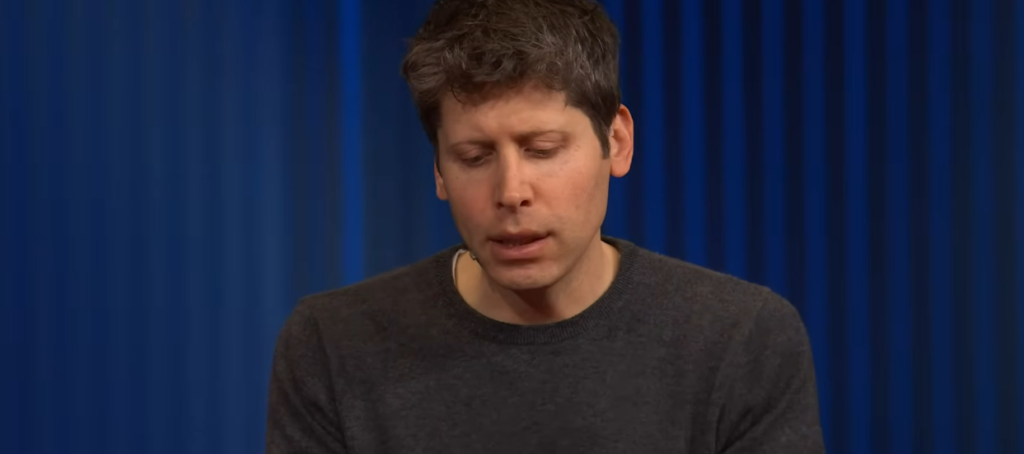
Elon Musk is another. The texture of that lawsuit is completely different; it is more combustible in the corporate and ideological sense and less personal in the unadulterated human sense. Since 2024, Musk, who co-founded OpenAI with Altman and others in 2015 and gave $38 million before leaving in 2018, has maintained that Altman had misled him. The main accusation is that Altman purposefully created the appearance that OpenAI would continue to be a nonprofit organization dedicated to the welfare of humanity while covertly constructing the necessary infrastructure to transform it into something more akin to a traditional for-profit tech business. Musk claims that if he had known what OpenAI was truly becoming, he would never have given that much money. His attorneys are demanding the dismissal of Altman as CEO, the removal of Greg Brockman as president, and the return of what they have described as up to $134 billion in wrongful gains, including Microsoft, the biggest investor in OpenAI.
The trial’s jury selection process is set to start in Oakland on April 27. The San Francisco offices of OpenAI, where Altman has spent the majority of the last three years overseeing one of the most significant corporate ascents in recent memory, will be roughly seventy miles away from the courtroom. When ChatGPT debuted in November 2022, it virtually instantly transformed the public’s perception of artificial intelligence, transforming what had previously been a technical research issue into something that millions of regular people were using on their laptops and phones. In the process, Altman rose to become one of the most well-known individuals in the technology industry. Now, that visibility is reciprocal.
Musk’s lawsuit has drawn harsh criticism from OpenAI, which characterizes it as a harassment campaign driven by ego and competitive anxiety. In October 2025, the company finished a major reorganization, becoming a nonprofit with a 26 percent share in its for-profit division. Musk started his own AI company, xAI, in 2023, and his rivalry with OpenAI has turned into one of the more overtly hostile rivalries in the tech industry. Whether or not that satisfies Musk’s objections is probably not the point. Observing all of this gives the impression that the lawsuit and the rivalry have become so intertwined that it is challenging to assess each one solely on the basis of its legal merits.
The accumulation in April 2026 is truly remarkable. There are many CEOs in the tech industry who have faced legal pressure, so Altman is not the first. However, it is difficult to fully comprehend the convergence of a family lawsuit, a high-profile corporate battle with one of the richest men in the world, and a physical attack on his home all occurring in the same month. It’s still unclear how any of these will be resolved or what the long-term effects will be on Altman, OpenAI, or the larger discussion about AI governance that the Musk lawsuit, at its most serious, is attempting to force.
Disclaimer
Nothing published on Creative Learning Guild — including news articles, legal news, lawsuit summaries, settlement guides, legal analysis, financial commentary, expert opinion, educational content, or any other material — constitutes legal advice, financial advice, investment advice, or professional counsel of any kind. All content on this website is provided strictly for informational, educational, and news reporting purposes only. Consult your legal or financial advisor before taking any step.
