

The way Broadcom’s share price fluctuates around $400 has an almost theatrical quality. It climbs over it, ducks beneath it, gets back up, and tries again. After briefly falling below $400 earlier in the week due to rumors that Google may be considering a chip partnership with Marvell Technology, the stock closed at $402.17 on April 21. The news caused Marvell’s stock to increase by more than 4%. Broadcom has failed. Despite the weekly commotion, Broadcom is up 14% year over year, comfortably above a 52-week low of $161.62, and has just finished one of its most successful quarters ever. In light of this, the $400 anxiety begins to appear as a very temporary issue disguised as a structural issue.
The Q1 FY2026 figures are truly remarkable, so it’s worth looking at them. At $19.31 billion, revenue increased by 29% from the previous year. Net income increased by 34% to $7.35 billion. Free cash flow increased by 33% to $8.01 billion. These are not the figures of a business facing intense competition. These are the numbers of a business that is operating at full capacity by the majority of financial metrics. The majority of the growth was driven by the semiconductor division, which saw a 52% increase in chip revenue to $8.4 billion. This increase was fueled by hyperscale data centers developing AI infrastructure at a rate that continues to astound even those developing it. With a full-year revenue forecast of roughly $22 billion, CEO Hock Tan has predicted that AI semiconductor revenue will increase even more in Q2. Additionally, he stated that the company’s AI chip revenue will surpass $100 billion in 2027 in terms that are difficult to misunderstand.
| Field | Details |
|---|---|
| Company Name | Broadcom Inc. |
| Ticker Symbol | AVGO (NASDAQ) |
| Current Share Price | ~$402.17 (as of April 21, 2026, close) |
| After-Hours Price | $404.95 |
| Market Capitalization | ~$1.90 Trillion |
| 52-Week Range | $161.62 – $414.61 |
| P/E Ratio (TTM) | 78.45 |
| Dividend Yield | 0.65% (quarterly dividend: $0.65/share) |
| CEO | Hock E. Tan (since March 2006) |
| Founded | 1961 (as Hewlett-Packard division) |
| Headquarters | San Jose, California, USA |
| Employees | ~33,000 (2025) |
| Annual Revenue (2025) | $63.89 billion USD |
| Q1 FY2026 Revenue | $19.31 billion (+29% YoY) |
| Q1 FY2026 Net Income | $7.35 billion (+34% YoY) |
| Q1 FY2026 Diluted EPS (GAAP) | $1.50 (+32% YoY) |
| Free Cash Flow (Q1 FY2026) | $8.01 billion (+33% YoY) |
| Q2 FY2026 Revenue Guidance | ~$22.0 billion |
| Key AI Partners | Meta (through 2029), Google (through 2031), Anthropic (from 2027) |
| YTD Performance | +14% (outperforming S&P 500) |
| Analyst 1-Year Price Target (avg) | $417.84 |
| Notable Acquisition | VMware (infrastructure software segment) |
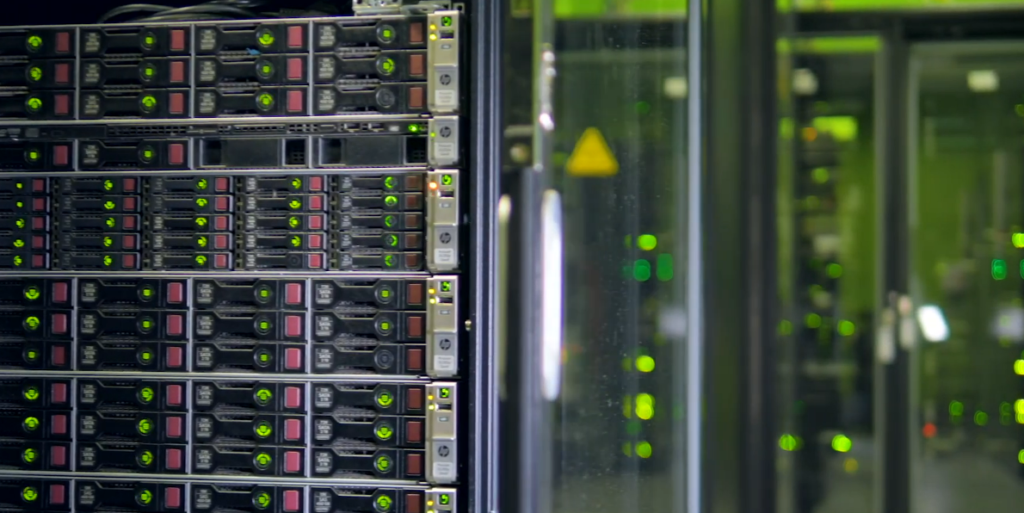
Every time that figure is used, attention is drawn to it, and rightfully so. Tan must either be extremely incorrect or current trends must accelerate significantly to reach this figure. Due in part to the difficulty of discounting the partnership roster Broadcom has put together, investors appear to be inclined to believe the former. With a focus on the Training and Inference Accelerator systems that Meta is implementing at scale, the company and Meta have a multi-year custom chip agreement that runs through 2029. It has a contract with Google that covers custom tensor processing units for next-generation data centers through 2031. Additionally, Anthropic is anticipated to utilize roughly 3.5 gigawatts of TPU-based compute capacity via Broadcom systems starting in 2027. These vendor relationships are not informal. Three of the world’s most capital-intensive technology companies have made these long-term structural commitments.
Because it shows how quickly sentiment can change in this industry, the Marvell situation is important to comprehend. Although there was no concrete confirmation of the report that Google was considering a chip partnership with Marvell, it was sufficient to cause a brief selloff in Broadcom and a rally in its competitor. The response might have been appropriate given the real risk. It’s also possible that investors were searching for any reason to take money off the table because they were sitting on sizable gains following Broadcom’s surge from below $200 last year. It is possible for both to be true simultaneously. As more hyperscalers create in-house or partner-based alternatives to Nvidia, the semiconductor market is fragmenting. Broadcom is right in the middle of this dynamic, sometimes benefiting from it and other times being questioned as a result.
Technically speaking, moving averages that are significantly below current prices are offering support, and analysts are keeping an eye on the $387 to $410 range as the near-term consolidation corridor. Overbought readings on the RSI and a number of other momentum indicators usually indicate a pause or slight decline prior to the next move. It’s difficult to ignore the fact that the stock continued to rise throughout much of 2025 despite the same overbought signals flashing intermittently. This does not render them useless at this point, but it does raise some concerns about interpreting short-term technical fatigue too strongly when the underlying earnings narrative is still so compelling.
When Broadcom closed the VMware acquisition, there was a lot of skepticism. However, the acquisition has settled into the portfolio more quietly than some had anticipated. Infrastructure software now accounts for $6.8 billion in quarterly revenue, growing more slowly than the semiconductor division but steadily producing steady cash flow to support chip R&D. Compared to three years ago, Broadcom is now a different kind of business. larger, more intricate, and more integrated with the infrastructure that powers AI. It is really unclear if the share price represents all of that, just a portion of it, or too much of it. More information about the stock’s future can be gleaned from how it handles the upcoming May 7 earnings report than from any weekly range.
Disclaimer
Nothing published on Creative Learning Guild — including news articles, legal news, lawsuit summaries, settlement guides, legal analysis, financial commentary, expert opinion, educational content, or any other material — constitutes legal advice, financial advice, investment advice, or professional counsel of any kind. All content on this website is provided strictly for informational, educational, and news reporting purposes only. Consult your legal or financial advisor before taking any step.
