

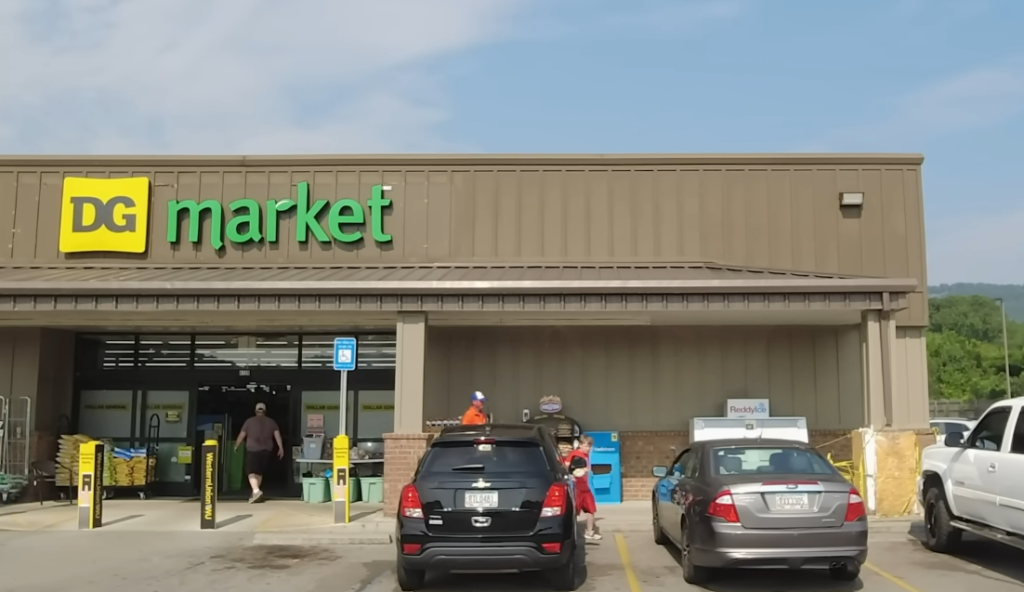
In the US, there are about 20,000 Dollar General locations. Nearly all of them have the same basic layout: narrow aisles, shelves filled with off-brand snacks and household essentials, and price tags that promise hard-to-find deals. The store has a distinct and dependable place in the weekly budget for the millions of Americans who shop there on a regular basis, especially in rural areas where Dollar General is occasionally the closest retail option for miles. The $8.5 million class action settlement, which closed for claims on April 13, 2026, feels like more than just a legal formality because of this.
Dollar General was accused of routinely charging customers prices at the register that were different from what was advertised on store shelves in the lawsuit, which was first filed in October 2022 in the Superior Court of New Jersey Law Division. Lead plaintiff Jennifer Braun filed the lawsuit on behalf of herself and everyone else in a similar situation. Since the class period runs from October 10, 2016, to November 19, 2025, this basically means everyone who has made purchases at a Dollar General store in the US over the course of almost ten years. The specific allegation is that the store consistently benefited from the discrepancy between the price tags on the shelves and the amount that the register rang up. Throughout the lawsuit, Dollar General denied any wrongdoing, and by accepting the settlement, it does not acknowledge the violation.
Because the payout mechanics split into two separate tracks, it is important to fully comprehend them. Customers are eligible for a cash payment of $10 per complaint, or the actual overcharge amount if it is higher, capped at $20 per household for two qualifying incidents, if they can provide documentation of an overcharge, such as a complaint previously filed with a government agency or Dollar General itself, or contemporaneous evidence like a photograph taken at the time of the discrepancy. That is modest. Although class action economics obviously don’t operate that way, it’s the kind of sum that makes you wonder if the individual payouts cover the legal fees incurred in getting there. The $8.5 million pool is intended to make up for the small amounts that each member of the population was impacted by.
| Category | Details |
|---|---|
| Company | Dollar General Corporation |
| Case Origin | Superior Court of New Jersey, Law Division |
| Lead Plaintiff | Jennifer Braun (and those similarly situated) |
| Settlement Amount | $8.5 million |
| Class Period | October 10, 2016 – November 19, 2025 |
| Allegation | Charging customers prices at checkout that differed from advertised shelf prices |
| Dollar General’s Position | Denied all wrongdoing |
| Claim Deadline | April 13, 2026 |
| Cash Payout (with proof) | Up to $10 per complaint, maximum $20 per household |
| In-Store Credit | $3 off first $10 of any purchase of at least $10 |
| In-Store Credit Window | June 1–2, 2026 (two-day window, nationwide) |
| Eligible Claimants | All US consumers who paid more or less than the advertised shelf price |
| Unclaimed Funds | Directed to food banks |
| Complaint Filing Start | October 2022 |
There is absolutely no proof needed for the second track, the in-store credit. During a two-day period, eligible customers can redeem $3 off a minimum purchase of $10 at any Dollar General location across the country. That window was established by the settlement administrators as June 1 and 2, 2026. Giving someone store credit at the business that allegedly overcharged them is effectively rerouting compensation back toward the company’s own revenue, making it an odd choice of remedy. Nevertheless, a $3 discount is $3 that customers who would otherwise visit Dollar General would not have otherwise had.
The settlement’s implications for a larger trend in American retail are difficult to ignore. There have been and will continue to be accusations of pricing discrepancies against other discount chains. Early in 2026, Walmart resolved a different class action concerning a problem with its TeleCheck processor. Over the years, Target has received similar complaints about its prices in a number of states. A common complaint in consumer protection law is the discrepancy between the advertised shelf price and the checkout price, especially at high-volume discount stores where the speed at which restocking and price changes are implemented can cause shelf tags to lag behind system updates. It is precisely the kind of question that class action litigation tends to leave unclear—companies settle without acknowledging fault, and customers receive a small portion of what they might have paid in total—whether that amounts to intentional deception or operational carelessness.
The length of the class period is what makes the Dollar General case somewhat noteworthy. From October 2016 to November 2025, or nearly nine years, it appears that the plaintiffs thought the behavior was a persistent practice rather than a temporary technical error. Dollar General’s use of “the same procedures in charging a higher price than advertised when selling the same and/or similar merchandise to numerous other customers” is highlighted on the settlement website. Instead of describing an accident, it describes a system.
According to the terms of the settlement, unclaimed checks will be donated to food banks. This clause is both sensible and subtly appropriate, considering that a sizable portion of Dollar General’s core clientele are individuals for whom a few dollars actually matter. Administrators have stated that distribution details will be provided after the April 13 deadline closes the claim window, but it is still unclear when payments will actually arrive for those who did file claims. Patience is a necessary component, just like in the majority of class action settlements.
Disclaimer
Nothing published on Creative Learning Guild — including news articles, legal news, lawsuit summaries, settlement guides, legal analysis, financial commentary, expert opinion, educational content, or any other material — constitutes legal advice, financial advice, investment advice, or professional counsel of any kind. All content on this website is provided strictly for informational, educational, and news reporting purposes only. Consult your legal or financial advisor before taking any step.
