

The lecture has withstood revolution, war, plague, and the development of the internet. It is difficult to ignore the possibility that it won’t survive what comes next. A professor at the front, rows of tiered seats, and the soft blue glow of hundreds of laptops open to everything but the slide on screen are all eerily familiar when you walk into almost any large university lecture hall these days. There’s a user on Instagram. Someone is half asleep. You wonder if the third-row student, who is taking notes with genuine attention, is aware that she is a minority.
Almost nothing in higher education is as old as the format itself. Due to the scarcity and high cost of books, medieval scholars in Bologna and Paris read aloud from rare manuscripts. That was the lecture’s purpose. The cause is no longer present. Despite mounting evidence that students are studying less, paying more, and graduating with degrees that don’t always deliver what they once did, the lecture continues to be ceremonial and unyielding.
| Topic Profile | Details |
|---|---|
| Subject | Transformation of university teaching practices worldwide |
| Origin of the Lecture Format | Medieval European universities, around the 12th–13th century |
| Current Global Enrollment in Higher Education | Over 235 million students, according to UNESCO estimates |
| Key Driver of Change | Digital tools, AI, and shifting student expectations |
| Most Cited Study | Arum & Roksa’s Academically Adrift (2011) |
| Countries Leading Reform | US, UK, Netherlands, Estonia, Finland |
| Average US Student Loan Debt | Roughly $38,000 per borrower (Federal Reserve data) |
| Emerging Credential Trend | Micro-credentials and stackable certificates |
| Policy Influence | Bologna Process, Obama-era postsecondary initiatives |
| Forecast Shift | AI-driven, student-centered, hybrid learning models |
There are some really uncomfortable numbers. Over the past 20 years, students’ study time has drastically decreased. Somehow, grades continue to rise. Graduates’ literacy has declined in quantifiable ways. Additionally, most families are quietly shocked by the rate at which tuition has increased, particularly in the United States, where loan balances increased by more than 500% in the early 2000s alone. I’ve had casual conversations with professors who seem to feel that something has quietly broken and no one knows who should fix it.
The disconnect within the classroom itself is intriguing. Students and faculty at Tallinn University in Estonia were asked to describe their teaching experiences in a recent survey. Collaborative, student-centered work—learning as a shared project—was described by the scholars. The pupils explained something more straightforward, more akin to a one-way information transfer. Two individuals experiencing two distinct realities in the same space. As tiny as it may seem, that gap is likely the most accurate representation of the current state of higher education.
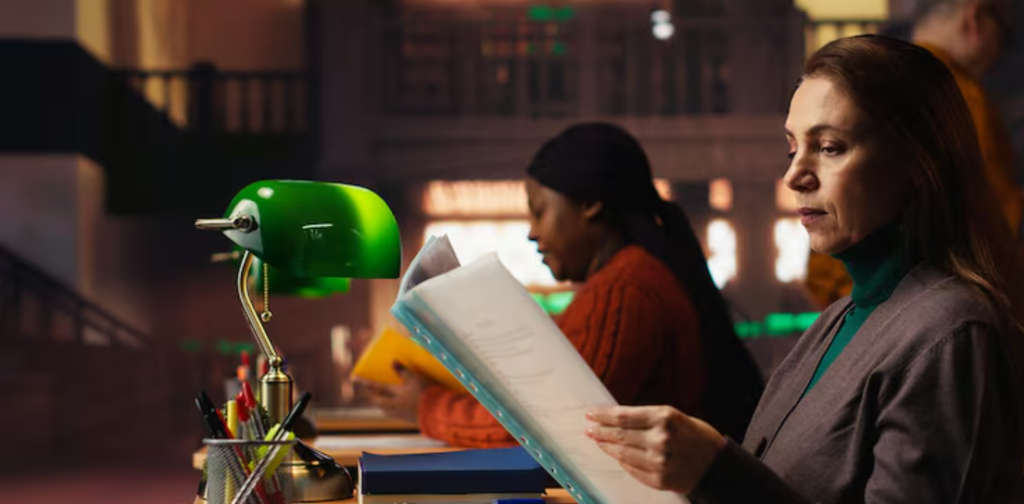
When reform does occur, it usually happens gradually before happening all at once. In the late 1990s, Europe changed its governance models due to what some referred to as the emergence of the “modern university”—more bureaucratic in practice but more effective on paper. There was a decline in academic freedom. Trust became strained. Artificial intelligence, remote learning, and a workforce that demands ongoing upskilling rather than a single four-year credential are driving this second shift. Micro-credentials are quietly becoming more popular. Modular, flexible learning is no longer a novel concept.
It’s still unclear if the traditional lecture completely vanishes or just gets smaller and more specialized. Flipped classrooms, in which students watch recorded material at home and spend class time debating, constructing, and solving problems, are being experimented with by some universities. AI tutors are becoming more popular among others, which is both encouraging and a little unsettling. Although there isn’t yet a Tesla-style disruption in academia, the elements are there: exorbitant prices, disgruntled customers, new technology, and a generation of students who don’t really believe the old promises.
As this develops, it seems like the next ten years will be more significant than the previous five centuries put together. The lecture might not end abruptly. It might simply disappear and be replaced by something messier, more engaging, and more human. For the first time in a long time, students are paying enough attention to ask why, so whatever takes its place will have to earn it.
Disclaimer
Nothing published on Creative Learning Guild — including news articles, legal news, lawsuit summaries, settlement guides, legal analysis, financial commentary, expert opinion, educational content, or any other material — constitutes legal advice, financial advice, investment advice, or professional counsel of any kind. All content on this website is provided strictly for informational, educational, and news reporting purposes only. Consult your legal or financial advisor before taking any step.
