

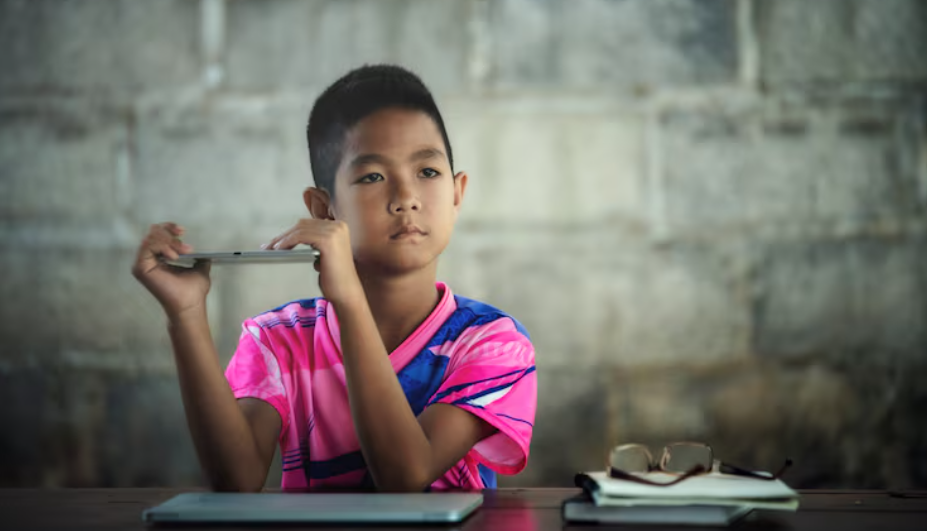
A government primary school with a broken gate and a board listing the names of students who stopped attending last year can be found somewhere outside of Multan, beyond the sugarcane fields and roadside tire shops. Half of the names would probably not return this year either, according to a teacher I spoke to some time ago, almost in jest. When she said that, she shrugged. The reality of Pakistan’s education crisis is more like that shrug than any statistic.
Even by the standards of a nation accustomed to bad news, the numbers themselves are startling. About 30 million kids do not attend school. When students do enroll in government primary schools, over half of them leave before completing their education.
| Key Information | Details |
|---|---|
| Country | Islamic Republic of Pakistan |
| Out-of-School Children | Approximately 30 million (ages 5–16) |
| Primary School Dropout Rate | Over 50% in government schools |
| Constitutional Guarantee | Article 25-A — free education for ages 5 to 16 |
| Major Reform Campaign | Alif Ailaan (launched 2013) |
| Primary Funder of Campaign | U.K. Department for International Development (DFID) |
| Campaign Supporters | Around 1.5 million signed up; 2+ million social media followers |
| Implementing Partners | DAI and Accadian Ltd. |
| Focus Areas | Budgets, teacher quality, data transparency, public schools |
| Population Impacted | The poorest and most vulnerable 40% of Pakistanis |
| Year of Renewed National Focus | 2018 general election, often called the “education election” |
Free education between the ages of five and sixteen is guaranteed by the constitution, but the politicians who drafted it largely ignored this promise. It’s difficult to ignore how infrequently this is discussed in the evening talk shows, which appear to be constantly preoccupied with exchange rates and palace intrigue.
There is a widespread, almost instinctive belief that increasing education will improve the nation. It won’t—at least not by itself. For many years, Pakistan has produced lawyers, engineers, accountants, and MBAs. Many of these graduates work as waiters in Dubai or as Uber drivers in Lahore. Thousands of people, including some with master’s degrees, reportedly applied for a position last year for a naib qasid, which is essentially an office peon. It’s obvious that something is wrong, and it’s not just the quantity of schools.
The fact that those at the top are already highly educated contributes to the issue. They attended Harvard, Oxford, LUMS, and Aitchison. To be honest, it seems a little dishonest to blame Rahim Yar Khan, an illiterate farmer, for the nation’s policy failures. Men with impressive degrees make the decisions that determine Pakistan’s economy, including those regarding taxes, energy, agriculture, and the rupee, in air-conditioned rooms. The nation would be very different if education were a guarantee of wisdom.
Then there is the more subdued rot that manifests itself in day-to-day existence. Why is it so difficult to locate a qualified plumber or a trustworthy electrician in a nation of 240 million people with severe underemployment? Most likely because most workplaces no longer value merit. Jobs are either bought outright or exchanged through connections. For a young man in Gujranwala, the wise investment isn’t a career path. It’s a cousin working for the appropriate government agency.
In an effort to shift the political discourse prior to the 2018 election, the Alif Ailaan campaign was born out of British aid funding in 2013. With 1.5 million signed supporters, rankings that humiliated provincial governments, and pressure on candidates to discuss schools rather than slogans, it had genuine momentum for a while. A portion of that energy endures. A large portion of it has vanished, absorbed into the routine of proclamations and inaugurations.
As this develops, it seems as though education in Pakistan has subtly transformed into something completely different—a diploma stamp, a credential filter, a method of sorting candidates for jobs that don’t actually exist. The nation continues to print degrees. Nothing comparable is consistently produced by the economy. In the meantime, the young person who did not go back to that Multan school is most likely working at a tea stall or folding bricks in a kiln. No one in Islamabad will notice when he grows up and the nation moves past him.
The fact that no single reform will solve this may be the most difficult thing to accept. Not more funds, not better educators, not more precise data. These are helpful, but a society that confuses credentials with education and education with opportunity is the real issue. The 30 million remain outside the classroom, outside the narrative, and outside the nation’s vision of its own future until that maze is resolved.
Disclaimer
Nothing published on Creative Learning Guild — including news articles, legal news, lawsuit summaries, settlement guides, legal analysis, financial commentary, expert opinion, educational content, or any other material — constitutes legal advice, financial advice, investment advice, or professional counsel of any kind. All content on this website is provided strictly for informational, educational, and news reporting purposes only. Consult your legal or financial advisor before taking any step.
