

Damelin, formerly known for its city center campuses and easily accessible education, is now in grave danger of closing. A Notice of Intent to terminate the institution’s registration was issued by the Department of Higher Education and Training in recent months, causing management, professors, and students to experience ongoing concern. In addition to having an impact on Damelin’s future, the closure would mark a significant change in the way South Africa oversees private higher education.
This wasn’t an impulsive choice. Damelin and its parent firm, Educor Holdings, have consistently disregarded the nation’s Higher Education Act during the previous few years. From failing to file yearly financial statements to disregarding fundamental operational regulations, the institution’s warning trail resembled a checklist of things not to do while operating a higher education service.
A turning point was the 2024 deregistration order, which was later contested. It was undoubtedly a generous chance for Damelin to resubmit documentation, make course corrections, and demonstrate that it could continue to serve students in a way that was both legally compliant and organized. Even that chance, however, was noticeably wasted. Director-General Nkosinathi Sishi claims that the department gave Damelin several extensions to turn in its 2024 annual report. One after the other appeared and disappeared.
| Key Detail | Information |
|---|---|
| Institution at Risk | Damelin College (South Africa) |
| Governing Authority | Department of Higher Education and Training (DHET) |
| Core Issue | Repeated non-compliance with Higher Education Act |
| Related Institutions | CityVarsity, ICESA City Campus (all owned by Educor Holdings) |
| Official Action | Notice of Intent to Cancel Registration (issued December 2025) |
| Current Status | Awaiting final decision; students and staff in limbo |
| Source | www.dhet.gov.za |
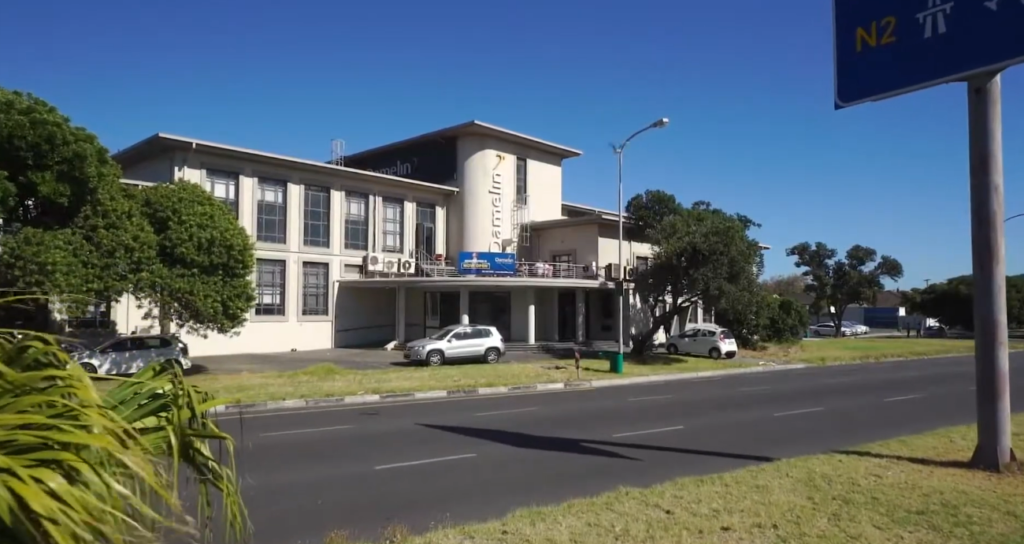
Officials have been noticeably more firm in their rhetoric. Sishi claimed that the organization is “just not able to cope with its mandate,” citing conflicting reports and inconsistent submissions. The use of such terminology by a department that has demonstrated patience indicates a barrier being reached, not just bureaucratic anxiety.
At the same time, student grievances have grown. Others said they were locked out of learning portals in the middle of the semester, while others explained how they received screenshots of their exam results. In one instance, a marketing student from Cape Town described how her final-year classes were abruptly canceled without an official email or other plan being provided.
One sentence caught my attention as I read a departmental summary of findings: “Institutions that fail to meet their legal and educational obligations cannot be allowed to compromise the futures of the people they serve.” It seemed grounded, unflinchingly fair, but not cruel.
There is a more subdued and emotional breakdown behind the regulatory notices. Hundreds of administrative and academic staff were hired by Damelin; many of them were under rising strain and had decreasing salaries. According to recent court decisions, Educor has been mandated to compensate former employees for wrongful termination with more than R1.3 million. This amount is a sign of broken trust and incompetent leadership, not merely financial mismanagement.
However, the fact that Damelin’s battle is taking place at a time when private education in South Africa is growing rather than contracting adds to the complexity of the situation. A R420 million facility in Sandton, which houses several businesses under a single, unified roof, was recently revealed by JSE-listed AdvTech. Nearly 5,000 students can be accommodated at STADIO’s Durbanville campus when it opens, while Akademia’s R1.8 billion Afrikaans-language university is currently being built.
It is quite illuminating to see this disparity. On the one hand, institutions are growing quickly thanks to funding, solid governance, and noticeably better compliance procedures. However, Damelin and its sister campuses are now examples of how long-standing reputations can be damaged when accountability and openness are disregarded.
Damelin has left a profound legacy. It acted as a link for decades for students who were not eligible to attend public colleges, working adults who wanted to return to school, and future professionals in a variety of areas. But too many students are now stuck in the middle of things due to operational delays and governance failings, which have seriously undermined that basis.
The organization is currently at a crucial point. The deregistration will take place if the necessary paperwork and structural changes are not filed quickly, the Department has stated. If that occurs, Damelin will probably close gradually to give students time to finish their current terms or transfer to other schools.
The department has thankfully stated that it will assist students during that change. However, the emotional cost should not be undervalued, particularly for part-time students balancing employment, family, and tuition. Revalidating credits, transferring coursework, and acclimating to new academic settings are all difficult tasks.
Even more uncertain is the future for employees. The remaining individuals are negotiating a scenario that has grown unstable from a professional and ethical standpoint. Many people went into education with the goal of fostering development, but they now have to deal with reputational harm, resource scarcity, and salary backlogs.
There is still cause for optimism. The government is making a strong statement by holding Damelin responsible: South African private education must meet the same standards as those in other countries. Schools that are concerned about the future of their kids will change and prosper. Those that don’t will have to make room for better models, regardless of legacy.
This choice might cause expectations in the industry to change. Now, compliance is required. Financial sustainability is the foundation of long-term service delivery and is not merely an administrative side issue. Most significantly, trust, transparency, and follow-through are now more critical aspects of the student experience than enrollment figures.
The next course of action is up to Educor. Although it is still limited, the window for course correction is still open. Even if they can show that they are willing to restructure internal processes and produce the required documents, the result can change. However, the margin for error has vanished.
Now, Damelin’s destiny lies at the nexus of reform and accountability. Whether it turns into a case study in recovery or a warning story will become clear in the upcoming weeks. In any case, the onus of adaptation has been lifted from students, and the accountability has returned to the people who had made the promises.
