

One particularly creative solution to the problem of educational access is the hybrid classroom. They enable students to attend classes regardless of their schedule, location, or health by fusing digital flexibility with physical engagement. The idea is remarkably similar to how workplaces are changing, with remote and hybrid systems now defining professional flexibility. Education is also redefining what learning access actually means by moving into that fluid rhythm.
They now include students who previously faced insurmountable obstacles, such as managing family responsibilities, living in rural areas, or coping with chronic illness. By enabling them to participate through a combination of virtual attendance and sporadic on-campus interaction, the hybrid model has significantly enhanced opportunities. It’s a striking illustration of how, when applied thoughtfully and empathetically, technology can transform exclusion into inclusion.
Leading the MIOP program at Kansas State University, Dr. Sarina Maneotis has personally observed this development. Her program combines immersive summer sessions with online coursework, making it ideal for working professionals. During short, intense residencies, students experience the collaborative spirit of academic life while maintaining their full-time jobs, demonstrating the structure’s remarkable effectiveness. She says, “Our students don’t have to choose between education and career.” “They are able to have both.” Students who might not have otherwise met have developed a stronger sense of community and dropout rates have been greatly decreased thanks to this model.
| Category | Details |
|---|---|
| Name | Dr. Sarina Maneotis |
| Profession | Teaching Assistant Professor at Kansas State University |
| Expertise | Industrial and Organizational Psychology, Hybrid and Online Learning Models |
| Contributions | Oversees the Applied Master’s in Industrial and Organizational Psychology (MIOP) Program |
| Awards | Recipient of Kansas State’s 2023 Global Campus Excellence in Online Teaching Award |
| Philosophy | Believes hybrid education bridges flexibility with connection, creating a more inclusive academic experience |
| Reference | https://www.facultyfocus.com/articles/online-education/the-best-of-both-worlds-exploring-the-benefits-and-challenges-of-hybrid-education/ |
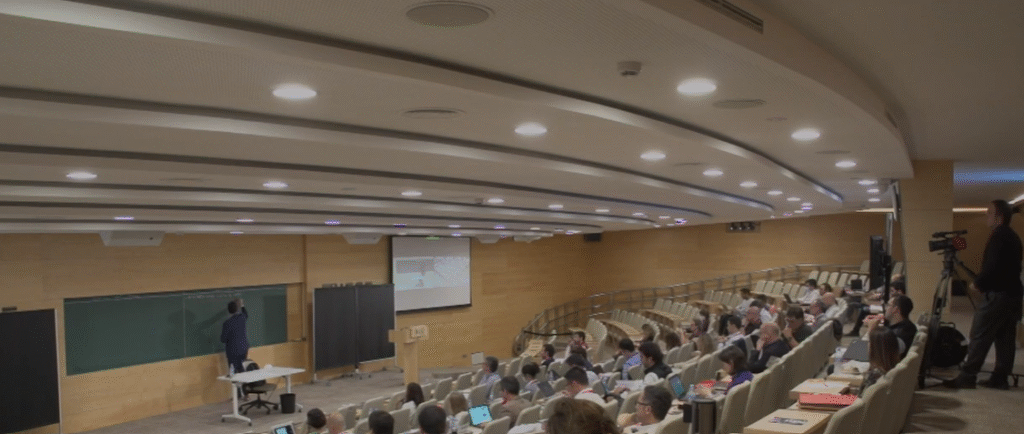
The flexibility of hybrid education is what makes it so appealing. It accommodates various learning styles by permitting both live interaction and asynchronous study. While some students do best in quiet online environments, others get their energy from face-to-face interaction. Because of the flexibility, a highly adaptable learning ecosystem is produced, appealing to a generation that is used to constant digital interaction.
However, this adaptability necessitates responsibility. Discipline and self-direction are traits that students need to develop because they reflect the demands of contemporary workplaces. These qualities are becoming more and more valued by employers, who view hybrid learning as a training ground for the hybrid workforce. Businesses that understand that access to education fosters innovation, such as Microsoft and IBM, have made significant investments in digital learning platforms for staff members. Students can work and learn from any location, creating a smooth transition between education and employability.
But there are many obstacles in the way of achieving equitable hybrid education. For millions of people, access to dependable devices and fast internet continues to be a barrier. Progress is still hampered by the digital divide, especially in underfunded districts with limited access to technology. “Hybrid learning works beautifully for those with resources but leaves others behind,” as one educator on Reddit put it. The sentiment draws attention to a harsh fact: access is about capacity rather than just connection. Insufficient infrastructure makes flexibility a myth.
Attention should also be paid to the emotional aspect of learning. Despite their effectiveness, hybrid classrooms run the risk of weakening the social ties that give education its transformative power. The energy of a shared classroom moment—the laughter, the silence, the sparked curiosity—rarely comes through in a video conversation. The difficult task of striking a balance between emotional authenticity and digital innovation now falls on educators. “Technology can connect us, but connection still requires intention,” as Dr. Maneotis notes.
The capacity of hybrid learning to customize instruction is among its most unexpected advantages. These days, adaptive platforms can monitor development, assess flaws, and provide personalized feedback. While some students can advance more quickly, others who struggle with statistics can benefit from additional digital resources. In conventional classrooms, this level of personalization would have been unimaginable. Teachers analyzing data while retaining human empathy is an example of how artificial intelligence and human insight can work well together.
Higher education has also benefited greatly from hybrid models. The hybrid MIOP program at Kansas State has a 95% retention rate, while the fully online MBA program has an 81% retention rate. These figures demonstrate how engagement can be significantly increased by even a small amount of physical contact. Even a brief encounter with peers and teachers fosters a sense of community that keeps students motivated long after they return to their home offices. It serves as a gentle reminder that education is relational rather than just transactional.
This balance is starting to be replicated by institutions in the US and abroad. Live hybrid instruction models that link remote teachers with in-person classrooms have been developed by platforms such as Elevate K-12. The strategy is very effective; schools in areas that are difficult to staff can reach certified teachers online without sacrificing quality. In rural districts where learning opportunities were previously restricted by teacher shortages, the results have been especially noticeable.
Around the world, nations like Singapore and Finland have incorporated hybrid education into their national policies, investing in digital infrastructure and providing blended pedagogy training to their teachers. Their efforts show that system-wide strategy, not sporadic experimentation, is the key to success. By emphasizing technological preparedness and inclusivity, they have transformed hybrid learning from a luxury into a public good.
However, detractors contend that hybrid models might lessen the rigorousness of conventional education. They draw attention to issues with academic integrity, motivation, and attention span. However, rather than being structural defects, many of these problems are the result of transitional pains. Like any new ecosystem, hybrid classrooms are still developing and adjusting to their surroundings. Practices advance, regulations change, and what initially appeared to be experimental eventually becomes the norm.
The societal ramifications in the long run are just as strong. By subtly redefining the parameters of education, hybrid learning has made lifelong learning more accessible. Retirees, professionals, and parents are going back to school without compromising their daily responsibilities. Education is becoming a continuous journey that adjusts to life’s stages rather than disrupting them, thanks to this fluidity.
A change in culture is also at work. Institutional boundaries no longer apply to education. It is distributed, mobile, and cooperative. Students form global communities of knowledge by learning from peers on different continents in addition to their professors. By its very nature, hybrid education promotes mutual problem-solving and cross-cultural understanding—values that are desperately needed in today’s world.
