

Markets have always been emotional arenas that alternate between worry and hope. But as technology developed, an interesting thing happened: investors began to depend more on manufactured emotion than intuition. It’s as though algorithms started to sense human behavior and turned sentiment into a commodity that could be traded.
These systems use sophisticated natural language processing (NLP) and machine learning (ML) to interpret not only headlines but also tone, sarcasm, and subtle clues from tweets or earnings calls. They function similarly to digital empaths, being extremely adept at deciphering emotional cues that human analysts might miss. AI analyzes investor sentiment rather than speculating about it, sifting through millions of tweets and reports to identify quantifiable trends that remarkably forecast future market movements.
This change has been especially creative. Unstructured data from news, forums, and analyst opinion is analyzed using models like FinBERT, which then assign a sentiment score to each item. When combined, such numbers show whether caution or optimism is more prevalent. The method has significantly increased market swing prediction accuracy, particularly in erratic periods when human emotions are running high.
Table
| Category | Details |
|---|---|
| Topic | Artificial Emotion and AI-Driven Sentiment in Financial Markets |
| Core Focus | Understanding how AI systems interpret investor emotions to shape market trends and trading decisions |
| Key Technologies | Natural Language Processing (NLP), Machine Learning (ML), Transformer Models like GPT and FinBERT, Sentiment Scoring Systems |
| Used By | Hedge Funds, Trading Firms, Market Analysts, and Financial Institutions |
| Key Impact | Transforming investor psychology into measurable data, reshaping how emotions influence prices |
| Authentic Reference | Forbes: How AI Sentiment Analysis Is Changing Stock Price Predictions |
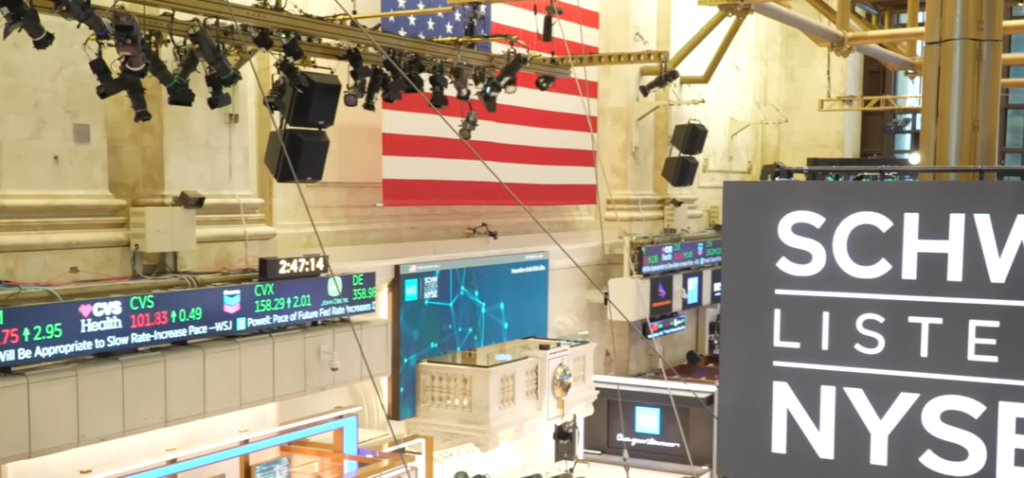
Financial organizations have incorporated these systems into automated trading platforms through strategic partnerships. Trades now happen milliseconds after a breaking headline or viral post thanks to the integration of emotion data with real-time market feeds. Machines that predict emotion before it shows up in market fluctuations have greatly shortened the once slow reaction time of human traders.
Intuition used to be a source of pride for investors. They now have faith in models that can read online conversations. Results are the driving force behind this transformation; it is not an accident. Traditional projections have been repeatedly exceeded by algorithms trained to sense collective emotion. From the enthusiasm surrounding a new product to the anxiety over an earnings shortfall, they recognize the emotional tremors that reverberate throughout financial ecosystems.
Once a burden, emotion is now data. Additionally, such data provides a competitive advantage after being processed through layers of neural networks. Automated sell signals, which frequently occur days before the stock really drops, might be triggered by a dramatic downturn in the positive mood surrounding a large tech company. It’s statistics enhanced by emotional intelligence, not magic.
Amazingly, the human mind has always been reflected in the financial market. Today, however, it not only reflects it, but also anticipates it. For investor sentiment, these models function similarly to weather forecasts. They assist funds in preparing for emotional storms long before they show up on trading screens by monitoring tone changes across millions of digital connections. During volatile market cycles, such insight has been very helpful.
This revolution is not without its difficulties, though. The quality of the data is still a weakness. Irony and cultural nuances are frequently difficult for AI systems to understand. A caustic tweet about a CEO could be mistaken for compliments. Models are constantly being improved by researchers to account for these nuances, but emotion is inherently difficult to perfectly codify. However, sentiment analysis continues to be a very robust paradigm for comprehending behavioral finance in spite of the noise.
Businesses are quickly changing. Statements are being drafted by investor relations teams with sentiment analytics in mind. In an earnings conference, changing the word “challenging” to “manageable” can flip AI readings from unfavorable to neutral. Tone is now money. CEOs are becoming more conscious of the fact that their language affects algorithms that affect billions of dollars in market value in addition to conveying confidence.
This change represents a more profound cultural transition. Human emotions, which were formerly impulsive and impossible to measure, are becoming methodically digitized. The market now predicts reactions before they happen rather than waiting for people to react. Artificial emotion, in a way, serves as a mirror reflecting how the general mood influences financial behavior, sometimes enhancing optimism and other times stifling it.
This is exciting and disturbing for traders. Dashboards that glow with color-coded emotions have taken the place of the previous rhythm of following instincts. Traders hear the whispers of the algorithms. Those who resist run the risk of slipping behind, while those who adapt become quicker and more accurate. The way pilots initially opposed autopilot before discovering its dependability is quite comparable to this scenario.
However, there are philosophical ramifications to this increasing dependence on manufactured empathy. Do markets become more rational or just more effective at capturing irrationality if they are powered by computers that mimic human emotion? Both could be the answer. AI provides clarity by converting sentiment into numerical values, but it also reduces human complexity to emotion scores.
These days, investors must navigate an environment where data seems to come to life. Emotion is now a quantifiable forecast rather than an unpredictable storm. The AI that decodes it behaves more like a conductor coordinating the tempo of financial behavior than a cold machine. It is a highly adaptable instrument that has been tuned to record the symphony of human mind in action.
Disclaimer
Nothing published on Creative Learning Guild — including news articles, legal news, lawsuit summaries, settlement guides, legal analysis, financial commentary, expert opinion, educational content, or any other material — constitutes legal advice, financial advice, investment advice, or professional counsel of any kind. All content on this website is provided strictly for informational, educational, and news reporting purposes only. Consult your legal or financial advisor before taking any step.
