

One type of institutional ambition is one that is not readily apparent. Press releases and camera ribbon-cutting ceremonies are not held by it. Instead, it manifests itself in grant applications, faculty research agendas, and the gradual development of collaborations between departments that don’t typically communicate with one another. That’s the kind of goal that George Mason University in Fairfax, Virginia, is currently pursuing, and it’s something to be aware of.
MasonARC, the George Mason University Arts Research Center, is at its core. It is a multidisciplinary project that resulted from an improbable partnership between the university’s psychology department, the College of Visual and Performing Arts, and the College of Education and Human Development. Simply put, the objective is to investigate how children’s and adults’ cognitive and social development is impacted by creative engagement, such as theater, visual art, and imaginative play. Not in a gentle, qualitative manner. in a quantifiable, empirically supported, and scientific manner. That’s a more uncommon goal than it seems.
America’s arts education system has long relied heavily on faith. We teach kids to perform and draw because we have a gut feeling that it benefits them. Relatively little rigorous research has been done to support that belief in ways that meet behavioral science standards. MasonARC is essentially placing a wager that George Mason is the ideal location to close that gap and that the time has come to do so. It’s still unclear if that wager will be profitable.
Dr. Thalia R. Goldstein, a psychology professor who has spent years examining the precise impacts of theater education on children’s social and emotional development, is one of the researchers working on the most intriguing projects within this framework. Her work takes seriously the question of whether learning to pretend to be someone else, hold a character in your mind, and navigate a scene does anything quantifiable to a young person’s capacity for empathy, perspective-taking, and self-regulation. Anyone who has spent time with children acting out plays will understand this type of research intuitively, but it has seldom received the controlled investigation it merits. One gets the impression from reading Goldstein’s work that this field of study has been waiting a long time for someone to treat it seriously and with true scientific rigor.
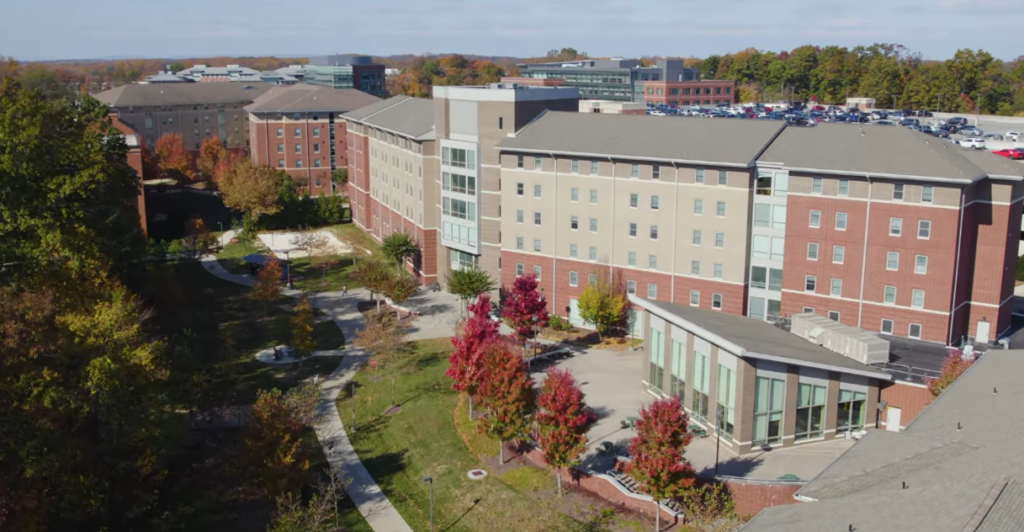
This push is more credible at Mason than it might be at a smaller school because of the larger institutional context. The university has been actively developing its research infrastructure for a number of years. The College of Humanities and Social Sciences are now housed under one roof thanks to the new Horizon Hall, a $191 million project that completely changed the Fairfax campus. This physical proximity allows interdisciplinary work to take place rather than just be discussed at faculty meetings. Students from 47 different majors attend the Mason Innovation Exchange, which is housed inside Horizon Hall. At the same time, the university is expanding its Grand Challenge Initiative with a $15 million investment across six research areas, funding quantum computing research, and pursuing partnerships with the U.S. Air Force.
MasonARC is a university actively working toward something greater, which fits into that larger pattern.
The most telling signal is probably the NEA Research Lab designation. Mason is positioned as a federally recognized hub for precisely the type of evidence-based arts education research that has been absent from the national discourse, and the National Endowment for the Arts does not award that designation lightly. This may continue to be a specialized endeavor, significant in scholarly circles but unseen by the general public. In ten years, the research being conducted in Fairfax may have subtly changed the way that art is taught in American classrooms. That’s not a promise. However, it’s a real possibility, and it’s the kind of thing that usually goes unnoticed until the work is finished.
Disclaimer
Nothing published on Creative Learning Guild — including news articles, legal news, lawsuit summaries, settlement guides, legal analysis, financial commentary, expert opinion, educational content, or any other material — constitutes legal advice, financial advice, investment advice, or professional counsel of any kind. All content on this website is provided strictly for informational, educational, and news reporting purposes only. Consult your legal or financial advisor before taking any step.
