

A sixteen-year-old named Jake was learning how to write a CV somewhere outside of Leeds, in a community center off a road that most people drive by without giving it much thought. He had had difficulty in school. He had no idea what would happen next. He received a laptop, free internet access, and non-rushing staff from the Sky Up Hub. He found his first apprenticeship in a matter of months. He is currently undergoing training in the manufacturing of prosthetic limbs, a career he claims he didn’t previously believe was feasible for someone like him.
The government has been recounting versions of this compelling tale a lot lately. They are numerous in the one-year review of the UK’s Digital Inclusion Action Plan, which was released in March 2026. For example, Lucy received a phone through Virgin Media O2’s Community Calling program and used it to safely contact support workers for the first time, while Maria, a single mother, received a refurbished laptop after fleeing domestic abuse. These are actual individuals. The specifics are important. However, the fact that 1.6 million people in the UK still do not have an internet connection at all puts everything in perspective.
The first government document of its kind in ten years, the Digital Inclusion Action Plan, was released in February 2025 with the declared goal that everyone should be able to connect and use the internet, regardless of their circumstances. Since then, the government has launched a £11.9 million Digital Inclusion Innovation Fund to support 85 projects throughout England, piloted a device donation program that has donated about 200 refurbished computers to community centers and homelessness charities, and secured industry pledges that, according to conservative government estimates, have helped over a million people access donated devices or cheaper connectivity. Vodafone claims to have surpassed its goal. Virgin Media O2 confirmed that it had reached the target of supporting one million individuals who were digitally excluded. These figures are not insignificant.
And yet. In the UK, eight million adults still lack even the most basic digital skills. For the same goods and services, people without internet access typically pay 25% more than those who do. This is a hidden poverty tax that exacerbates all other disadvantages. The difference between those who have a laptop at home and those who don’t is more than just a hassle for kids. It establishes whether homework is completed, whether a student in Year 9 can follow an online course, and whether a teen applying for their first job can conduct themselves professionally. A girl who was helped by the DVLA’s device donation had been gradually trying to purchase a laptop with her own savings. She was a secondary school student. That seemingly insignificant detail reveals something unsettling about how long Britain has been at ease assigning this issue to someone else.
| Initiative | UK Digital Inclusion Action Plan (Year One Review) |
|---|---|
| Published | February 2025 (Plan); March 2026 (One Year On Report) |
| Lead Department | Department for Science, Innovation and Technology (DSIT) |
| Key Fund | £11.9 million Digital Inclusion Innovation Fund (DIIF) |
| Projects Supported | 85 projects across England; devolved funding to Scotland, Wales, Northern Ireland |
| Devices Donated | ~22,200 via IT Reuse for Good Charter (June–Dec 2025) |
| People Supported | 1 million+ connected by Virgin Media O2; 1 million+ by Vodafone |
| Key Partners | Google, Sky, BT, Vodafone, Virgin Media O2, Good Things Foundation, Age UK |
| Target Group | Low-income families, disabled children, older people, care leavers, domestic abuse survivors |
| Headline Gap | 1.6 million people still completely offline; 8 million adults lack basic digital skills |
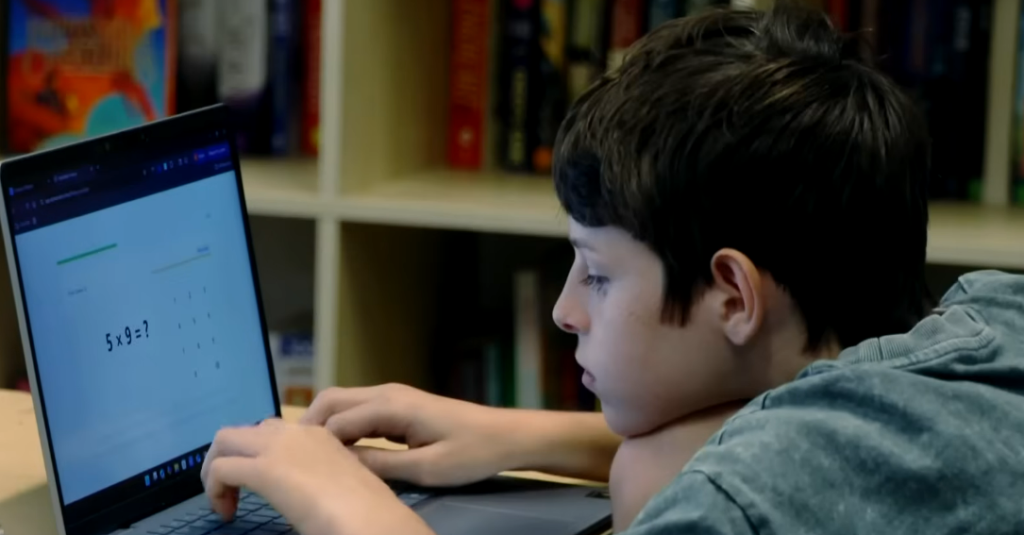
Reading the government’s own progress report gives the impression that the machinery is actually working now. Every quarter, the Ministerial Group for Digital Inclusion convenes. In late 2024, DSIT created a special unit for digital inclusion and skills. The team now includes an academic with experience in inclusive design. In collaboration with local councils, Google is providing AI skills training for care leavers in the Northeast. It may seem improbable, but Sheffield United’s community foundation is using e-sports to help young people develop digital confidence. Instead of creating chatbots for the digitally excluded community, the University of Bristol is working with them. These methods, at the very least, show some comprehension of the real mechanisms of exclusion, which involve not only access but also confidence, trust, and relevance.
The more difficult question is whether all of this contributes to something structural or if it continues to be a collection of well-funded pilots that reach the most accessible individuals while ignoring the most difficult cases. The device donation program was extended until August 2026, but it’s still unclear if it will become a permanent initiative. DSIT is updating the Essential Digital Skills Framework, the national standard for what constitutes basic digital competency, for the first time in years. AI literacy is now part of the updated survey, but it won’t be released again until 2027. 2027 is not an abstract date on a policy timeline for kids who are currently enrolled in school and navigating an educational system that increasingly assumes a device at home. Three academic years remain.
According to different estimates, there are more than 200 million unused gadgets in UK cabinets and drawers. By the end of 2025, the IT Reuse for Good Charter, which was started in collaboration with the Good Things Foundation, VodafoneThree, and Deloitte, had 43 signatories and had enabled about 22,200 donations in its first half-year. That’s a beginning. It’s also a small portion of what would be available if the practical and cultural obstacles to donation were actually eliminated. Observing this area gives the impression that Britain is progressing, albeit not as quickly as the issue requires.
Disclaimer
Nothing published on Creative Learning Guild — including news articles, legal news, lawsuit summaries, settlement guides, legal analysis, financial commentary, expert opinion, educational content, or any other material — constitutes legal advice, financial advice, investment advice, or professional counsel of any kind. All content on this website is provided strictly for informational, educational, and news reporting purposes only. Consult your legal or financial advisor before taking any step.
