

A certain type of business does a great deal of work in the background of the global economy, such as sourcing cocoa for chocolate bars in European supermarkets, roasting coffee beans in cafes from Sydney to São Paulo, and sourcing grains and edible oils that feed people in Asia and Africa. Until something significant happens, retail investors hardly pay any attention to these businesses. That type of business is Olam Group. With Temasek Holdings as a key shareholder, it has been a part of Singapore’s business scene for decades, operating in over 60 countries and processing agricultural commodities on an industrial scale. For the majority of recent memory, the share price on the SGX has been fluctuating below SGD 1. The company then declared in April 2026 that the Chairman, Group CEO, and Group CFO would all be leaving at the same AGM. In just seven days, the stock increased by 13%.
The change in leadership is significant enough to warrant notice. It is uncommon for all three of a company’s top executives to leave at the same time in any setting, and for a business the size and complexity of Olam, with complex supply chains spanning agricultural regions in West Africa, Southeast Asia, South America, and beyond, the timing and extent of the transition raise serious concerns. This might be a planned, well-organized handover that the business has been internally preparing for. Another possibility is that the market is interpreting the departures as a clearing of the deck, a reset that eliminates some uncertainty instead of introducing it. At least among short-term traders, the 13 percent increase in the share price in the week after the announcement would seem to support the latter interpretation.
IMPORTANT INFORMATION — OLAM GROUP LIMITED (SGX: VC2)
| Field | Details |
|---|---|
| Company Name | Olam Group Limited |
| Stock Symbol | SGX: VC2 (also OLAG.SI for Olam Group) |
| Founded | 1989 (originally in Nigeria, moved to Singapore) |
| Headquarters | Singapore |
| Sector | Agrifood / Agricultural Commodities |
| Business | Sourcing, processing, packaging, and merchandising of agricultural products worldwide |
| Key Shareholders | Temasek Holdings (major shareholder) |
| Current Share Price | ~SGD 0.98 (April 2026) |
| 52-Week Range | SGD 0.96 – SGD 1.11 |
| 52-Week High Date | August 14, 2025 |
| Price-to-Book | 0.57x |
| Price-to-Sales | 0.12x |
| P/E Ratio (Current) | ~26.8x |
| Peer P/E Average | ~21.5x |
| Industry Average P/E | ~17.1x (Asian Consumer Retailing) |
| DCF Fair Value Estimate | ~SGD 2.61 per share (one model) |
| Implied Intrinsic Discount | ~62% |
| 7-Day Share Price Return | +13.29% |
| 30-Day Share Price Return | +11.36% |
| 3-Year Total Shareholder Return | -27.86% |
| Leadership Changes | Group CEO, Group CFO, and Chairman all stepping down at 5th AGM (April 2026) |
| Subsidiaries / Divisions | Olam Agri (food ingredients, grains, animal feed), Olam Food Ingredients (OFI) |
| Global Presence | Operations across 60+ countries |
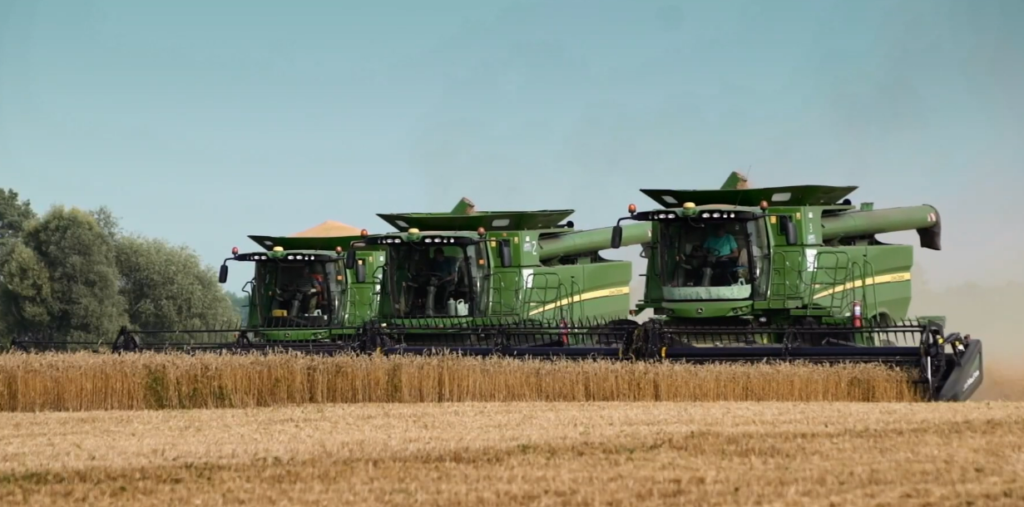
Beneath all of this is a striking picture of valuation. According to one DCF model, Olam’s fair value is roughly SGD 2.61 per share, which implies a 62 percent discount from the current trading price of about SGD 0.98. The company is only trading at 0.12 times revenue and 0.57 times book value. For a company that is actually operating and making money at scale, those figures are incredibly low. Peer companies in the food processing and consumer industries in Asia trade at P/E multiples of 21 to 25 times earnings.
Olam is slightly above peers on that same measure, at about 26.8 times, which makes the significant discount on a book value and revenue basis more intriguing rather than less. These two facts can be reconciled by either the market applying a persistent structural discount for complexity, debt, and governance uncertainty, or the earnings quality is lower than the revenue scale suggests.
The figure that most likely explains investor reluctance is the three-year total shareholder return of minus 27.86 percent. Even after deducting dividends, shareholders who owned Olam for three years saw a significant loss of value. A single week of encouraging momentum or an announcement of a leadership change are unlikely to dispel the skepticism that is typically created by such a track record. There is a perception in the market that Olam needs to show that the restructuring efforts of the last few years have improved the underlying business rather than just streamlined the corporate structure, and that this can be done through results rather than announcements.
It is important to consider the context in which all of this is taking place. Citing rising energy costs due to disruptions in the Strait of Hormuz, Singapore’s MAS tightened monetary policy in April. Olam’s sourcing costs and the margins it can make on actual commodity flows are impacted by the overall macroeconomic environment, which includes high commodity prices and currency pressures. Transportation, processing, and refrigeration are all dependent on energy prices, so an agricultural commodities company is not exempt. Investors will learn far more about Olam’s future as a company from observing how it manages a leadership change and navigates this unique environment than from any one share price change this month.
Disclaimer
Nothing published on Creative Learning Guild — including news articles, legal news, lawsuit summaries, settlement guides, legal analysis, financial commentary, expert opinion, educational content, or any other material — constitutes legal advice, financial advice, investment advice, or professional counsel of any kind. All content on this website is provided strictly for informational, educational, and news reporting purposes only. Consult your legal or financial advisor before taking any step.
