

One obvious reason why parents are drawn to Maker schools is that they transform learning into action. Children construct drones, create smart devices, and test prototypes that have the potential to transform daily life rather than reciting lessons from a whiteboard. The classrooms are lively, boisterous, and collaborative; they resemble a contemporary tech startup more than a conventional school.
Teachers spearheading this change contend that this method is especially helpful in preparing students for an innovative future. Traditional education, according to Southern Cross University professor David Lynch, is “industrialized and outdated,” highlighting the need for modern education to shift from passive knowledge transfer to active creation. His realization is strikingly obvious: those with critical thinking and creative action will rule the future.
Todd Keruskin, an assistant superintendent at the Elizabeth Forward School District in Pennsylvania, has been turning classrooms into “Dream Factories.” In these areas, students use 3D printers to design chocolate molds, digital tools to create packaging, and marketing videos to introduce their small brands. This combination of science, business, and design transforms abstract concepts into real-world experiences. Since the start of this model, student engagement has significantly improved, according to Keruskin, who also notes that enthusiasm for learning has increased and dropout rates have significantly decreased.
Profile: Maker Schools Movement
| Field | Details |
|---|---|
| Concept | A hands-on, project-based educational approach that empowers students to design, build, and innovate through real-world problem-solving. |
| Key Advocates | Gaby Galvin (U.S. News), David Lynch (Southern Cross University), Todd Keruskin (Elizabeth Forward School District). |
| Founding Inspiration | The global “Maker Movement,” merging STEM education with creativity, design thinking, and entrepreneurship. |
| Core Focus | Encouraging curiosity, experimentation, and resilience through project-based, student-led learning. |
| Educational Approach | Integrates engineering, arts, science, and technology with collaborative design and critical thinking. |
| Student Impact | Builds self-confidence, problem-solving ability, and teamwork while reducing dropout rates. |
| Institutional Partners | Carnegie Mellon University, MIT, NuVu Studio, and Case Western Reserve University. |
| Notable Projects | Student-built robots, Braille printers, sustainable devices, and social innovation projects. |
| Social Impact | Fosters creativity, entrepreneurship, and adaptability essential for the modern economy. |
| Reference | https://www.usnews.com/news/maker-cities/articles/makers-movement-changes-the-educational-landscape |
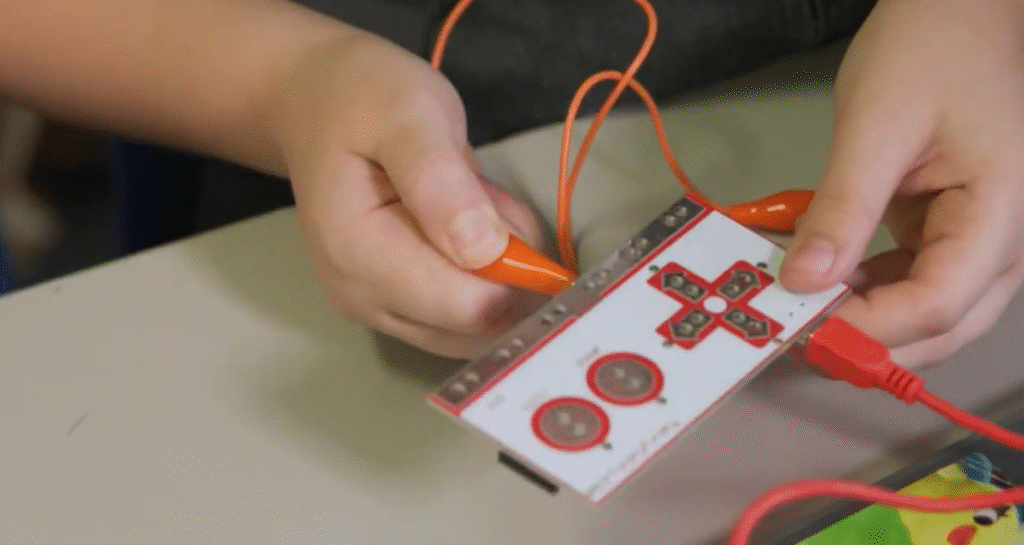
Although the idea of maker education is not new, its quick uptake seems especially creative. It sprang from the larger Maker Movement, a culture centered on open-source cooperation, engineering ingenuity, and do-it-yourself projects. This movement in education found support from parents who wished to foster their kids’ curiosity and resilience while teaching them useful skills.
Students at Cambridge’s NuVu Studio work without strict subjects or grades. Rather, they select design problems that relate to actual problems, such as environmental design, health innovation, or urban safety. Their prototypes, like illuminating jackets for cyclists or magnetic wallets, show how young students can be creative and responsible. With every experiment, it’s education that feels alive and is always changing.
Another reason why this change has drawn parental attention is that it reflects the spirit of contemporary entrepreneurship. Parents in the creative and tech sectors frequently view Maker schools as continuations of their own work culture, which emphasizes teamwork, experimentation, and lifelong learning. According to a mother from San Francisco, her daughter spends the afternoons writing code and the mornings building sensors. “It’s about solving a problem, not about studying for an exam,” she stated.
Universities are also realizing how transformative the movement can be. The seven-story innovation lab known as “ThinkBox” at Case Western Reserve University serves as an example of how curriculum and creativity can coexist in higher education. Every level denotes a distinct stage of the creation process, ranging from networking and ideation to prototyping and launch. This model has proven especially successful in assisting students in moving from concepts to businesses, fostering confidence that goes well beyond the classroom.
Equally inspiring is Maker education’s social reach. Underprivileged communities are given access to resources that foster creativity and problem-solving skills through neighborhood projects like the San Diego Central Library’s “Innovation Incubator.” A paraplegic who turned personal limitation into public inspiration by creating a hand-cranked bike system is one of its most inspiring success stories. These tales demonstrate how, when education breaks down barriers, creativity and inclusivity can coexist harmoniously.
The way that Maker schools bring learning and joy back together is what makes them so captivating. These programs foster cooperation, patience, and emotional intelligence by implementing curiosity-driven projects. Students discover that failure is data, not defeat. This way of thinking, which has proven to be incredibly successful in research and business, is now influencing the future of education.
Technology analyst Tim Bajarin and other experts think this method is very effective at preparing students for the challenges that lie ahead. He emphasizes how practical education produces the kind of problem-solvers that businesses are looking for—people who can blend creativity and logic. “Those who can build something new rather than memorize something old will be rewarded in the jobs of tomorrow,” he says.
Notwithstanding the movement’s extraordinary potential, difficulties still exist. It takes money, qualified teachers, and steadfast community support to create Maker spaces. But innovative solutions have surfaced. Schools have started using grants, collaborations, and even crowdsourcing initiatives. For instance, the Children’s Museum and seven schools in Pittsburgh raised more than $100,000 to construct shared Maker spaces. In addition to being resourceful, this type of cooperation is incredibly resilient as a long-term model for educational reform.
Disclaimer
Nothing published on Creative Learning Guild — including news articles, legal news, lawsuit summaries, settlement guides, legal analysis, financial commentary, expert opinion, educational content, or any other material — constitutes legal advice, financial advice, investment advice, or professional counsel of any kind. All content on this website is provided strictly for informational, educational, and news reporting purposes only. Consult your legal or financial advisor before taking any step.
