

Teachers hear the saying “What works in your classroom, share it with your colleagues” so frequently that it has lost all meaning. It sounds like an invitation to create something cumulative, innovate, and share good ideas. In reality, the majority of educators who have worked in a real school are aware that invitations seldom come with the time, resources, institutional approval, or cultural safety necessary to follow through on them. The brilliant idea remains in the room where it originated. It never comes up to the coworker across the hall. The district proceeds to the following project.
Researcher Rebecca E. Wolfe’s recent paper from the Hoover Institution’s Education Futures Council, released in February 2026, provides a rigorous framework for what seasoned educators have long suspected: the American educational system is not just failing to promote innovation. It is actively preventing it through its incentive design and structure.
The paper arrives at a depressing time. The results of the 2025 National Assessment of Educational Progress, which is the closest thing the US has to a trustworthy national report card, confirmed what was already known rather than serving as a wake-up call. In addition to reading and math, students are performing worse than they did decades ago in mental health, attendance, and engagement—all of which have reached all-time lows. Simultaneously, a significant 2025 consensus report from the National Academies of Sciences, Engineering, and Medicine discovered that, despite genuine promise, educational innovations frequently fail to scale or sustain due to fragmented implementation and a lack of systemic support. The Hoover paper quotes Charles Payne as saying, “The essential problem in our schools isn’t children learning; it is adult learning.”
The foundation of Wolfe’s framework is a seemingly straightforward question: how does a good idea actually make its way from the classroom where a teacher found it to the larger system where it might benefit more students? She contends that the answer is almost never found through the channels that policy presumes. District-wide rollouts, mandatory training days, and formal professional development have a dismal history as innovation catalysts. Relationships are what really move ideas. In particular, the unofficial, trust-based networks that educators create over time, frequently through discussions in teacher lounges and hallways rather than in formal meetings. According to a study of Norwegian educators that was referenced in the article, the most creative teachers typically have the biggest and most varied personal networks and are well-connected to other educators who have faith in them. The implication is unsettling: investing in relationship infrastructure might be more important than investing in a different curriculum package if you want innovation to spread.
Can We Get There from Here? The New Framework That Argues America’s Education System Is Built to Resist Its Own Improvement
| Category | Details |
|---|---|
| Report Title | “Can’t Get There from Here: A Framework for the Start, Spread, and Scale of Bottom-Up Innovation in Education” |
| Author | Rebecca E. Wolfe, PhD |
| Publishing Institution | Hoover Institution, Stanford University — Education Futures Council |
| Publication Date | February 2, 2026 |
| Report Length | 28 pages |
| Core Argument | The current education ecosystem is structurally hostile to teacher-led innovation; only a paradigm shift will change this |
| Key Evidence Cited | 2025 NAEP scores at historic lows; NASEM 2025 consensus report finding innovations consistently fail to scale |
| Three Phases of Innovation | Catalyst → Adoption and Adaptation → Scaling and Sustaining |
| Three Modes of Innovation | Everyday (small, spontaneous); Strategic (aligned with goals); Radical (transformative) |
| Key Finding on Networks | Most innovative teachers have largest and most diverse personal networks; organic relationships outperform required professional development |
| Key Finding on Space | Physical corridors and informal spaces (teacher lounges, hallways) are underestimated catalysts for idea sharing |
| Primary Obstacle | Compliance-driven, risk-averse culture created by decades of standardised testing and top-down mandates |
| Educator Burnout Factor | “Burnout-related resistance can occur as a way for staff to conserve their energy and well-being” |
| Policy Recommendation | Reward ambitious adaptive teaching; build “fail-forward” cycles; reframe teaching as inquiry-based profession |
| Quote from Charles Payne | “The essential problem in our schools isn’t children learning; it is adult learning” |
| AI Context | Framework designed to remain relevant as AI enters classrooms — future research to test whether AI constitutes genuine disruption or latest version of the blackboard |
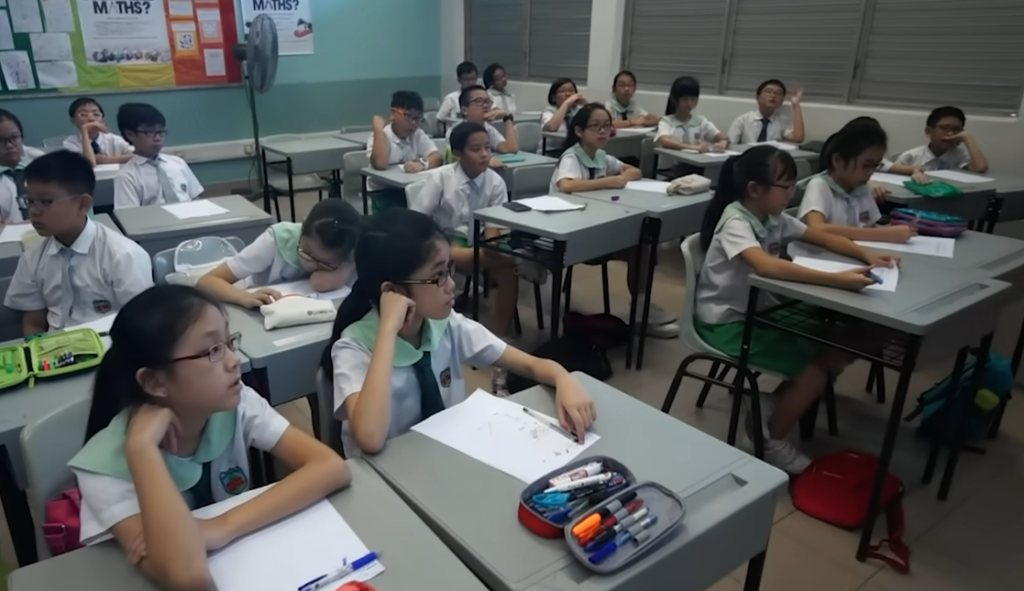
When you consider how education reform has been pursued over the past thirty years, this finding seems almost counterintuitive. The prevailing reasoning has been top-down: find what works through research, require its application, assess compliance, and repeat. According to the Wolfe framework, this reasoning is fundamentally incorrect. Genuine improvement typically comes from bottom-up innovation, which is the kind that begins with a particular teacher responding to the specific needs of specific students. It is the system’s responsibility to foster an environment in which such improvisation can be recognized, encouraged, and eventually disseminated. Instead, because experimentation entails risk and risk jeopardizes standardized test scores that determine funding, ratings, and careers, the system has been designed to minimize precisely that type of experimentation.
It is worthwhile to sit with the self-perpetuating cycle that the paper identifies. Teachers have been conditioned to avoid failure due to decades of emphasis on test scores. Avoiding risk entails avoiding failure. Avoiding risk entails sticking to tried-and-true strategies that seem secure even when they are clearly ineffective. Leaders who might otherwise encourage experimentation often prevent it in advance, not out of malice but as a logical reaction to a culture that penalizes deviation. In Wolfe’s words, the outcome is a system that is “optimized for control and efficiency” rather than for learning, for both adults and students.
This is made worse by burnout. According to the paper, putting new demands for innovation on top of a workforce that is already worn out doesn’t lead to innovation; instead, it creates resistance, a kind of self-preservation among individuals who are already carrying more than they can reasonably handle. Many coached teachers have an intuitive understanding of the phenomenon: new practices don’t stick until they can be used in the classroom tomorrow, not after a six-month implementation timeline. The best inventions spread swiftly because they address a pressing, identifiable issue. Before they notice an improvement, they don’t need anyone to completely revamp their practice.
Wolfe’s suggestions for decision-makers are pragmatic rather than hopeful. Policy needs to go beyond what she refers to as “window-dressing involvement” of classroom teachers, which is consultation that takes place after decisions have already been made. It is necessary to reorganize accountability systems so that adaptation is rewarded instead of compliance. Schools must incorporate “fail-forward” cycles so that tried-and-true concepts can be examined, improved, or dropped without the failure being permanently linked to a school’s or teacher’s record. Additionally, teaching itself needs to be reframed as an inquiry-based improvement profession rather than a means of delivering standardized content, both in terms of practice and cultural perception.
In the current American educational environment, where discussions about curriculum content, testing requirements, and school choice are often more contentious than discussions about how innovation actually moves through a system, it is still unclear whether any of this is politically achievable. Reading the paper gives me the impression that the diagnosis is more certain than the prognosis. The framework is well-supported and cohesive. To its credit, the paper does not pretend to address the question of whether the institutions it describes are capable of changing their own incentive structures.
Disclaimer
Nothing published on Creative Learning Guild — including news articles, legal news, lawsuit summaries, settlement guides, legal analysis, financial commentary, expert opinion, educational content, or any other material — constitutes legal advice, financial advice, investment advice, or professional counsel of any kind. All content on this website is provided strictly for informational, educational, and news reporting purposes only. Consult your legal or financial advisor before taking any step.
