

The way that education values its most diverse minds has been gradually changing across the United States in a quiet revolution. It started with tenacious advocacy, silent resolve, and profoundly human conviction rather than with clamor or rebellion. Over time, educators, parents, and legislators came together in support of a single idea: every child should have the chance to learn in a dignified manner.
Often referred to as the “silent revolution,” this movement has done a remarkable job of overcoming the long-standing gap between equality and exclusion. Its origins date back to the middle of the 20th century, when it was common for schools to exclude children with disabilities, to hide them in institutions, or to write them off as incapable. Even talented kids were occasionally ignored and expected to thrive without support or empathy. Both groups were overlooked by a system that valued consistency over uniqueness.
This started to change when parents demanded justice as a matter of citizenship rather than charity, motivated by the moral fervor of the civil rights movement. They made arguments that were remarkably similar to those of racial segregation activists. They maintained that education was a right and not a privilege. The ensuing legal momentum resulted in historic decisions like Mills v. Board of Education and Pennsylvania Association for Retarded Children v. Commonwealth. A precedent was set by these cases: no child could be excluded from school because of a disability.
The Silent Revolution in Special Needs Education US
| Title | The Silent Revolution in Special Needs Education |
|---|---|
| Focus | Civil rights and educational reform for children with disabilities and gifted students |
| Historical Roots | The Education for All Handicapped Children Act of 1975 |
| Legal Milestones | Pennsylvania Association for Retarded Children v. Commonwealth (1971); Mills v. Board of Education (1972) |
| Core Principle | Free and appropriate education for every child regardless of disability |
| Estimated Students Impacted | 7.8 million with disabilities; 2 million gifted learners |
| Societal Impact | Shift from segregation to inclusion in mainstream education |
| Notable Figures | William C. Greer, Frederick J. Weintraub, Alan Abeson |
| Reference | https://www.ed.gov/special-education |
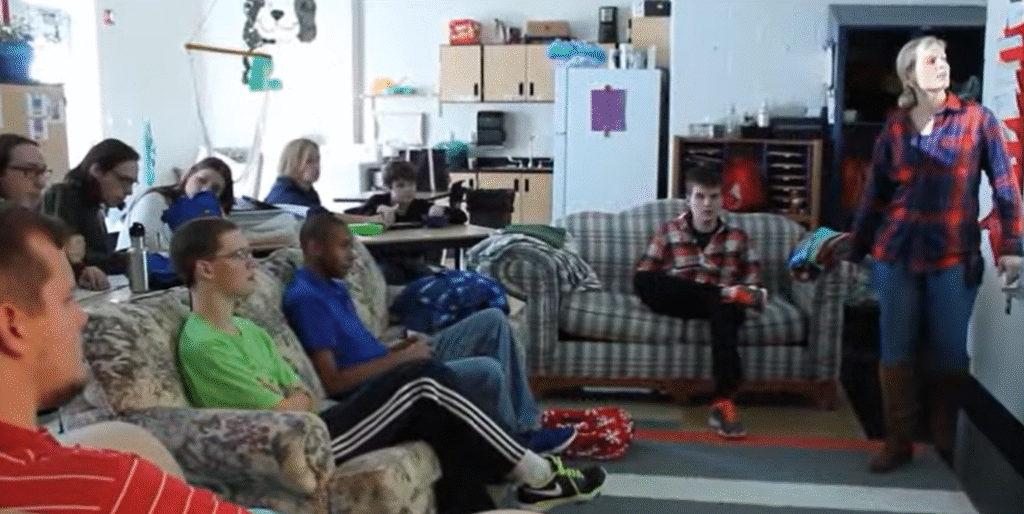
The Education for All Handicapped Children Act of 1975 marked the pinnacle. It required all states to give every child, regardless of disability, free and suitable education. This law served as the cornerstone of contemporary inclusion and subsequently developed into the Individuals with Disabilities Education Act (IDEA). It was especially novel in that it mandated that schools provide instruction in the “least restrictive environment,” a notion that radically changed the nature and structure of public education.
Schools started integrating children who had previously been segregated behind institutional walls by utilizing this legal framework. The shift was emotional as well as cultural. Students became more accepting, teachers more flexible, and classrooms more sympathetic. For all parties concerned, these advancements have significantly raised the standard of learning. Research has repeatedly demonstrated that inclusive classrooms help all students develop better social skills, collaborate more effectively, and value diversity.
Parents who had no voice before were now empowered advocates. Many describe how their activism changed the future for their kids. They established advocacy organizations that are still active today, forged alliances, and sent letters to Congress. Their tenacious efforts, which guarantee accountability and long-term reform, are especially advantageous to the current state of education. This parent-teacher collaboration changed the definition of involvement in a child’s education.
Teachers also played a significant role in creating this change. Once constrained by strict curricula, they have since embraced flexible teaching models that prioritize behavioral understanding, emotional support, and individualized learning. Under the direction of imagination and empathy, their classrooms developed into miniature versions of inclusive environments. These teachers found that special education strategies, such as differentiated instruction, visual aids, and sensory-friendly environments, were highly adaptable and increased student engagement across the board.
The outcomes were remarkable over time. Once-segregated children started to flourish socially and academically. Students with disabilities gained self-expression and confidence, while gifted students received specialized attention that matched their curiosity. These groups’ peaceful integration showed that, when welcomed, diversity improves rather than interferes with education.
Another significant factor was cultural influence. Public personalities like Christopher Reeve and Temple Grandin contributed to a change in how people thought about potential and disability. Their advocacy brought attention to the exceptional contributions that people with disabilities could make in addition to their participation in society. These role models were particularly explicit in demonstrating that human value should be determined by ability rather than limitations.
The advantages of this evolution in education were very effective from an economic standpoint. Schools greatly decreased the long-term expenses of institutional care or remedial programs by offering support early. Furthermore, communities and workplaces have seen quantifiable improvements as a result of graduates with disabilities becoming more productive and independent. This illustrates how empathy-driven policy can produce useful and long-lasting outcomes.
This progress has been further accelerated by technological advancement. Access to communication and educational resources has increased thanks to assistive technologies, which range from text-to-speech software to adaptive AI platforms. These developments are especially creative because they turn conventional classrooms into inclusive, participatory environments. They also represent a larger social movement in which progress is increasingly equated with accessibility.
But there have been difficulties for the movement. Disparities in funding still exist, and certain school districts find it difficult to adapt to the changing requirements of special education programs. Nevertheless, resilience exists despite these difficulties. Communities are still advocating, innovating, and moving forward, which is a constant reminder of this revolution’s resilient spirit.
Disclaimer
Nothing published on Creative Learning Guild — including news articles, legal news, lawsuit summaries, settlement guides, legal analysis, financial commentary, expert opinion, educational content, or any other material — constitutes legal advice, financial advice, investment advice, or professional counsel of any kind. All content on this website is provided strictly for informational, educational, and news reporting purposes only. Consult your legal or financial advisor before taking any step.
