

A few days’ drive from the closest town of any size, deep in the Peruvian Amazon, there is a river that does something that rivers shouldn’t do. It boils. Not in a symbolic sense. The water temperature rises from a cool 20 degrees Celsius upstream to almost 100 degrees in the hottest parts, and steam rises in clouds through the overhanging jungle canopy, giving the impression that the air is inside a greenhouse. In just a few minutes, animals that fall in—such as frogs, snakes, and birds—are cooked from the inside out. The Asháninka people who live there refer to it as Shanay-Timpishka. It is regarded by scientists as one of the planet’s most remarkable natural thermal experiments. Additionally, scientists are increasingly using the river as a window into the effects of global warming on freshwater ecosystems globally, not just in one extreme geothermal location.
The Boiling River’s heat originates from subterranean geothermal forces that do not have a volcanic origin, which scientists are still trying to fully comprehend. The other rivers and lakes in the world are warming due to atmospheric factors. But the biological consequences, the research suggests, are not entirely different. River heat waves are growing two to four times faster than air heat waves, according to a 2025 study of American rivers. The water is outpacing the warming of the atmosphere rather than merely following it. As the drought worsens, there is less groundwater influx, which typically cools rivers during the summer. Thermal energy is being directly transferred into streams by urban runoff from heated roads and asphalt. Heat is taken up by reservoirs and released downstream. As a result, the world’s inland waterways are warming more quickly than the atmosphere above them.
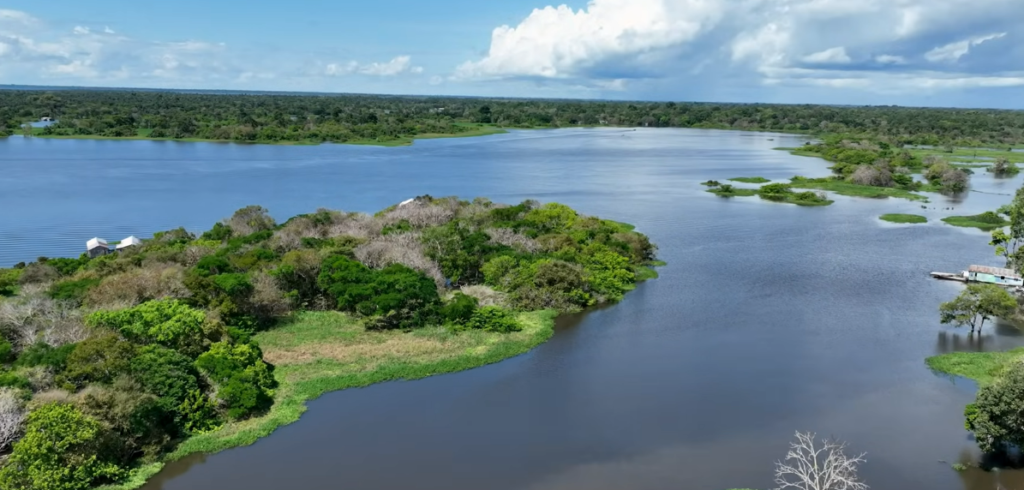
The Amazon River near Tefé in northern Brazil experienced temperatures above 30 degrees Celsius for a number of days in August 2023. It was sufficient at that temperature, which is about the same as a warm bath. In a matter of days, over 100 pink river dolphins washed up dead on Lake Tefé’s shores, their bodies collected by nearby communities who had witnessed the animals perish in water that appeared to be perfectly normal. One of the most endangered mammals in the world, river dolphins reproduce slowly and are deeply embedded in a food chain that makes it difficult for them to withstand shocks. Climate projections did not account for the deaths in Tefé. They were recorded in a year that was already the warmest in human history, and they were linked to a documented temperature exceedance.
IMPORTANT INFORMATION TABLE — RIVER & FRESHWATER WARMING
| Category | Details |
|---|---|
| Core Phenomenon | Global warming is heating rivers, lakes, and streams — in some cases faster than the surrounding air temperature |
| US River Heatwave Rate | A 2025 study found heat waves in US rivers are increasing 2–4 times faster than air heat waves |
| Chesapeake Bay Streams | 79% of streams feeding the Chesapeake Bay showed significant water temperature rises over five decades (2015 analysis) |
| Amazon River (Aug 2023) | Exceeded 30°C for several days; resulted in deaths of over 100 pink river dolphins |
| Lake Surface Warming (Global) | Average lake surface water temperature rose ~0.34°C per decade between 1985 and 2009 (235 lakes studied) |
| Boiling River Location | Shanay Timpishka, Peruvian Amazon — geothermal river reaching near-100°C; surrounded by forest averaging 4°C warmer than surroundings |
| Boiling River Biodiversity Finding | Every 1°C increase in mean annual temperature = 11% reduction in tree diversity; 2°C warming could eliminate 20% of Amazonian tree species |
| Oxygen Depletion | Warmer water holds less dissolved oxygen; warmer organisms also metabolize faster, compounding suffocation risk for aquatic life |
| Fish Die-Off Projections | Climate warming projected to cause a 6- to 34-fold increase in lake fish die-off events by 2100 |
| Key Driver 1 | Rising air temperatures directly heat surface water |
| Key Driver 2 | Urban heat runoff — hot asphalt runoff enters streams, raising temperatures |
| Key Driver 3 | Reduced groundwater influx — groundwater normally cools rivers in summer; drought reduces this effect |
| Key Driver 4 | Loss of riparian shade — deforestation exposes rivers to direct sunlight |
| Cold-Water Species at Risk | Trout, salmon, bull trout — facing 11–22% habitat loss; migrating to higher elevations |
| US Stream Warming Trend | Long-term warming of 0.009–0.077°C per year, especia |
Understanding the chemistry of warm water is important because it clarifies why temperature increases that appear insignificant to humans can have disastrous effects on aquatic life. There is less dissolved oxygen in warmer water. That on its own would be problematic. However, fish and other aquatic organisms’ metabolic rates are accelerated by warming, which means that they need more oxygen at the exact moment when the water has less of it. A slow physiological squeeze that weakens fish, impairs reproduction, and ultimately kills populations that have nowhere cooler to go is what researchers refer to as the “suffocation effect,” which is caused by a combination of increased demand and decreased supply. When you combine that with algal blooms, which heat aggressively encourages and which further deplete oxygen as they die and decompose, the result is water that is still obviously wet and appears to be a river, but it is becoming more and more hostile to the life it once supported.
Reading the data on freshwater warming gives me the impression that the public discourse on climate change has significantly understated the extent of the harm occurring in locations that people don’t frequently visit. Sea level rise, extreme weather, and rising land temperatures are the main topics of climate reporting. Lakes and rivers make up a more subdued portion of the narrative. However, a 2015 study of streams that supply the Chesapeake Bay discovered that 79% of them had experienced notable increases in water temperature over the previous 50 years. It is estimated that between 11 and 22 percent of suitable habitat has already been lost by cold-water fish species like bull trout and Atlantic salmon, and this trend is continuing. In certain respects, tropical fish species are even more vulnerable because they already live close to the upper limit of their thermal tolerance, which means that even a slight increase could cause them to surpass the point at which they can survive.
Something that is especially significant in this context was discovered during the research at Peru’s Boiling River. Overall tree diversity decreased by 11% for every degree Celsius increase in mean annual temperature, according to researchers who set up temperature loggers along the river and surveyed the tree communities from its cool upper reaches into its hottest accessible sections. Two degrees of global warming could wipe out about 20% of tree species if that relationship holds true at the scale of the Amazon as a whole. They were careful to point out the substantial uncertainties. One-fifth. Heat alone, not from land clearing or chainsaws. The fish in the rivers beneath those trees, the animals that rely on them, and the insects that pollinate them are all interconnected in ways that make each species’ extinction a withdrawal from an already depleted account rather than a singular occurrence.
One of the most practical and economical solutions is to restore riparian buffers by planting trees and dense vegetation along riverbanks. This reduces the direct solar loading on water surfaces and filters part of the nutrient-rich runoff that promotes algal growth. Another technique with proven advantages is controlling reservoir operations to release deeper, colder water downstream. It also helps to reduce urban impervious surfaces, which direct heated runoff into streams. These are actual measurements, not hypothetical ones. What they have in common is a reliance on local investment and political will that, in most places, still falls short of the pace of change they are attempting to address. The rivers are not waiting to be caught up by the policy cycle. They are warming in this decade as a result of decisions that were made decades ago and are still being made today.
Disclaimer
Nothing published on Creative Learning Guild — including news articles, legal news, lawsuit summaries, settlement guides, legal analysis, financial commentary, expert opinion, educational content, or any other material — constitutes legal advice, financial advice, investment advice, or professional counsel of any kind. All content on this website is provided strictly for informational, educational, and news reporting purposes only. Consult your legal or financial advisor before taking any step.
