

When considering what’s going on at Cornell right now, one image stands out: a biology student sitting at a lab bench, sketching rather than pipetting or calculating. Holding a watercolor. A specimen of a bird before them. The objective is to compel the eye to slow down and truly see, not to create art for a gallery wall.
In a way, this is the main justification for Cornell’s increasing efforts to incorporate fine arts methods into science courses. Additionally, the argument is more serious than it first seems.
The second part of Cornell’s Center for Teaching Innovation’s larger “Art of Teaching” series, a faculty panel titled “The Art of the Lab,” was announced at the beginning of February 2026. Three faculty members—a biomedical engineer, a biological and environmental engineering professor, and a physics lecturer—met to talk about how they’re rethinking lab courses around open-ended inquiry, iteration, and something more akin to true creative thinking rather than set procedures. Really, it’s a little event. A panel in a biotechnology building lasting ninety minutes. However, the points it makes are worth considering.
The undergraduate science lab had a well-known script for a very long time. Students came with a protocol, followed the instructions, recorded a result that essentially validated what was already stated in the textbook, and departed. It had a certain coziness. Rigor disguised as predictability. However, it didn’t always result in students who knew how to think when the protocol ran out—that is, when there wasn’t a pre-written answer key waiting somewhere for the problem in front of them.
The challenge was put simply by CTI senior associate director Carolyn Aslan: how do you update a lab for the kinds of issues students will actually encounter? environmental emergencies. gray areas in ethics. systems that defy easy fixes. No one is prepared for these kinds of issues by a well-practiced experiment with a known result. This conflict may have been present in science education for many years, but it seems more pressing now. The old lab model was designed for a more orderly world, but the problems are becoming messier.
It is worthwhile to take a closer look at what Cornell is doing in a number of its programs. Biology students learn how to record species in gouache and watercolor through the Bartels Science Illustration Program, which is administered by the Cornell Lab of Ornithology. The reasoning is almost elegant in its simplicity: you cannot memorize something from a distance if you must accurately draw it. You must examine the precise texture of a feather, the actual shape of a wing, and the way light strikes a curved surface. In other words, students start doing observation instead of just assuming they are.
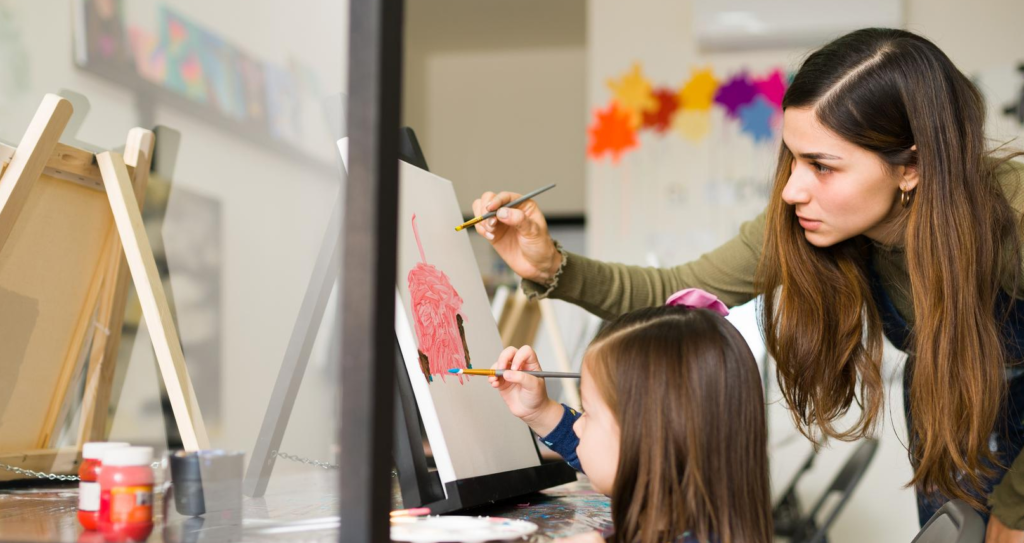
How different that is from a multiple-choice test on the same subject is difficult to ignore. One results in a pupil who can recognize the name of a species, while the other results in a student who has gazed at the structural reality of that species for twenty minutes. A similar notion is promoted by Cornell’s Humanities Lab: dismantling the barrier between the arts and sciences actually sharpens both fields rather than diluting them. The fact that a university with Cornell’s scientific reputation is taking this kind of transdisciplinary work seriously says something, even though it’s still unclear if it will become the norm or remain an experiment at the periphery.
One of the panelists, Shivaun Archer, a three-time teaching award winner, has dedicated years to creating labs that enable undergraduates to use biomedical nanotechnology while providing them with practical training in research techniques rather than merely a checklist to follow. Another panelist, Sunny Jung, oversees a biorobotics lab where students construct real robots, some modeled after the movements of animals and others intended to track the health of plants. In the past, Jung collaborated with others to create a robot that resembled a snail and could collect microplastics from the ocean. Students tend to remember that type of work better than a semester of planned experiments.
The idea that the greatest scientists have always been, in some ways, artists seems to be what Cornell is truly attempting to reclaim here, something that traditional science education subtly lost. Not in a gentle or symbolic manner. In the literal sense that they pay close attention to details, accept ambiguity, experiment without a certain outcome, and have a strong concern for the dissemination of knowledge. The physics lecturer on the panel, Cristina Schlesier, has been collaborating with colleagues to move lab courses toward inquiry-based models in which students formulate their own research questions. Learning that is surprisingly challenging. After years of education, the majority of students are trained to respond to questions rather than ask them.
One of the first universities in the United States to include laboratory instruction as a fundamental component of undergraduate education was Cornell. that history is important. Instead of viewing these experiments as flimsy substitutes for actual science, it indicates that the organization has the resources and credibility to treat them seriously. What’s currently taking place feels more like an honest confrontation with what it was always meant to be than a break from that tradition.
Disclaimer
Nothing published on Creative Learning Guild — including news articles, legal news, lawsuit summaries, settlement guides, legal analysis, financial commentary, expert opinion, educational content, or any other material — constitutes legal advice, financial advice, investment advice, or professional counsel of any kind. All content on this website is provided strictly for informational, educational, and news reporting purposes only. Consult your legal or financial advisor before taking any step.
