

Small boats continue to push out into seemingly calm, almost indifferent waters just before sunrise along Spain’s northern coast. As always, nets fall. However, the fishermen now use longer pauses and shorter sentences in their speech. They can’t quite quantify it, but they can definitely sense that something has changed beneath the surface.
Meanwhile, scientists are attempting to quantify that anxiety. Fish biomass has been declining at rates close to 20% annually in some regions of the Mediterranean, the North Atlantic, and the Northeast Pacific. That is not a gradual decline. It’s sudden, almost unnerving. It’s difficult to ignore how quickly a stable system can start to falter once temperature takes center stage.
The actual warming isn’t as significant as people might think. degrees in fractions. One tenth here, one more there. However, the effects of each increase appear to be disproportionate. Even a 0.1°C increase every ten years, according to researchers, can reduce fish populations by more than 7%. These tiny steps might be riskier because they don’t feel urgent—at least not until the damage is already apparent.
An even more striking example is provided by the anchovy industry in coastal Peru. There were times when the smell of fish lingered in the air long after sunset, boats returned loaded with catch, and docks were bustling with activity. The anchovies were then forced farther offshore as the waters gradually warmed. The fishery eventually closed. Nearly overnight, a $1.4 billion industry came to a halt. There’s a sense that this was a preview rather than a singular incident.
The illusion produced by marine heatwaves complicates the narrative. Abrupt warming can momentarily, and sometimes significantly, increase fish populations in colder waters. Stocks rise. Catches get better. It appears to be a recuperation. However, it is short-lived. Populations frequently decline at the same rate as temperatures stabilize. It’s still unclear if fisheries managers are overestimating how much the ocean can continue to supply due to pressure from short-term gains.
| Category | Details |
|---|---|
| Core Issue | Record ocean warming impacting global fisheries |
| Biomass Decline | Up to ~19.8% annual decline in key regions |
| Temperature Impact | Every 0.1°C rise → ~7.2% drop in fish populations |
| Affected Regions | Mediterranean, North Atlantic, Northeast Pacific |
| Heatwave Impact | Up to 43.4% biomass loss in extreme events |
| Temporary Booms | Up to 176% increase in colder regions (short-lived) |
| Economic Loss Example | Peru anchovy fishery loss ~$1.4 billion |
| Global Risk | Up to 25% drop in sustainable fish catch by 2100 |
| Key Drivers | Climate change, marine heatwaves, overfishing |
| Reference Links | The Guardian – Ocean Warming Study |
| Oceanographic Magazine – Marine Heatwaves Impact |
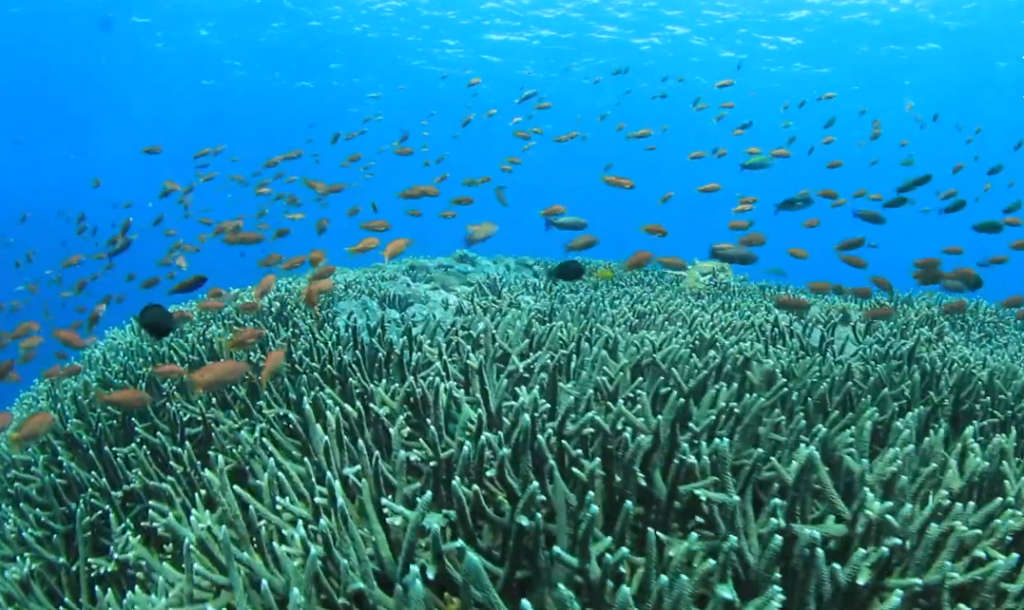
Fish themselves are traveling at the same time, heading deeper and northward in search of colder weather. In certain parts of the Mediterranean, native clams have all but vanished, to be replaced by species that belonged elsewhere. Ecosystems are being quietly rearranged, with no obvious boundaries. The issue is that economies, laws, and fishing rights are still set in stone. Fish are mobile. Policies don’t.
Additionally, something more subdued is taking place. Fish are getting smaller. Not significantly, but enough to be significant. Because warmer water contains less oxygen, species must adapt by becoming smaller and having fewer offspring. It’s a small detail that might go unnoticed on its own, but it adds up over entire oceans. Reduced stocks, smaller fish, and fewer progeny. It becomes hard to ignore the math.
Of course, overfishing is still a problem. Over 30% of the world’s fish stocks are already overfished. The pressure feels more intense now that the oceans are warming. What was once manageable, if not ideal, might be evolving into something completely different. a system that is under stress from several sources, each of which strengthens the others.
Aquaculture, which is frequently offered as a remedy, is starting to reveal its own weaknesses. Large numbers of farmed fish are being wiped out by warmer waters, which are speeding up disease outbreaks. Billions are used to quantify losses. Observing workers examine empty pens while standing close to a coastal farm gives the impression that the backup plan isn’t as dependable as previously thought.
It’s difficult to ignore the wider ramifications. For billions of people, fish is their main source of protein. They are essential to entire coastal economies. However, the ocean is beginning to bear the consequences of its long-term role in absorbing excess heat from the atmosphere. There is a perception that the crisis is not only ecological but is also subtly turning into an economic, social, and even political one.
The answer still seems hesitant. Scientists discuss international collaboration, marine protected areas, and climate-adaptive fisheries management. It all makes sense. Even necessary. However, given how slowly policy tends to advance, there is some uncertainty regarding whether these measures will be implemented in time to keep up with the current rate of change.
None of this is theoretical out at sea. Nets are lighter. Species show up in unexpected places. Seasons change unexpectedly. When they can, fishermen make adjustments to their routes and targets in the hopes that the next trip will be better. It is occasionally the case. It usually isn’t.
Disclaimer
Nothing published on Creative Learning Guild — including news articles, legal news, lawsuit summaries, settlement guides, legal analysis, financial commentary, expert opinion, educational content, or any other material — constitutes legal advice, financial advice, investment advice, or professional counsel of any kind. All content on this website is provided strictly for informational, educational, and news reporting purposes only. Consult your legal or financial advisor before taking any step.
