

Something subtle starts to take place all over the world on the morning of March 8. Office desks are decorated with purple ribbons. Banners honoring female leaders are displayed in university hallways. Photographs of mothers, activists, scientists, and educators abound on social media.
This is how International Women’s Day 2026 comes every year: subtly at first, then progressively becoming a global discussion.
For over a century, the day has been observed. In 1911, labor movements in North America and Europe organized protests demanding safer working conditions and the right to vote, which led to the first International Women’s Day events. These early demonstrations were political and boisterous. Women’s demands for equality reverberated through streets that were not used to hearing them, and crowds crowded into public squares.
In retrospect, it’s probable that the early organizers had little idea how widespread the observance would grow.
| Event | International Women’s Day 2026 |
|---|---|
| Date | March 8, 2026 |
| Type | Global observance |
| First Observed | 1911 |
| Recognized By | United Nations and global organizations |
| Core Focus | Gender equality, women’s rights, social and economic progress |
| 2026 Campaign Theme | “Give To Gain” |
| UN Focus | Rights. Justice. Action |
| Countries Observing | Celebrated in more than 100 countries |
| Historical Origin | Labor and suffrage movements in early 20th-century Europe and North America |
| Reference | International Women’s Day official website: https://www.internationalwomensday.com |
| Additional Information | United Nations Women’s Day page: https://www.un.org/en/observances/womens-day |
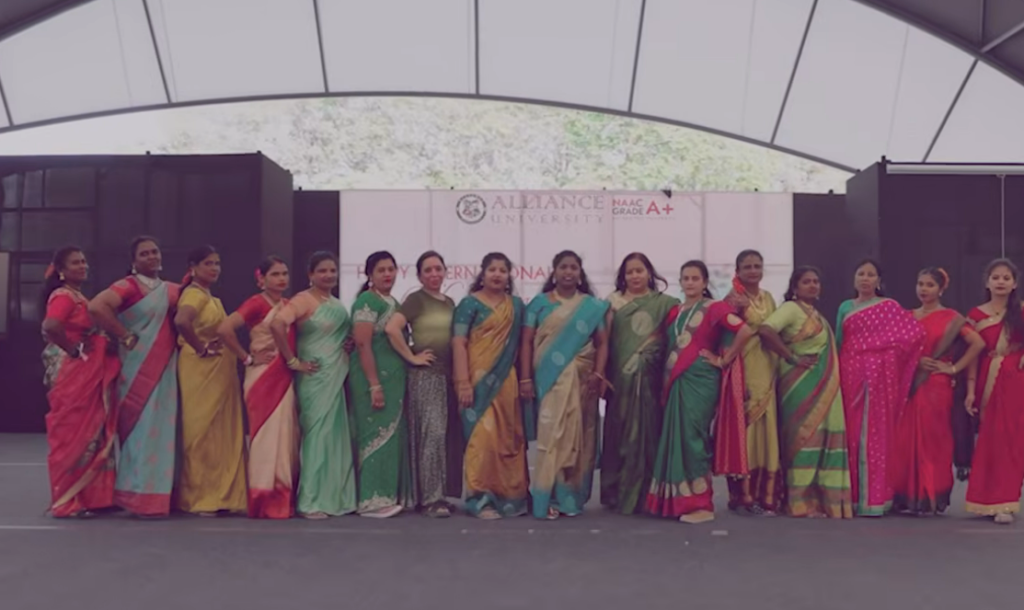
Across continents and cultural boundaries, Women’s Day is now observed in over 100 countries. There are marches and rallies in some cities. In others, hotel halls are filled with panel discussions and conferences. Celebrations at work can occasionally seem more modest: a quiet recognition ceremony, a guest speaker, or a breakfast meeting.
However, the same mix of pride and introspection is frequently present in the atmosphere.
It’s difficult to overlook the minor details that are rarely mentioned in formal speeches when strolling through the downtown business district on Women’s Day. As a senior executive discusses her career path, a group of young interns listen intently. An auditorium at a university where students are discussing policies regarding equal pay. A local nonprofit is holding a fundraiser to support programs for girls’ education.
These scenes have a humble, almost everyday vibe. However, they show how Women’s Day has progressively come to mean more than just activism.
That change is reflected in the 2026 theme, “Give To Gain.” The expression implies that investment—the decision of communities, businesses, and governments to support women’s advancement—is just as important to progress as protest. It’s a compelling concept.
Nonetheless, some conversations contain a hint of skepticism.
because the statistics supporting gender equality are still unyielding. In many nations around the world, women continue to have fewer legal rights than men. In all industries, wage disparities still exist. Furthermore, millions of women are still impacted by violence against them every year, according to global data.
Every celebration tends to have those statistics hovering subtly in the background.
Women’s Day 2026 seems to have a more nuanced tone than it did in the past, based on the conversations that have taken place this week. There is still hope. But a certain impatience is also present.
The United Nations, for instance, has highlighted themes such as “Rights, Justice, Action,” highlighting the legal safeguards for women and girls. The focus is purposeful. Access to justice is still unequal in many parts of the world, and victims of discrimination or violence often find it difficult to deal with the legal system.
Whether international commitments will result in significant reforms is still up in the air.
Even so, there are still moments on Women’s Day that feel surprisingly hopeful in spite of these difficulties.
A panel of female diplomats discussed negotiating peace agreements in conflict areas earlier this week at a university event in Vienna. One of them talked about how, years ago, she was the only woman in the negotiation room. She smiled slightly and said, “The room looks very different today.”
Something significant was caught in that brief observation.
It is rare for change to occur in sudden and dramatic ways. Usually, it happens in silence, one law, one promotion, one generation at a time.
The day also has a very personal component. While international organizations concentrate on policy discussions, people typically use their personal experiences to understand Women’s Day. For some, it’s about paying tribute to grandmothers and mothers who toiled in challenging circumstances. For others, it’s about honoring female coworkers who broke down barriers in formerly male-dominated fields.
As you watch this happen, you get the impression that the day is reflecting back to you. It illustrates how societies view women and how that view is changing annually.
The day is not without criticism, of course. Corporate marketing campaigns, according to some observers, have weakened the original activist spirit. Deeper conversations about equality can occasionally be overshadowed by flower promotions and advertising slogans.
The criticism isn’t wholly unfounded. However, beneath the surface, something genuine endures. Fairness, opportunity, and dignity are topics of discussion in living rooms, offices, and classrooms every year. And the true strength of Women’s Day might lie in that recurrent discussion.
March 8 is a global celebration that goes beyond merely commemorating accomplishments. It also involves looking at incomplete work. One gets the impression from watching the talks in 2026 that there has been substantial but unfinished progress.
This could help to explain why Women’s Day still feels both joyous and incomplete.
Disclaimer
Nothing published on Creative Learning Guild — including news articles, legal news, lawsuit summaries, settlement guides, legal analysis, financial commentary, expert opinion, educational content, or any other material — constitutes legal advice, financial advice, investment advice, or professional counsel of any kind. All content on this website is provided strictly for informational, educational, and news reporting purposes only. Consult your legal or financial advisor before taking any step.
