

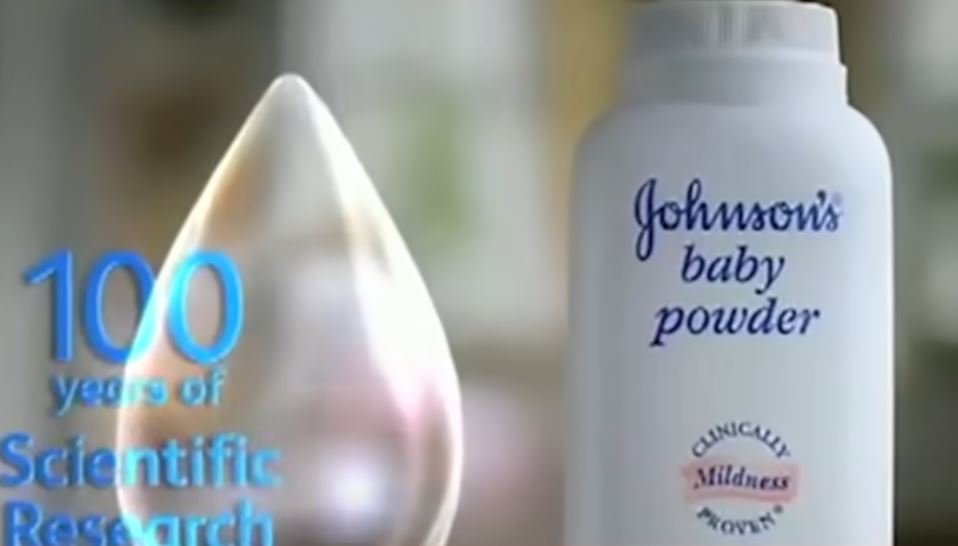
The story of Johnson & Johnson’s talcum powder has changed in recent months from a business scandal to a landmark case involving consumer accountability and trust. A global reckoning involving thousands of victims, scientists, and advocacy groups committed to revealing the truth behind a brand once associated with innocence and purity has grown out of what started as a family case in Los Angeles.
One of the most important decisions in business history was rendered by a Los Angeles jury in October 2025, which ordered Johnson & Johnson to reimburse the family of Mae K. Moore, who passed away from mesothelioma purportedly brought on by long-term usage of the company’s talcum powder, with around $1 billion. The jury’s finding that Johnson & Johnson had operated with reckless disregard for public safety was reflected in the verdict, which included $16 million in compensatory damages and an astounding $950 million in punitive damages.
| Category | Information |
|---|---|
| Company | Johnson & Johnson |
| Product | Talcum-Based Baby Powder |
| Legal Issue | Asbestos contamination leading to cancers such as mesothelioma and ovarian cancer |
| Landmark Verdict | Nearly $1 billion (October 2025, Los Angeles) |
| Number of Global Cases | Over 60,000 lawsuits worldwide |
| Prominent Case | Mae K. Moore family awarded $950 million in punitive damages |
| U.K. Action | 3,000 claimants in a mass claim represented by KP Law |
| Product Withdrawal | Talc-based baby powder discontinued globally in 2023 |
| Major Health Risks | Mesothelioma, ovarian cancer, peritoneal cancer |
The business has been charged in lawsuits for years of intentionally marketing talc tainted with asbestos, a material known to cause cancer. Company scientists had found asbestos fibers like tremolite and actinolite in their talc samples, according to internal papers, some of which went back to the 1960s. According to a 1973 memo, the corporation allegedly considered ways to “keep the whole thing confidential” rather than warning customers or regulators.
Since then, the Johnson Talcum Powder Lawsuit has been compared to other corporate scandals such as Volkswagen’s emissions disaster and Big Tobacco’s deception about the dangers of nicotine. Each story demonstrates how big businesses can violate research out of greed and reputation. Numerous statements from victims and their families have contributed to the irreversible harm to Johnson & Johnson’s carefully cultivated reputation as a family-friendly company.
More than 3,000 plaintiffs have filed a lawsuit in the UK led by KP Law, claiming that Johnson & Johnson and its subsidiary Kenvue Ltd. supplied carcinogenic baby powder with knowledge. According to the BBC, internal business conversations focused on marketing plans, asbestos detection techniques, and possible regulatory resistance. Memoranda from the 1980s, which critics described as “deeply unsettling,” were especially troubling since they suggested that marketing should target African American women after sales among white consumers decreased.
One of the several anecdotes connected to the case is particularly poignant. Somerset mother Siobhan Ryan, 63, remembers using Johnson’s baby powder as a youngster and considers it “soft, clean, and comforting.” She was shocked to learn that she had stage 4 ovarian cancer. She sobbed as she claimed, “They sold it to new mothers and their babies even though they knew it was contaminated.” Thousands of customers who originally viewed the product as a sign of care have found resonance in her story around the United Kingdom.
There is mounting evidence from medical study that talc tainted with asbestos is linked to some types of cancer. Ovarian tissue samples from women who had previously used talc were found to contain asbestos fibers, according to studies published in the Journal of Clinical Oncology in 2024. Once asbestos fibers enter the reproductive system, the body finds it difficult to get rid of them, which results in chronic inflammation that can eventually cause cancer, according to scientists like Professor Christina Fotopoulou of Imperial College London.
The legal issues facing Johnson & Johnson go well beyond the courtroom. Courts have repeatedly rejected the company’s attempts to use bankruptcy filings to settle claims by establishing subsidiaries to take on obligation. Instead of providing victims with just compensation, some see these tactics as attempts to protect corporate assets.
Johnson & Johnson insists that its baby powder was “compliant with regulatory standards” and that “it did not contain asbestos and does not cause cancer” in spite of the growing body of evidence. The business cites decades of independent laboratory testing as evidence of the product’s safety. However, the regularity of decisions around the world—from the $25 million Connecticut award earlier this year to the $4.69 billion Missouri ruling in 2018—indicates juries are still not persuaded.
The emotional dissonance this case produces is what makes it so moving. Johnson & Johnson’s baby powder, a common sight in nurseries, hospitals, and family homes, was for generations associated with kindness. Consumer confidence is severely damaged by the revelation that the identical product may have been fatally tainted. The disclosure has shattered public confidence across businesses and prompted a further examination of personal care and cosmetic safety regulations, much like discovering poison in something that should be nurtured.
Cultural analysts have pointed out that the case reflects a larger change in society: the increasing demand for openness. Today’s consumers expect complete ingredient transparency, incredibly clear labeling, and corporate responsibility. Even established brands may have to contend with reputational harm in a time when social media can magnify whistleblower disclosures in a matter of hours.
Many people felt that Johnson & Johnson’s 2023 decision to stop producing its talc-based baby powder worldwide and switch to a cornstarch substitute was long overdue. Despite being framed as a “strategic transition,” many saw it as a grudging yield to growing legal and scientific pressure. Years after US and Canadian regulators expressed concerns about talc contamination and its possible connection to cancer, the withdrawal was made.
The Johnson Talcum Powder Lawsuit is changing consumer awareness in addition to corporate narratives. Since then, advocacy organizations have started educational efforts to remind families that there are safer alternatives to talc-based cosmetics and to completely avoid using them. Legislative measures to strengthen safety testing requirements for consumer goods in North America and Europe have also been spurred by the discussion.
Nonetheless, the battle is still personal for victims and their loved ones. They want recognition—a confirmation that their pain was avoidable—more than monetary restitution. Through their unwavering perseverance, institutional negligence has been exposed, transforming personal suffering into public change.
The Johnson & Johnson case keeps developing into a potent illustration of corporate responsibility as more testimony comes to light and more verdicts are rendered. It emphasizes that regardless of how ingrained their brands are in society, even the most well-known businesses have to take responsibility for their past.
Disclaimer
Nothing published on Creative Learning Guild — including news articles, legal news, lawsuit summaries, settlement guides, legal analysis, financial commentary, expert opinion, educational content, or any other material — constitutes legal advice, financial advice, investment advice, or professional counsel of any kind. All content on this website is provided strictly for informational, educational, and news reporting purposes only. Consult your legal or financial advisor before taking any step.
