

Even when markets aren’t feeling calm, there’s a strange serenity to GLD stock.
On a recent Monday morning, gold futures silently surged higher, surpassing $5,200 per ounce, while stock futures fell in response to new geopolitical strikes in the Middle East. GLD shares were trading at $495 by midday, edging closer to a 52-week high of $509. The contrast between gold ETFs glowing green and tech stocks flashing red is difficult to ignore.
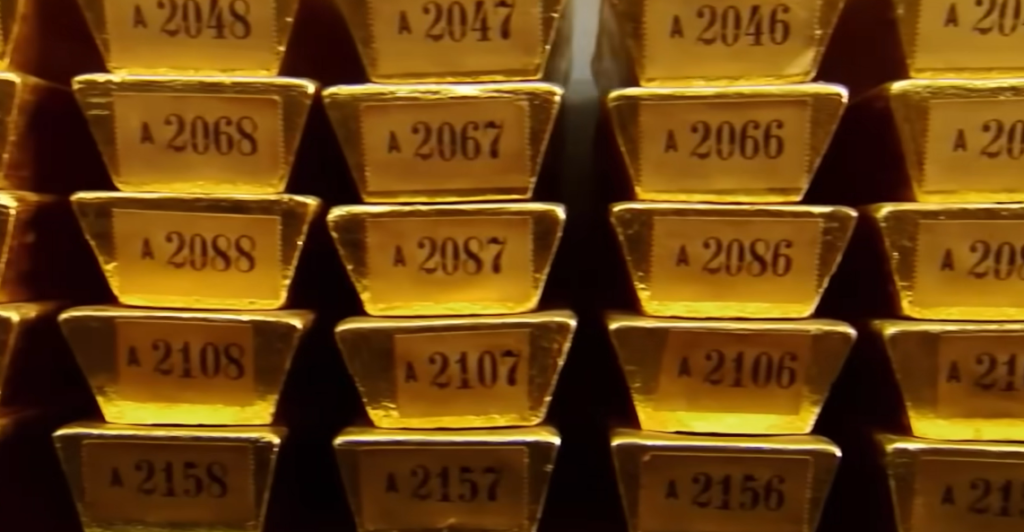
The allure is almost natural. Investors look for something tangible when they see headlines about conflicts, rising oil prices, and uncertain tariffs. GLD, which tracks actual bullion kept in London vaults, functions as a digital equivalent of metal bars that are stacked behind doors made of reinforced steel.
GLD stock seems to have evolved beyond a straightforward commodity exchange-traded fund (ETF). After rising about 64% in 2025 and more than 20% so far this year, it seems to be a declaration of confidence—or lack thereof—in currencies and central banks.
| Fund Name | SPDR Gold Shares |
|---|---|
| Ticker | NYSEARCA: GLD |
| Inception | November 18, 2004 |
| Sponsor | State Street Global Advisors |
| Assets Under Management | ~$185 billion |
| Expense Ratio | 0.40% |
| 52-Week Range | $261 – $509 |
| Gold Holdings | Physical gold bullion (London vaults) |
| Benchmark | LBMA Gold Price PM USD |
| Official Website | https://www.spdrgoldshares.com |
| Sponsor Website | https://www.ssga.com |
Using structural dollar weakness and fiscal deficits as justifications, Bank of America recently predicted that gold could hit $6,000 within a year. JPMorgan went even farther, speculating about potential gains of up to $8,000. Both believers and skeptics are drawn to these audacious figures.
It’s possible that gold’s rally is more about uneasiness than excitement as we watch this play out. According to reports, central banks have been diversifying their reserves away from the US dollar by purchasing about 60 tonnes of gold each month. That kind of consistent accumulation feels purposeful rather than speculative.
However, there has been some turbulence in the price action. Following market tremors caused by policy rumors, gold fell by almost 10% in a single session in late January. As traders like to say, it was a quick and precise move—down the elevator, up the stairs. Investors were reminded that even safe havens can lurch when GLD stock reflected that volatility.
There’s something almost graceful about the GLD mechanics. About a tenth of an ounce of gold is represented by each share. Authorized participants maintain the ETF’s close alignment with spot prices by exchanging substantial blocks of shares for physical bullion. Even though the system is meant to lessen price disparities, intraday fluctuations still happen.
GLD provides no yield, in contrast to stocks that pay dividends. It just keeps gold, less costs. Its simplicity is both its advantage and disadvantage. Given the volatility of real yields and the perceived unpredictability of monetary policy, investors appear prepared to forgo income in exchange for perceived stability.
Whether the current rally can continue at this rate is still up in the air. Some analysts caution that gold may be overextended following such a sharp increase. Overbought conditions are suggested by RSI readings. Exuberance could be swiftly dampened by a stronger dollar or an unexpectedly hawkish Federal Reserve.
However, more general factors seem to be working in gold’s favor. The U.S. budget deficit is still stubbornly high. Despite being moderated, inflation continues to exceed long-term goals. There are still geopolitical tensions. Bullion prices have historically been supported by these factors, and investors appear to think that the trend will continue.
Comparisons between GLD and other value stores, such as cryptocurrencies, are inevitable. Bitcoin has faltered during periods of volatility, but it has also occasionally soared alongside gold. GLD’s comparatively weak correlation with stocks is reflected in its beta, which is close to 0.13. Its popularity among institutional portfolios looking for ballast may be explained by its low volatility profile.
There’s a sense that GLD stock does well because it provides reassurance rather than growth. When risky assets falter in trading rooms with glowing monitors, gold’s silent upward drift can feel like a steady heartbeat.
The symbolism extends beyond the realm of finance. Long before ETFs and algorithmic trading, gold was used as a store of value for centuries. Although owning GLD does not equate to holding a coin in your hand, it psychologically appeals to the same instinct—protecting wealth from uncontrollable forces.
It is evident from observing the daily price increase, occasionally by only a few dollars, that GLD stock represents more than just supply and demand for commodities. It reflects both societal fear and societal faith.
Gold’s move toward $6,000 or consolidation below $5,200 may be determined less by charts and more by news stories—fiscal talks in Washington, changes in Fed policy, and events in far-off places that affect markets.
As stocks fluctuate erratically, investors seek refuge in GLD stock, which is currently trading close to its peak. Dividends are not paid by it. It isn’t innovative. It just contains gold.
Disclaimer
Nothing published on Creative Learning Guild — including news articles, legal news, lawsuit summaries, settlement guides, legal analysis, financial commentary, expert opinion, educational content, or any other material — constitutes legal advice, financial advice, investment advice, or professional counsel of any kind. All content on this website is provided strictly for informational, educational, and news reporting purposes only. Consult your legal or financial advisor before taking any step.
