

The term “climate overshoot” has a sterile, technical sound to it. It might be interpreted as a small policy slip or an accounting error. However, the term becomes less abstract when one is standing in a city that is experiencing a heatwave, witnessing the shimmering of asphalt and emergency personnel distributing bottled water to individuals seeking refuge under highway overpasses.
We have entered the era of climate overshoot, according to scientists. Practically speaking, this indicates that global temperatures have risen above the 1.5°C cutoff point established by the Paris Agreement — not as an isolated occurrence but rather as a consistent multi-year trend. The guardrail was not intended to be ornamental. Its purpose was to draw a line between dangerous and seriously destabilizing.
We’ve moved on from it.
Global temperatures rose by about 1.55°C over preindustrial levels in 2024. The symbolic boundary that diplomats used to battle over in packed conference rooms was crossed during the three-year period from 2023 to 2025. Negotiators talked about “keeping 1.5 alive” for years. The slogan seems to have aged more quickly than anyone anticipated.
| Category | Details |
|---|---|
| Climate Threshold | 1.5°C above preindustrial levels (Paris Agreement target) |
| Status | Multi-year breach recorded 2023–2025 |
| Carbon Budget | Nearly exhausted for 50% chance of staying under 1.5°C |
| Emissions Trend | Global fossil fuel emissions hit record highs in 2024 |
| Key Risks | Ice sheet collapse, Amazon dieback, AMOC slowdown |
| Scientific Bodies | Intergovernmental Panel on Climate Change (IPCC), World Meteorological Organization (WMO) |
There is more to this moment than just the graph’s number. It’s the signals coming together. Over the past few summers, record-breaking floods have swept through cities unprepared for that amount of rain, wildfires have turned Canadian skies orange over Manhattan, and marine heatwaves have bleached coral reefs throughout the tropics. These occurrences are no longer isolated. They unfold with unnerving regularity and have a systemic feel.
Overshoot is defined by scientists as a transient excess that could be subsequently corrected by significant carbon removal and emissions reductions. The optimistic framing is that. Whether the overshoot will be short-lived or persist long enough to cause irreversible tipping points is still unknown.
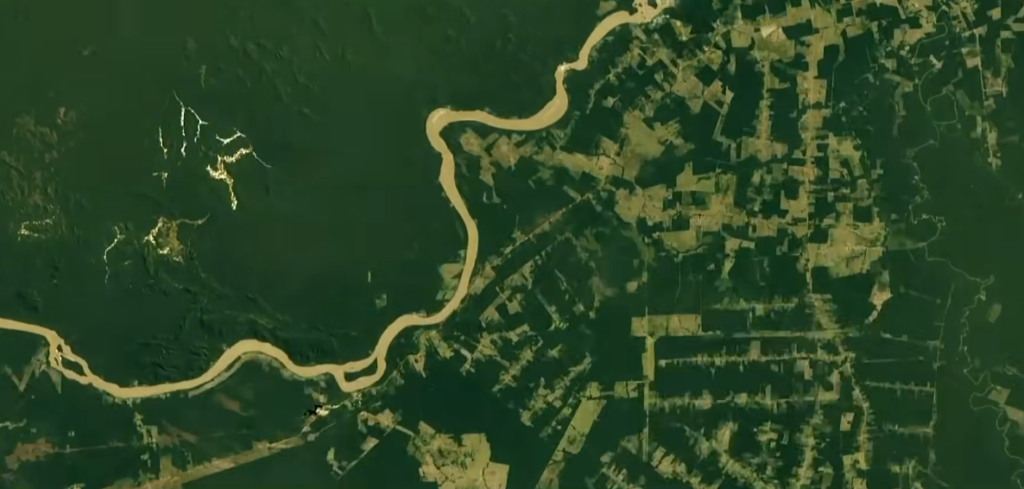
The silent undertone of every new climate report is those tipping points. Already destabilizing is the West Antarctic Ice Sheet. The Amazon rainforest is partially changing from a carbon sink to a carbon source. Europe is warmed by the Atlantic circulation system, which appears to be slowing down. Reaching one threshold could increase the likelihood of the next. A series of dominoes. As this is happening, it seems like the Earth system is reacting more quickly than policy can keep up.
Arithmetic is one aspect of the issue. The amount of carbon that humans can emit while still having a 50% chance of preventing global warming is almost completely depleted. It might run out before the end of the decade at the current rate of emissions. In 2024, however, the use of fossil fuels hit all-time highs. Oil and gas projects with decades-long timelines are still being financed by investors. The markets appear to think that demand will continue to exist.
Governments may have believed that technological solutions, such as negative emissions, large-scale carbon capture, and possibly even solar geoengineering, would develop over time. However, the majority of those tools are still either pricy, have not been tested on a large scale, or are politically sensitive. Tree planting is beneficial, but not in the necessary quantity. Although there are direct air capture facilities, their high cost currently prevents them from expanding quickly.
Additionally, there is the unsettling fact that natural buffers are eroding. Historically, roughly half of human emissions have been absorbed by forests and oceans. According to recent studies, those carbon sinks are struggling in the face of drought and heat stress. Atmospheric concentrations increase more quickly if nature absorbs less. I find that feedback loop disturbing.
Overshoot has changed the tone in diplomatic circles. The focus of previous climate talks was prevention. The focus of the discussion is now shifting to damage control, including resilience planning, loss and damage mechanisms, and adaptation funding. Roads in coastal cities are being raised. Risk models are being revised by insurance companies. “Managed retreat” is no longer theoretical in some neighborhoods that are vulnerable to flooding.
However, the term “overshoot” can be deceptive. It implies a curve with a peak and a gradual descent. But descent necessitates purpose. To significantly limit the peak, emissions would need to decrease significantly, by about 26% by 2030 and almost half by 2035 when compared to 2019 levels. That necessitates changes in policy, which feel politically precarious at the moment.
The emotional exhaustion in public discourse is difficult to ignore. You will see both defiance and resignation when you scroll through online discussions. Overshoot is sometimes interpreted as evidence that nothing matters anymore. Some view it as justification for quick action, contending that even if the boundary is briefly crossed, it still acts as a guide.
Every tenth of a degree still matters, according to scientists. A world that drifts toward 2.5°C or higher is more destructive than one that stabilizes at 1.6°C. Agency is not eliminated by overshoot. It makes things more difficult.
All of this has a subtle irony to it. The 1.5°C goal set forth in the Paris Agreement was once criticized for being unrealistic and aspirational. Despite having passed it, the objective is still important because it serves as a benchmark to return to rather than a perfect boundary that has never been crossed.
It seems less like a sudden break and more like a slow recognition as this era dawns. For years, the numbers have been increasing. The warnings were made public. It is no longer possible to frame the data as far-off projections.
We have entered the era of climate overshoot, according to scientists. This does not imply that collapse is inevitable. It does indicate that there is now much less room for delay. The unforgiving nature of physics may not have as much of an impact on whether this is a temporary deviation or a permanent change as it does on whether policy and behavior advance more quickly than they have in the past.
Disclaimer
Nothing published on Creative Learning Guild — including news articles, legal news, lawsuit summaries, settlement guides, legal analysis, financial commentary, expert opinion, educational content, or any other material — constitutes legal advice, financial advice, investment advice, or professional counsel of any kind. All content on this website is provided strictly for informational, educational, and news reporting purposes only. Consult your legal or financial advisor before taking any step.
