

The forest doesn’t abruptly end close to Mato Grosso’s edge. It becomes thinner. Trees start to get dispersed. Then all of a sudden, the land opens up into something completely different: endless rows of precisely aligned, nearly sterile soybeans stretching toward the horizon. One gets the impression that the change took time while standing at that imperceptible line. However, it didn’t take long either.
It has been astounding to watch Brazil become a soy superpower. The United States dominated world exports twenty years ago. Currently, about 40% of the soy used to feed livestock in China, Europe, and other countries comes from Brazil. It appears that investors think this growth is far from over. It’s difficult to ignore what those newly paved roads replaced, though, as trucks hauling fresh harvest thunder down them.
Forests are not always directly destroyed by soy. It occasionally takes the place of cattle pasture. However, that displacement sets off a series of events of its own. Rising land prices force ranchers to relocate farther into the Amazon, where they clear new land to reestablish their herds. Soy might not be the first domino to fall. However, it maintains the line’s descent.
| Item | Details |
|---|---|
| Industry | Brazilian Soybean Production |
| Global Rank | Brazil is the world’s largest soy producer and exporter |
| Annual Production | Approx. 152 million tonnes |
| Main Export Markets | China, European Union, Singapore |
| Key Region Impacted | Amazon Rainforest and Cerrado biome |
| Major Companies | Cargill, Bunge, ADM, COFCO, Amaggi |
| Key Policy | Amazon Soy Moratorium (2006–2026, now weakening) |
| Environmental Impact | Over 100 million tonnes of CO₂ emissions linked to soy-driven land clearing |
| Reference | Stockholm Environment Institute Soy Data, WWF Brazil Soy and Amazon Overview |
Part of the story is revealed by satellite images. The Brazilian Amazon’s soy-growing regions have more than tripled since 2008. Heavy machinery has carved entire regions that were once defined by tangled rainforest into geometric grids. Pilots who fly over these regions occasionally report seeing smoke rising from controlled burns and small fires that are removing the last of the vegetation.
Even though it appears normal from above, there’s something unnerving about it.
This change might be accelerated by the Amazon Soy Moratorium’s collapse earlier this year. Major traders had agreed not to purchase soy produced on recently deforested land for almost 20 years. Although it slowed it, that pledge did not completely prevent expansion. Now that businesses are quietly withdrawing, the calculation seems to be shifting.
It’s hard to overlook short-term demand.
China, Brazil’s biggest consumer, feeds its enormous livestock industry primarily with imported soy. Another important buyer is still the European Union. Once disrupted by trade disputes and droughts, global supply chains have reaffirmed Brazil’s significance. It seems as though the world has subtly determined that it needs Brazil’s agricultural land more than its forests.
Seldom does that choice feel clear. Markets are how it comes to be. through costs.
The effects on the economy are evident in small farming communities. Dusty streets are lined with new pickup trucks. Beside small houses, grain silos rise. Farmers discuss export contracts, rainfall, and yields. Soy has given many people stability that was impossible for earlier agricultural systems. It’s still unknown if environmental issues have the same impact when livelihoods rely on growth.
Nevertheless, the cost to the environment keeps rising.
Massive amounts of carbon stored in soil and trees are released when forests are cleared. According to scientists, emissions from soy-driven land conversion have exceeded 100 million tonnes of carbon dioxide in a single year. Carbon, however, is invisible. Unlike smoke, it doesn’t linger in the atmosphere. But there is no denying the lack of forest.
Silently, biodiversity suffers. First to go extinct are birds. Next, insects. Water cycles change. Rivers get warm. Local communities are surrounded by strange landscapes, even though some have lived there for generations. People who live there might perceive these changes as being gradual. They seem abrupt to outsiders.
One gets the impression from observing how soy prices affect global commodity markets that economic momentum hardly ever stops for environmental consideration. Banks have invested billions of dollars in agricultural development, supporting businesses that guarantee productivity and expansion. Investors discuss productivity. hardly ever about trees.
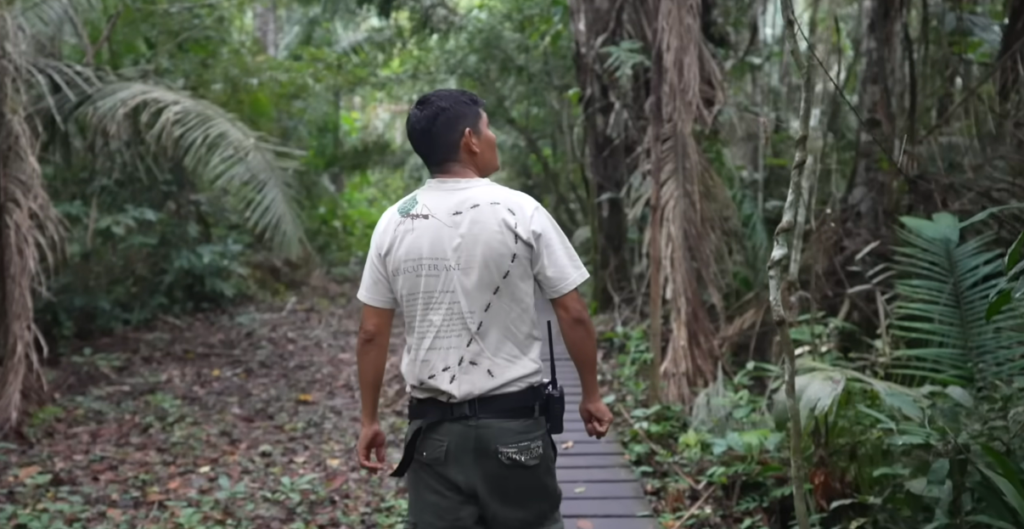
Even the Amazon itself still seems vast. It’s hard to imagine it going completely extinct when you’re standing inside of it, encircled by tall canopies and the steady hum of invisible life. However, the edges continue to move.
Disclaimer
Nothing published on Creative Learning Guild — including news articles, legal news, lawsuit summaries, settlement guides, legal analysis, financial commentary, expert opinion, educational content, or any other material — constitutes legal advice, financial advice, investment advice, or professional counsel of any kind. All content on this website is provided strictly for informational, educational, and news reporting purposes only. Consult your legal or financial advisor before taking any step.
