

Even though the TV was off, the little red standby light continued to glow steadily and patiently in the shadows. The quiet indication that the gadget is never completely asleep is the kind of detail that most people overlook. It turns out that smart TVs are more than just devices that are waiting to be turned on. They frequently continue to work, listen, and observe in their own quiet manner.
Modern smart TVs employ a technology known as Automatic Content Recognition, or ACR, which silently keeps an eye on what’s playing on the screen. Many owners are unaware of this. The system recognizes it, cataloging habits and sending that data back to manufacturers and advertising partners, whether it’s a late-night Netflix binge, a football game on cable, or even a video game played via HDMI.
The majority of people may have agreed to this without really realizing it. Usually, the permission is hidden in lengthy privacy agreements that seem to be meant to be ignored during setup. One gets the impression that the actual transaction wasn’t purchasing a television when they see someone swiftly scrolling through those screens and selecting “Accept” without reading. It was consenting to join its stream of data.
Systems developed by manufacturers such as Samsung and LG are capable of tracking viewing habits with a high degree of accuracy. What shows you watch, when you pause them, and how long you stay are all known to the TV. Most users still don’t seem to realize how detailed that profile can get, exposing habits that even close friends might miss.
| Category | Details |
|---|---|
| Technology | Automatic Content Recognition (ACR) |
| Function | Tracks viewing habits across apps and devices |
| Data Collected | Shows watched, viewing time, app usage, voice commands |
| Purpose | Targeted advertising, analytics |
| Default Status | Usually enabled automatically |
| Common TV Brands | Samsung, LG, Sony, Roku, Vizio |
| Privacy Setting Names | Viewing Information Services, Live Plus, Smart TV Experience |
| Risk Level | Moderate privacy concern |
| Reference | https://www.consumerreports.org |
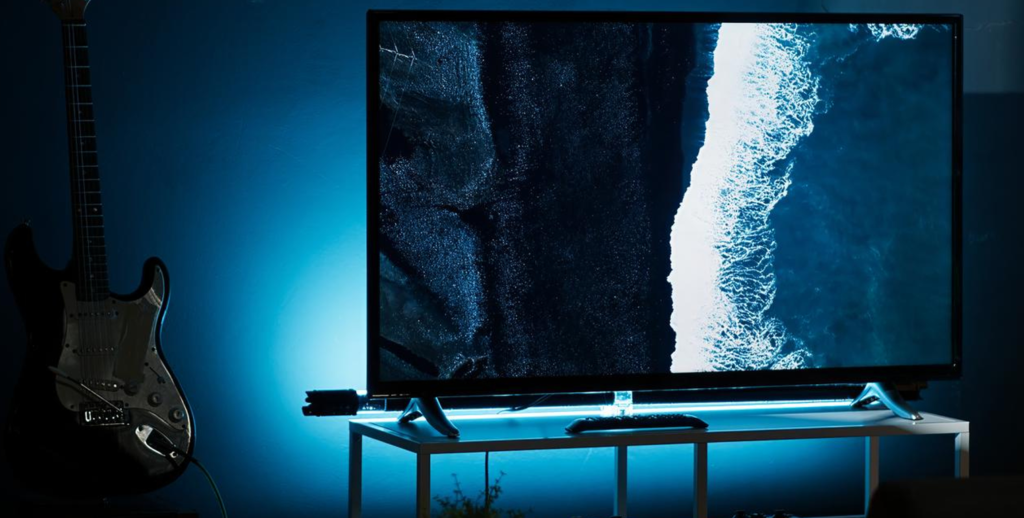
A streaming menu appears on the screen of a quiet apartment one evening, suggesting a documentary that strangely resembles something that was seen only a few days prior. The recommendation seems beneficial and even considerate. However, it also poses a nuanced query. And just who’s listening?
More and more, the viewer is not the only answer.
ACR identifies programs nearly instantly by taking small visual snapshots of the content and comparing them to enormous databases. It works well. invisible. And very valuable to advertisers. Investors appear to think that information such as this will become even more important to television economics, with precisely targeted commercials taking the place of traditional ones.
When you discover that the television knows your habits better than you thought, it can be a little unnerving. As this is happening, it seems as though the screen has subtly changed from being a passive object to something more active years ago.
Manufacturers frequently use the improvement of user experience as justification. customized suggestions. improved features. improved output. To be fair, those advantages do exist. However, they have trade-offs that aren’t always immediately apparent.
Another layer is added by voice recognition. Many smart TVs have microphones that can react to commands, so users can speak to change the volume or search for shows. However, for those microphones to work correctly, they need to listen constantly. The possibility of remote analysis of audio snippets raises concerns about the location and duration of the information’s storage.
The fact that nothing is technically hidden only adds to the complexity. There are controls. They’ve simply been buried.
The option to disable it is located deep within settings menus, frequently under headings like “Viewing Information Services,” “Live Plus,” or “Smart TV Experience.” Turning it off doesn’t damage the TV. The quality of the image is unaffected. The shows continue to play and the screen continues to function. The silent observation is the only thing that halts.
However, a lot of people never alter it.
With technology, there’s a tendency to ignore defaults and a certain inertia. Convenience, maybe. Maybe uncertainty. Or maybe a tacit belief that once privacy is lost, it’s hard to get it back.
Disclaimer
Nothing published on Creative Learning Guild — including news articles, legal news, lawsuit summaries, settlement guides, legal analysis, financial commentary, expert opinion, educational content, or any other material — constitutes legal advice, financial advice, investment advice, or professional counsel of any kind. All content on this website is provided strictly for informational, educational, and news reporting purposes only. Consult your legal or financial advisor before taking any step.
