

At first, Zhengzhou’s rain did not seem particularly noteworthy. Central China experiences summer storms on a regular basis, which cool the hot air and wash dust from building sites. However, the sky didn’t appear to close on July 20, 2021. It fell apart. In one hour, more than 200 millimeters of rain fell, so much so that everything built to contain it was overpowered. Tunnels in the subway filled. The streets became rivers. People ascended onto the roofs of cars and waited.
Nearly 400 people had been killed or reported missing by the time the floodwaters subsided, and the estimated financial losses came to about 120 billion yuan. It continues to rank among the most expensive catastrophes in contemporary Chinese history. Later, scientists came to the conclusion that climate change had caused rainfall intensity to increase by about 7.5 percent. This may seem like a small amount, but when it hit an unprepared city, it translated into catastrophic force.
Months later, tourists strolling through Zhengzhou reported seeing mud stains halfway up concrete walls, indicating the height of the water’s rise. Although many store owners spoke in private about how quickly everything had been lost, many of them reopened. It seems that even though recovery is evident, the memory of water flowing in the wrong direction is never completely forgotten.
China’s history has always been influenced by flooding. The Yellow River, sometimes known as “China’s Sorrow” due to its lethal overflows, was managed by several ancient dynasties that came and went. However, the scale and frequency of today’s floods are changing, not because water is new. With tens of billions of dollars in losses every year, floods have emerged as the most costly natural disaster in the nation in recent years.
| Category | Details |
|---|---|
| Country | China |
| Major Event | 2021 Henan Province floods |
| Death Toll | 398 dead or missing |
| Economic Damage | Approx. 120 billion RMB (≈ $16.5 billion) |
| Population at Risk | Nearly 400 million exposed to severe flood risk |
| Flood Losses 2025 | Over 51 billion yuan ($7.12 billion) |
| Key Issue | Climate-driven rainfall intensification and infrastructure gaps |
| Reference Website | https://www.mem.gov.cn |
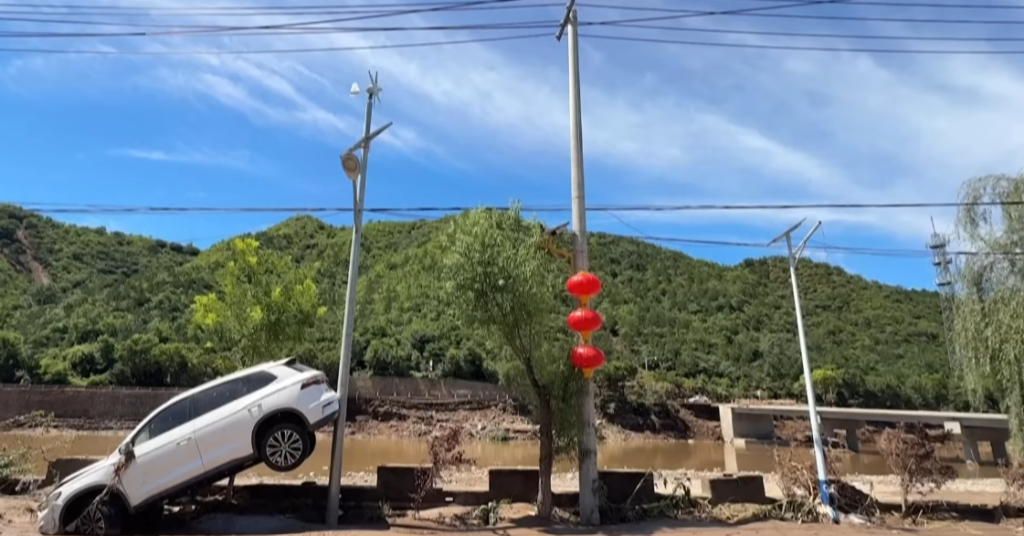
The figures are astounding. Approximately two-thirds of the nation’s population lives in areas that are prone to flooding, and nearly 400 million people reside in areas that are extremely vulnerable to flooding. This vulnerability is caused by both human activity and geography. Cities have grown more quickly than drainage systems could adjust, narrowing rivers with development and replacing wetlands with concrete.
China made an effort to address this. It started the “sponge city” project in 2015, spending billions to restructure cities to absorb rainfall. Zhengzhou itself invested a lot of money in these improvements. However, those systems faltered when the storm of 2021 struck. The infrastructure might have been built for a climate from yesterday rather than one from tomorrow.
Damaged homes are just one aspect of the financial ramifications. Floods have a cascading effect on supply chains, factories, and transportation. Because China is the hub of global manufacturing, flood damage there can subtly impact global prices and delivery. This appears to be understood by investors, who now watch weather patterns with a sense of financial anxiety that was previously only associated with interest rates.
Insurance provides little protection. In China, only about 6% of flood losses are covered by insurance; the remainder must be borne by people, companies, and governments. This disparity highlights a more serious problem: risk is present, but protection hasn’t kept up. Whether insurance markets or policymakers can close that gap quickly enough is still up in the air.
Floods directly cost more than 51 billion yuan in the first half of 2025 alone. Indirect expenses like lost productivity or supply chain disruptions are not included in that figure, which according to some estimates could double the overall economic harm. As these numbers continue to rise, there is a sense that flood damage is starting to factor into the national budget.
Everything is made more difficult by climate change. Sudden, heavy downpours are more likely when the air is warmer because it retains more moisture. Over the past few decades, scientists have noticed a discernible rise in extreme rainfall events throughout China. Sometimes there is no warning for these storms. They show up out of the blue, testing systems that were constructed with different assumptions.
But there are other problems besides infrastructure. Paving over surfaces that once absorbed rainfall has changed the way water flows through cities due to rapid urbanization. It’s difficult to ignore how little room there is for water to escape when you’re standing in newly constructed neighborhoods with glass towers rising where there used to be farmland.
The public’s response has also changed. The floods in Henan sparked a surge in citizen petitions calling for improved flood protection and drainage. It’s interesting that many avoided specifically mentioning climate change. Better planning, safer neighborhoods, and stronger infrastructure were their main priorities instead. It implies that people react more to their experiences than to theoretical justifications.
Beneath the surface, political tension also exists. China has made significant investments in lowering emissions, developing renewable energy, and mitigating climate change. However, adaptation—getting cities ready for the unavoidable effects of climate change—might end up being equally crucial. It’s possible that adaptation feels more like acknowledging vulnerability, whereas mitigation feels more like progress.
But floods don’t wait for discussions about policy.
Disclaimer
Nothing published on Creative Learning Guild — including news articles, legal news, lawsuit summaries, settlement guides, legal analysis, financial commentary, expert opinion, educational content, or any other material — constitutes legal advice, financial advice, investment advice, or professional counsel of any kind. All content on this website is provided strictly for informational, educational, and news reporting purposes only. Consult your legal or financial advisor before taking any step.
