

Just before midnight, under a sky that had been calm for hours, a startling blue-green flare sliced its way above Wellington. It flashed, then vanished—leaving behind a brilliant arc that remained like a streak of breath on cold glass. It was brief but really vivid.
In recent nights, fireballs have acquired an oddly reassuring presence. This one, however, felt markedly different. Caught by a webcam at the Heretaunga Boating Club, its shape was extremely clear—a glowing head, a bright tapering tail, and at least two apparent flares before vanishing from view. It entered over the Eastern Hutt Hills and appeared to go virtually horizontally, which onlookers later reported felt exceptionally low.
By the time I watched the video making the rounds on the internet, I was impressed not just by how clear the picture was, but also by how many people seemed to stop everything to discuss it.
On local Facebook groups, someone in Petone mentioned their room flashed up “like a strobe.” Another in Tītahi Bay described the scene as “a green line tearing across the sky.” A woman in Lower Hutt claimed that she initially believed it to be a transformer explosion, but she changed her mind after hearing the silence.
| Category | Details |
|---|---|
| Date & Time | January 30, 2026, at 11:25 PM NZDT |
| Location | Visible across Wellington and Lower Hutt; seen as far as Seddon and Tītahi Bay |
| Object Description | Bright fireball with long glowing trail; blue-green color; multiple flashes observed |
| Cause (suspected) | Likely a large meteor (fireball); some speculation around space debris or rocket stage |
| Captured By | PredictWind live feed camera at Heretaunga Boating Club |
| Notable Reactions | Room lit up in Petone, awe and confusion across social media |
| Scientific Input | Fireballs Aotearoa, MetService, Canterbury Astronomical Society |
| Related Activity | Separate Chinese rocket debris re-entry observed 800km south of NZ at 1:39 AM NZDT |
| External Reference | RNZ Report |
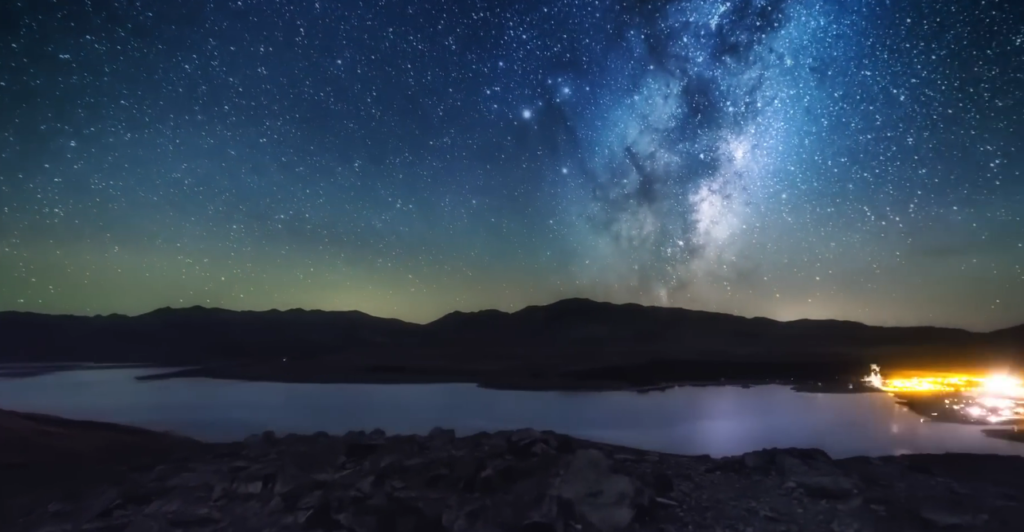
Fireballs Aotearoa verified many fireball incidents that evening, including this one about 11:30 PM. From a different vantage point, their meteor cameras near Canterbury captured a smoke trail that persisted for more than five minutes. According to Steve Wyn-Harris, who often comments on meteor occurrences, this fireball was unusually effective in gaining public attention not simply because of its brightness, but because of its timing and direction.
By employing high-sensitivity meteor detection cameras, his team witnessed how the item lighted up, decelerated, and slowly broke apart in the upper atmosphere. The long-lasting path and flare pattern suggested it could have been a massive space rock—larger than the normal grain-sized particles we associate with shooting stars.
In the context of atmospheric entry, what separates a fireball from a regular meteor is size and luminosity. This one fulfilled both requirements. And yet, weirdly, there was no sonic boom. That lack shows the object likely disintegrated before reaching the lower atmosphere. Had it dropped closer—below 25 kilometers—it might have slowed down enough to survive reentry and land as a meteorite.
That is still a possibility. Fireballs Aotearoa has appealed for reports of sound waves, pressure shock, or other odd physical findings. So far, nothing conclusive has surfaced.
Still, this event became a conversation starter across age groups and platforms. On TikTok, teenagers reposted slower versions. Amateur astronomers annotated film frame by frame. Parents showed it to their kids during breakfast the next morning, addressing difficult questions about whether it was “an alien ship” or “a broken satellite.”
Two hours later, at 1:39 AM, US Space Force data showed that space debris, namely the second stage of a Chinese rocket that had been launched the month before, had re-entered Earth’s atmosphere 800 kilometers south of New Zealand. The synchronicity of both events on the same night generated slight uncertainty, though specialists were quick to discern between the two. The 11:25 PM fireball was natural, atmospheric, and probable meteoritic. The later event was mechanical, predictable, and tracked.
This divergence is important in the context of growing orbital clutter. Space debris, while certainly a concern, enters with a different signature—typically broader, slower, and often accompanied by scattered bits. What transpired above Wellington was too specific, too unique.
Nothing out of the ordinary was noticed by the MetService. Their computers, albeit highly efficient in tracking weather systems and aerial anomalies, didn’t register the fireball. That’s not unusual. Many fireballs are unrecorded by atmospheric sensors but make an impression in the memories of people who catch them in the correct moment.
For locals who saw it, the reaction wasn’t fear—it was silent wonder. As one Reddit user put it, “I watched it through the window and just stood there. No sound, no warning. Just blue fire dropping sideways.”
I couldn’t get that image of the sideways-falling blue flames out of my head.
It speaks to something deep-seated. We are dependent on gadgets, rituals, and expectations throughout our lives. But every so often, nature—or space, rather—reminds us how big the sky is above our rooftops. These streaks aren’t just fireballs. In our otherwise linear nights, they serve as punctuation.
The scientific community continues to study film and check for any tangible traces. But even without a recoverable portion, the fireball had a function. It brought attention to the skies again. It made neighbors speak to each other. It reminded individuals that they were small—but not alone.
By integrating community-sourced pictures, observatories now have a more complete dataset than before. People participate in “distributed skywatching,” a contemporary method of tracking near-Earth objects using shared technologies and casual observation, frequently without realizing it.
In the next years, incidents like this will become easier to research, faster to verify, and possibly, more universally recognized. With AI-enhanced sky surveys and public sensor arrays, the veil between space and streetlight is getting thinner.
But even as detecting technologies get more advanced, the emotional sensation of witnessing a brilliant streak tear across the night remains unaltered. It’s not about where the object originated from, but how briefly it belonged to us.
And that’s what made January 30 remarkable—not because a rock dropped from the sky, but because we all glanced up at the same time.
Disclaimer
Nothing published on Creative Learning Guild — including news articles, legal news, lawsuit summaries, settlement guides, legal analysis, financial commentary, expert opinion, educational content, or any other material — constitutes legal advice, financial advice, investment advice, or professional counsel of any kind. All content on this website is provided strictly for informational, educational, and news reporting purposes only. Consult your legal or financial advisor before taking any step.
