

Farmers have been discreetly changing the rules over the last ten years. Sensors, AI-powered monitoring, and minuscule nutrients are helping them produce bountiful harvests with a fraction of the fertilizers that were once thought to be essential. Droplets of nutrient-rich mist and whisper-thin streams of data are now used to do what once took truckloads of chemical inputs.
Kale grows upwards without ever coming into contact with dirt inside one urban greenhouse in Helsinki’s outskirts. While sensors that monitor leaf growth, root color, and hydration levels control fertilizer delivery, LEDs simulate sunlight in 18-hour cycles. The results are very evident: these crops provide comparable or even greater yields while requiring 95% less fertilizer than conventional approaches. incredibly efficient, particularly in areas with little agriculture or severely damaged soil.
Something similar is happening at conventional farms throughout the Midwest, but in open fields instead of glass towers. Farmers apply nano-fertilizers only when absolutely essential by using AI-powered soil analytics and sophisticated satellite images. These nutrients, which were created at the molecular level, are supplied in such exact amounts that the plant absorbs almost all of them, greatly lowering waste and runoff.
In the Central Valley of California, a number of large-scale growers are increasingly integrating digital monitoring tools with regenerative farming through strategic partnerships with agri-tech businesses. Nitrogen is naturally replenished by cover crops like clover and alfalfa, and decisions about planting cycles, water distribution, and disease prevention are guided by real-time data. As a result, business margins have significantly increased without sacrificing environmental integrity.
| Key Detail | Description |
|---|---|
| Technique | Integration of vertical farming, nano-fertilizers, precision agriculture, and regenerative methods |
| Fertilizer Reduction | Up to 95% less synthetic fertilizer used |
| Yield Impact | Equal or higher crop yields reported |
| Environmental Benefits | Lower runoff, reduced emissions, improved soil health |
| Adoption Areas | Urban vertical farms, drought-prone regions, large-scale agribusiness |
| Notable Technologies | Nano-nutrient delivery, AI-based precision systems, hydroponics, and aeroponics |
| Reference | NIH – Hydroponics and Sustainable Crop Production |
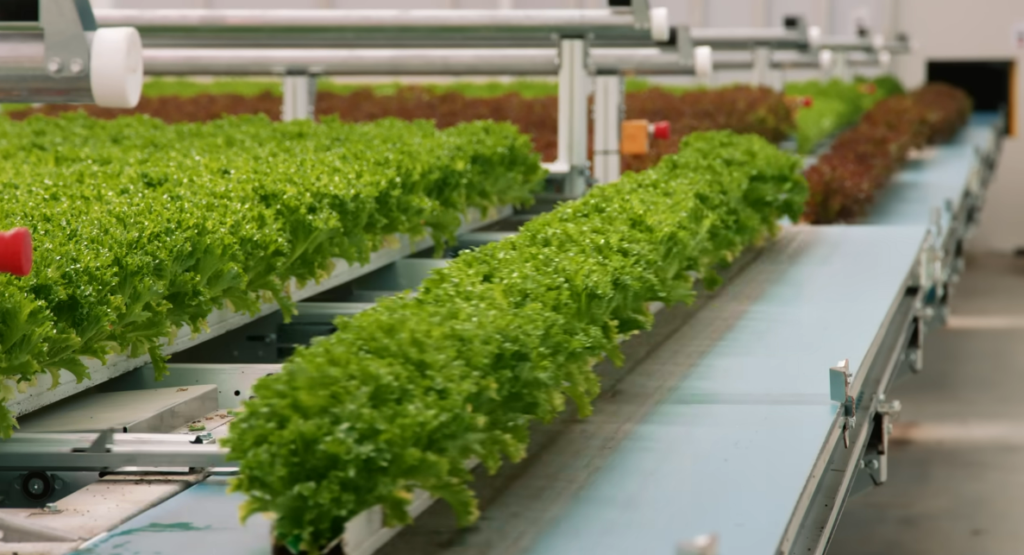
In Rajasthan, I went to see a small cooperative a few months ago that was testing a low-tech version of this idea. Instead of robotic arms or shimmering towers, there was rain-fed irrigation and compost loaded with microbial nanoparticles. However, the quality of the chickpeas they collected was consistently high, and the soil, which had been depleted by fertilizers high in salt, was at last recovering. Their experience indicates that the fundamentals of this strategy can be unexpectedly accessible and broadly applicable even in the absence of state-of-the-art technology.
By combining sensor systems and micro-dose methods, many farmers have found that their crops only require precise feeding rather than continuous feeding. These nanoscale molecules provide precisely what the plant needs, at the right time, in contrast to conventional fertilizers that release nutrients randomly. This type of personalization has been shown to be quite effective in decreasing waste and increasing plant resistance.
This is significant in light of climate change. One of the main causes of aquatic dead zones and nitrous oxide emissions is excessive fertilizer use. These farms are not only saving money by reducing their chemical impact, but they are also, acre by acre, restoring natural equilibrium. Water quality in areas like the Gulf Coast has gradually improved since the implementation of these techniques, particularly in the vicinity of agricultural corridors.
It’s also an autonomy narrative. It is not only environmentally beneficial but also financially liberating for smallholder farmers to use 95% less fertilizer, especially in areas where supply chains are still unstable or fertilizer costs have skyrocketed. Their exposure to debt and price volatility decreases when they have fewer inputs to buy. “For the first time, I feel like the land is giving more than it takes,” a Peruvian farmer told me.
On a session at this year’s Sustainable Agriculture Forum in Berlin, one MIT researcher put it simply: “We need to smartify farming, not intensify it.” I remember that line. The method relies on listening to the land, tracking its patterns, comprehending its messages, and reacting with consideration rather than force, rather than overpowering it.
There are difficulties in the changeover. Because of their size and sensitivity, cereal crops like rice and wheat take longer to adapt. But trial farms in southern France and Arizona have started to show encouraging results, with wheat yields remaining stable while fertilizer use fell. The secret is being responsive in real time; if a crop is doing well, it is left alone; if a patch is underfed, it is addressed right away.
More governments are anticipated to provide incentives for these low-input systems in the years to come. Tax refunds for fertilizer-efficient systems have already been introduced in Norway. In the meantime, Singapore has classed vertical farms as important infrastructure, making urban land and subsidies available for their growth.
Public awareness is growing as well. Consumers who care about their health are drawn to product that isn’t heavily chemically treated, and investors see possibilities in technologies that combine profitability and sustainability. Once written off as fringe, companies creating nanoscale fertilizers are now drawing significant funding rounds and licensing agreements from Asia, Europe, and the Americas.
Long constrained by custom and need, farming is changing. Through smart, gradual changes that build up over time, rather than through radical industrial transformation. We are seeing a revolution in the sustainable, hygienic, and remarkably accurate cultivation of food.
The ramifications will go well beyond agriculture if these methods continue to be scalable. Rivers that are cleaner. improved soils. Reduced emissions. And perhaps most significantly, there is a rising conviction that doing less harm can result in even more abundance.
Disclaimer
Nothing published on Creative Learning Guild — including news articles, legal news, lawsuit summaries, settlement guides, legal analysis, financial commentary, expert opinion, educational content, or any other material — constitutes legal advice, financial advice, investment advice, or professional counsel of any kind. All content on this website is provided strictly for informational, educational, and news reporting purposes only. Consult your legal or financial advisor before taking any step.
