

Millions of virtual rooms are still operational somewhere in a server farm, most likely in the Pacific Northwest. Paintball arenas, escape rooms, and hangout lounges created by teenagers who devoted hundreds of hours to the geometry, color scheme, and ambient sound are still being accessed by people. Those rooms are operational as of this writing. They will all go dark simultaneously on June 1st at noon Pacific time.
The timing of the announcement, which came on March 30, two days before April Fool’s Day, gave the community a strange sense of hope for a brief period. This must have been a joke. The Discord server for Rec Room was filled with incredulous posts. However, the word “final” left no room for interpretation, and the language on the company’s official blog was clear. Rec Room, a social gaming platform based in Seattle that began as a VR experiment in 2016 and eventually became home to 150 million users, is closing. Eventually, the math stopped working.
| Platform Name | Rec Room |
|---|---|
| Developer / Company | Rec Room Inc. (Seattle, Washington, USA) |
| Founded | 2016 |
| Shutdown Date | June 1, 2026 (noon Pacific time) |
| Total Players Reached | Over 150 million |
| Total Time Spent on Platform | 68,000 cumulative years |
| Peak Valuation | $3.5 billion |
| Total Funding Raised | ~$294 million |
| Key Layoffs | 16% of staff (March 2025); ~50% of remaining workforce (August 2025); final headcount ~100 |
| Assets Acquired By | Snap Inc. (some assets and talent moving to Specs Inc., Snap’s XR subsidiary) |
| New Account Creation Disabled | March 31, 2026 |
| Premium Subscriptions Halted | March 31, 2026 |
| Final Creator Payout | June 1, 2026 |
| Available Platforms | VR, PC (Steam), console, mobile |
| Reference Links | Official Rec Room Blog — Shutdown Announcement / GeekWire — Rec Room Shutting Down |
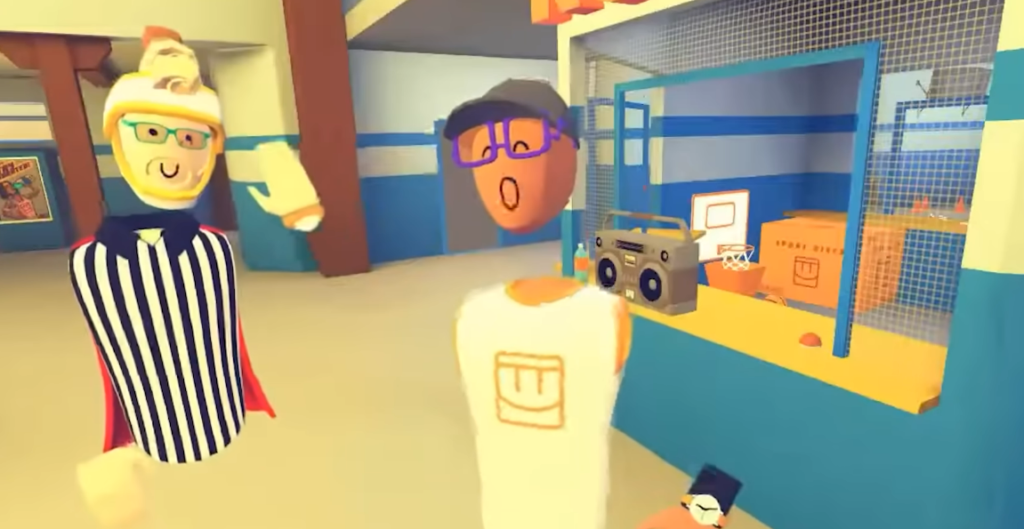
The contradictions in the numbers supporting Rec Room’s narrative are startling. Over the course of its ten years in business, the company raised about $294 million from investors. It was valued at $3.5 billion at its height, which demonstrated sincere enthusiasm for the metaverse era and the potential for social VR to emerge as a key 2020s medium. Users spent a total of 68,000 years on the platform, demonstrating a level of genuine engagement that most apps can only dream of. Each user-made room accumulated more than 500 years of playtime. The engagement was genuine. But the money didn’t follow. After platform fees and creator payouts, the company reportedly kept only roughly thirty cents of every dollar. No iteration of the business plan ever managed to close the gap between costs and revenue.
In hindsight, the layoffs were the most obvious indication that there was a structural issue. Rec Room laid off 16% of its employees in March 2025. About half of what was left was taken by another wave five months later, reducing the company’s workforce from roughly 310 to just over 100. Leadership at the time stated that the business had a runway through 2029. A few years later, that proved to be optimistic. Seven months later, the decision was made to close.
In its official statement, the company blamed two interrelated pressures: broader challenges in the gaming industry and a major shift by Meta away from supporting consumer VR gaming, which had always been one of Rec Room’s most obvious entry points. They are both genuine. With its shift away from the Quest-as-gaming-device narrative and toward enterprise AR, Meta eliminated a structural advantage that the entire VR social space had been enjoying. Additionally, the gaming industry as a whole has been shrinking in ways that make it harder for free-to-play platforms with high infrastructure costs to remain profitable. The Rec Room was one of the most obvious victims of these forces, but it wasn’t the only one.
The shutdown announcement was written with a certain kind of melancholy. The group expressed sincere pride in what the community had created, describing the platform as “an explosion of love and creativity all around the world” as founder Gribbly put it. A half-billion friendships were formed. rooms that people spent years returning to. Children who studied design and coding in a virtual environment. Depending on how long you’ve been there, the closure statement, which reads more like a farewell letter than a corporate press release, can either be heartwarming or make the shutdown more difficult to accept.
A portion of Rec Room’s staff will be joining Snap’s XR-focused subsidiary, Specs Inc., to work on the company’s next mixed-reality glasses. Snap has also acquired some of Rec Room’s assets. Although it’s not a significant continuation of Rec Room, that’s a fair exit for the talent and the technology. Players won’t be switching to a platform that is powered by Snap. There is no preservation of the rooms. While it’s a step in the right direction, the ability for creators to download their room and invention data in Unity-compatible formats is still a long way from preserving ten years of community-built content.
Rec Room’s genuine user love, genuine engagement, genuinely inadequate monetization, and a bet on VR adoption that the hardware market failed to fully deliver make it difficult to avoid seeing it as a case study in the particular failure mode of the metaverse moment. Roblox is subject to similar pressures, albeit on a scale that has allowed it to endure thus far. As Rec Room closes, it’s hard not to wonder which other virtual worlds are doing the same calculation in the background. The question isn’t whether players will show up, but rather whether they’ll ever make enough money to cover the servers’ operating expenses.
