

There is most likely a marketing team that spent months crafting language about Copilot as the future of work somewhere on Microsoft’s Redmond campus, in the kind of glass-walled conference room that overlooks well-kept corporate lawns. Rethinking productivity. innate intelligence. The AI that works with you. Then, in October of last year, a legal team in a different building subtly amended the terms of service with a sentence that immediately made the majority of that messaging awkward: “Copilot is for entertainment purposes only.”
Early in April 2026, that line appeared on social media and quickly gained traction, a little gleefully, with the special vigor people reserve for witnessing a major organization say something it obviously didn’t want to be seen by large audiences. In response, Microsoft referred to it as “legacy language” and pledged an update. According to a representative who spoke with PCMag, the wording no longer accurately describes how Copilot is used today due to the product’s evolution. Apparently, the terms had simply fallen behind. They’ll be altered.
| Category | Details |
|---|---|
| Product Name | Microsoft Copilot |
| Developer | Microsoft Corporation |
| Microsoft HQ | One Microsoft Way, Redmond, Washington, USA |
| CEO | Satya Nadella |
| Copilot Launch | November 2023 (general availability) |
| Integration | Microsoft 365 (Word, Excel, Outlook, Teams), Windows OS, Copilot+ PCs |
| Terms Last Updated | October 24, 2025 |
| Key TOS Language | “Copilot is for entertainment purposes only. It can make mistakes, and it may not work as intended. Don’t rely on Copilot for important advice. Use Copilot at your own risk.” |
| Microsoft’s Response | Called the language “legacy” and promised an update |
| Comparable Disclaimers | OpenAI (ChatGPT), xAI (Grok), Anthropic (Claude) — all carry similar hedging language |
| Copilot+ PCs | Dedicated hardware class built around Copilot integration |
| Enterprise Pricing | Sold as a premium productivity add-on to Microsoft 365 |
| Reference Links | Microsoft Copilot Terms of Service – Microsoft.com / Copilot Coverage – TechCrunch |
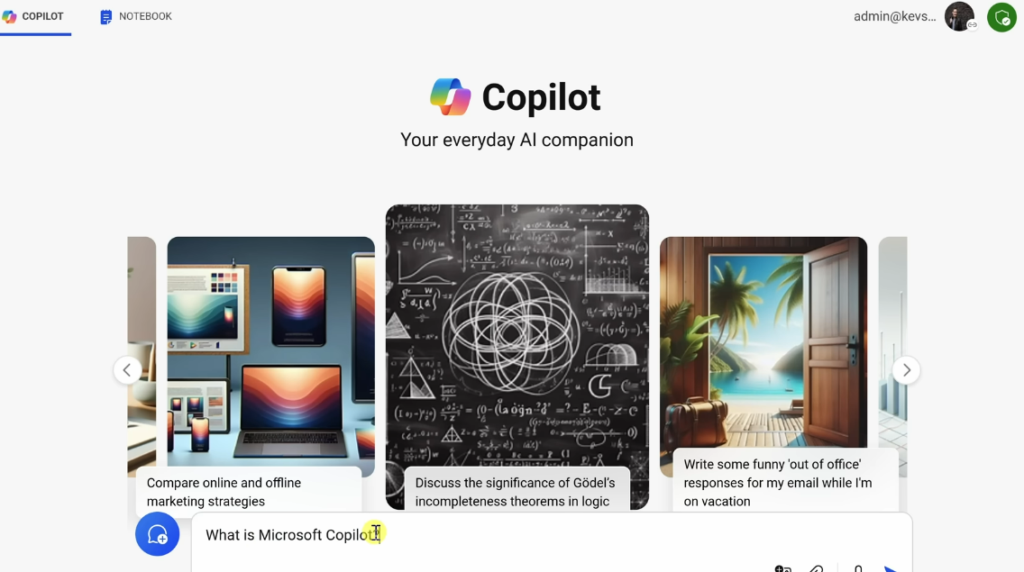
There’s a sense that the explanation is completely irrelevant and technically correct. These terms were in effect from October 2025 until at least April 2026. During that time, Microsoft launched a special class of Copilot+ PCs, aggressively sold Copilot to Fortune 500 companies, integrated it into Word, Excel, Outlook, and Teams, and reported hitting what Bloomberg called “audacious” revenue targets. The sales team’s pitch and the legal team’s language described essentially different products. “Entertainment,” the attorneys said. The salespeople stated that it was crucial. They were both employed by the same business.
Before putting it aside as a humiliating oversight, it is worthwhile to read the entire disclaimer. The entire text cautions users not to rely on Copilot “for important advice,” warns that it “can make mistakes, and it may not work as intended,” and declares that use is completely at the user’s own risk. Additionally, the terms state that Microsoft does not guarantee that Copilot’s responses won’t violate someone else’s rights and that users who publish or distribute content created by Copilot are solely liable for any subsequent consequences. Additionally, the business maintains the right to withdraw access for any reason at any time and without prior notice. When taken as a whole, it is an exceptionally comprehensive disclaimer for a product that is promoted as a mainstay of contemporary enterprise software.
Writing in this manner about its own AI is not unique to Microsoft. According to xAI, Grok’s answers shouldn’t be regarded as “the truth.” OpenAI advises ChatGPT users not to regard output as a “sole source of truth or factual information.” Similar hedges are part of Anthropic’s acceptable use policy. The industry-wide practice makes it simpler for any one company to defend—everyone does this, it’s just the way AI terms are written—but the defense doesn’t really stand up to scrutiny. The play’s revelation is not diminished by the fact that it is performed by all of the major AI companies. It intensifies it.
Together, these disclaimers characterize a product category in which the manufacturers of the tools are genuinely unsure about their dependability and have opted to address that uncertainty by fully shifting legal responsibility to the users of the software. There are professional repercussions for a lawyer who uses Copilot to draft a brief and then finds out it referenced a case that was hallucinated. If a financial analyst develops a model based on Copilot-generated projections that prove to be false, their company will suffer the repercussions. If a hospital administrator processes intake summaries using Copilot and overlooks a crucial detail, they will have to deal with the consequences. Microsoft’s legal stance in each case is clear-cut: the terms stated. for amusement. You run the risk.
It’s difficult to ignore how neatly Microsoft benefits from this arrangement. Subscription income, enterprise contract value, and the market positioning that comes with being a leader in AI are all captured by the company. Copilot’s efficiency on good days is captured by the customer, who also bears the losses when it doesn’t function as intended, which is frequently acknowledged in the terms. The incentive scheme discourages accountability while rewarding deployment. That’s simply how liability disclaimers work when regulators haven’t kept up with the technology; it’s not a conspiracy.
Microsoft’s “legacy language” defense merits further investigation. In the upcoming update, “entertainment purposes only” will probably be replaced with something gentler and more formal, like “productivity assistant,” or “workplace AI tool.” But the core legal reality cannot be edited away with a terminology refresh. Large language models confidently format incorrect answers. They make up stories. They make up statistics, misinterpret context in ways that aren’t always evident, and hallucinate citations. Because they read the same research as everyone else, the legal teams at Microsoft, OpenAI, and every other AI company are aware of this. Simply put, the revised terminology will use less awkward language to convey that reality.
Microsoft isn’t actually the source of this deeper tension. It concerns the discrepancy that has emerged between the accountability frameworks surrounding AI tools and how they are marketed. Financial advisors, therapists, and attorneys all follow professional standards that impose penalties for providing poor advice. They have regulatory frameworks and warranties for the tools they use. Currently, the AI integrated into their workflows has a disclaimer stating that it is for entertainment purposes and a warning to use it at your own risk. At some point, that arrangement will need to resolve itself — either through regulation, through liability litigation that finds its way through disclaimers, or through the kind of visible failures that force the conversation. As of right now, the best indicator of these companies’ true beliefs about their own products is the terms of service. Simply put, Microsoft was the company that was caught openly expressing this.
