

Before a significant launch, a certain kind of silence descends upon Kennedy Space Center. The facility is humming with generators, technicians, and the low mechanical breath of something massive being prepared, so it’s not a quiet silence; rather, it’s a silence of anticipation, the kind that makes you conscious of your own heartbeat. That sensation has returned. NASA is just a few days away from launching humans around the Moon for the first time in over fifty years.
Artemis II is not just another mission entry in a government log; it is slated to launch no earlier than April 1, 2026. It is by far the most significant American crewed spaceflight since Apollo. Reid Wiseman, Victor Glover, Christina Koch, and Jeremy Hansen of the Canadian Space Agency are the four astronauts who will board the Orion spacecraft, sit atop the massive Space Launch System rocket, and accomplish something that no human has done since 1972: travel outside of Earth’s immediate vicinity.
| Mission Name | Artemis II |
|---|---|
| Mission Type | Crewed Lunar Flyby |
| Launch Window | No Earlier Than April 1, 2026 |
| Launch Site | Launch Complex 39B, Kennedy Space Center, Florida |
| Rocket | Space Launch System (SLS) Heavy-Lift Rocket |
| Spacecraft | Orion Crew Capsule |
| Crew Size | 4 Astronauts |
| Mission Duration | ~10 Days |
| Crew Members | Reid Wiseman, Victor Glover, Christina Koch (NASA); Jeremy Hansen (CSA) |
| Orion Manufacturer | Lockheed Martin (CM); Airbus Defence and Space (ESM) |
| Max Distance from Earth | ~10,300 km (6,400 mi) planned |
| Program | NASA Artemis Program |
| Preceded By | Artemis I (Uncrewed, 2022) |
| Followed By | Artemis III (Planned Lunar Surface Landing) |
| Official Mission Page | NASA Artemis II |
| Send Your Name to Space | NASA Artemis II Boarding Pass |
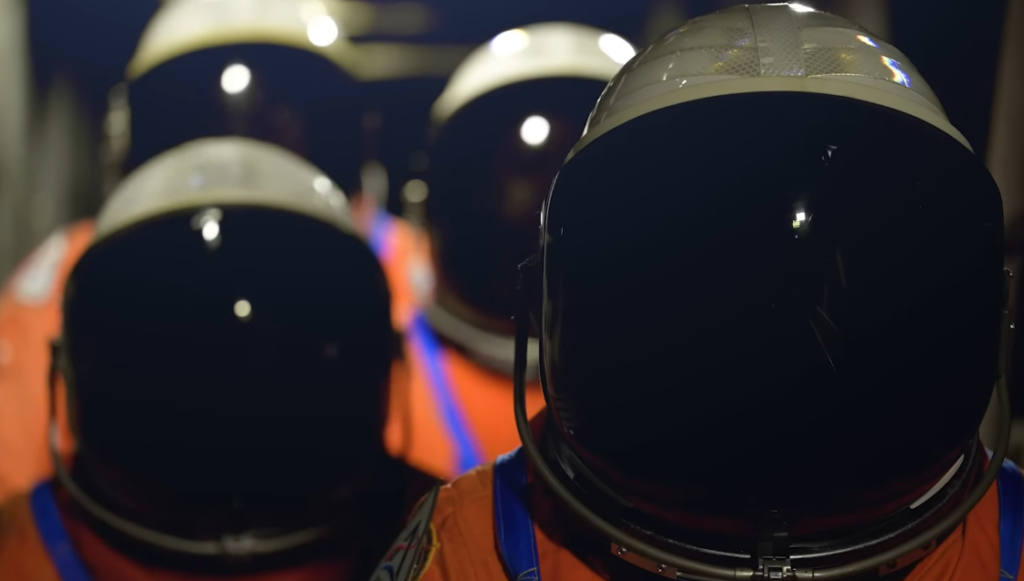
The regular rhythm of space news can easily cause one to lose perspective, so it’s worth taking a moment to reflect on that. This is not a journey to the International Space Station, which is located several hundred miles above Earth. The Moon is this. Four people will travel ten days farther from Earth than any living person has ever traveled.
It has not been an easy journey to this launch. Following the Space Shuttle Challenger and Columbia disasters in 1986 and 2003, NASA struggled for decades with the seemingly straightforward question, “What comes next?” Despite its engineering prowess, the shuttle program was never the cost-effective workhorse it was marketed as. Hundreds of millions of dollars were spent on each flight, and the ongoing cost made lofty deep space objectives seem almost unreal. There had to be a change. The SLS and Orion emerged as the solution, albeit slowly, costly, and after a great deal of political upheaval.
The SLS is not an understated car. It’s the kind of machine that, when the mission truly calls for it, serves as a reminder of what serious engineering looks like from the launch pad. One of the first things mission observers will see on launch day are the solid rocket boosters, which are based on technology from the shuttle era. They are dependable, but when boosters malfunction, they do so quickly, as Scott Pace, director of the Space Policy Institute at George Washington University, stated with the kind of careful honesty that space veterans tend to develop. There is about a two-minute window following ignition during which the crew is focused and the boosters are operating as intended. After that, everything else follows.
The crew won’t go straight to the Moon, assuming a clean ascent. The mission team and the astronauts themselves will go through Orion’s environmental control and life support systems at a planned checkpoint in Earth’s orbit. It’s similar to a pilot performing a thorough instrument check prior to a transatlantic flight, but the closest port of call is a quarter of a million miles away, and the ocean is space. The crew won’t permit the translunar injection, which would start the engine to leave Earth’s orbit and head toward the Moon, until those systems are successful.
Because of its astute conservatism, the trajectory itself is worth comprehending. Artemis II will not go into orbit around the moon. Rather, the spacecraft will execute a free-return loop, utilizing lunar gravity to slingshot back toward Earth after swinging around the Moon’s far side. It’s a route that somewhat resembles Apollo 13’s improvised rescue. You don’t have to run your engines very often. Much of the work is done by the physics. In a mission that already has a great deal of symbolic significance, that design decision reflects a risk management philosophy.
Christina Koch’s presence on this team has a poignant quality. She is the record holder for the longest female spaceflight. Victor Glover was the first Black astronaut to spend a significant amount of time on the International Space Station. The first Canadian to leave Earth’s orbit will be Jeremy Hansen. The entire company is run by former Navy test pilot Reid Wiseman. To put it simply, this is an exceptional group of individuals to send on an exceptional journey.
However, it is hard to ignore the budget talks. The cost of each SLS car is in the billions. Depending on who you ask, that number lands differently. Opponents believe the program is too costly to be sustainable. Supporters recognize the price of taking on a truly difficult task that develops capabilities and infrastructure that were nonexistent a generation ago. Before Artemis III, which aims to actually land on the Moon, becomes feasible on any regular cadence, it’s still unclear whether future iterations of the Artemis program can significantly reduce those costs or whether the architecture will need to change.
The geopolitical aspect is subtly present. China’s space program has made significant progress, and there are valid concerns about who will set the rules and guidelines for a future in which several countries—and eventually private businesses—will be active on the moon. Compared to a race, it’s a slower, more institutional form of competition, but it still exists.
