

One of Jupiter’s most studied moons, Europa, may have volcanoes deep beneath its frozen ocean rather than on its surface. This ice moon is outside the bands of gas giants and radioactive belts, and it may be concealing a mystery beneath its surface.
Planetary scientists have long been fascinated by Europa. It is thought to have a huge ocean beneath its frozen shell, one that is somewhat smaller than Earth’s moon and has more water than all of Earth combined. However, what’s at the bottom of that ocean has piqued experts’ interest.
If the rocky bottom of Europa is geologically active, particularly with volcanic activities, it may hold the key to one of science’s most intriguing hypotheses: extraterrestrial life. Whole ecosystems on Earth are sustained by hydrothermal vents on the ocean floor, which use chemical energy rather than sunlight to flourish. The hypothesis that a comparable ecology might exist beneath Europa’s ice is both extremely intriguing and rigorously scientific.
There was optimism for some early models, especially those that focused on tidal flexing. The interior of Europa is squeezed and stretched by Jupiter’s tremendous gravitational pull. This continuous distortion in those simulations might produce enough internal heat to partially melt the rocky layer and trigger undersea volcanic eruptions.
| Aspect | Description |
|---|---|
| Celestial Body | Europa, a moon of Jupiter |
| Ocean Type | Global subsurface salty ocean beneath an icy crust |
| Potential for Volcanism | Still debated; some models suggest tidal heating may support underwater volcanoes |
| Importance for Life | Volcanism could fuel chemical reactions needed for microbial life |
| Key Contrast | Io, another Jupiter moon, is highly volcanic due to stronger tidal forces |
| Upcoming Mission | NASA’s Europa Clipper (launch 2024, arrival 2030) |
| Primary Uncertainty | Whether the ocean floor is geologically active or geologically quiet |
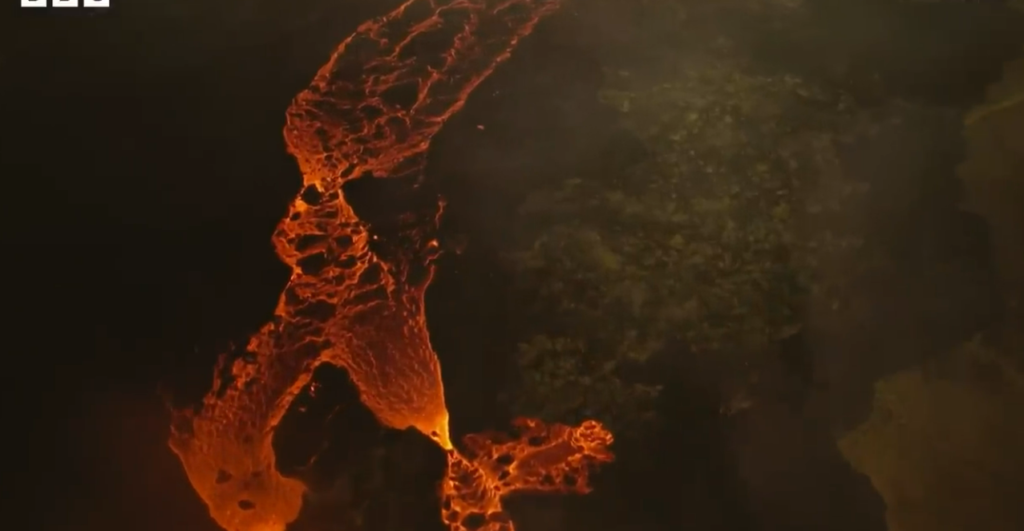
If they do happen, these volcanic processes are more than just spectacular geological occurrences. They are especially helpful in the hunt for life because they drive water-rock reactions, which are crucial for creating the energy gradients required for life to exist in deep, dark oceans.
However, a more conservative perspective is presented by recent studies that were released in late 2024 and early 2026. Despite the existence of tidal heating, our simulations indicate that it might not be strong enough to substantially alter the rocky seafloor. Rather, the ocean floor might resemble a geologically silent seafloor in many ways: it is hard, closed off, and has no chemical interaction.
But not all hope is lost. Mineral-rich zones that provide hints—possibly even biosignatures—may be left behind by low-temperature hydrothermal features or sporadic volcanic activity in the past. It’s the kind of place where life may have started billions of years ago or is still silently flickering.
NASA’s next mission, Europa Clipper, will try to shed light on this controversy. The spacecraft will gather information from several near flybys using radar and magnetometers that may change our understanding of Europa’s internal structure. Researchers working to decipher the chemical and thermal processes beneath the ice are looking forward to its 2024 launch and 2030 arrival.
Io, Europa’s neighbor, is a tumultuous, lava-spewing furnace in contrast to the enigmatic serenity of Europa. The most active volcano in the solar system is Io. As it approaches Jupiter and undergoes more intense gravitational flexing, it receives an even greater dose of tidal heating, which is responsible for its hyperactivity. Planetary geologists find that the differences between Europa and Io present a striking contrast—a range of potential outcomes influenced by the same fundamental processes.
Europa can be scientifically valuable without having to equal Io’s spectacular displays. There could be amazing consequences from a single vent that is only slightly warmer than its surroundings. Microbial activity, the cycling of nutrients, or chemical interactions could be fueled over millennia by a tiny fracture in the crust.
The discovery of hydrothermal vent ecosystems close to the Galápagos in 1977 reminds me that life frequently flourishes where we least expect it to. Although the ocean’s darkness may appear intimidating, under the correct circumstances, it may be nurturing.
Without regular volcanic activity, some scientists maintain their skepticism, claiming that the energy source might not be strong enough to support life. However, life is usually far more tenacious and adaptive than we think, as history has demonstrated. It is about potential rather than certainty.
Europa Clipper’s discoveries have the potential to drastically alter our understanding of biology, habitability, and our role in the solar system in the years to come. Finding evidence of recent geological activity or traces of previous underwater volcanism would be a significant turning point.
Europa’s ocean is currently hidden under an ice shell, its mysteries kept hidden in the dark. However, the likelihood that something stirs beneath that ice is harder to rule out with each model improved and mission initiated. Perhaps one day, when we look through the frozen curtain, we’ll see something subtly alive, heated by a secret fire below rather than by light.
Disclaimer
Nothing published on Creative Learning Guild — including news articles, legal news, lawsuit summaries, settlement guides, legal analysis, financial commentary, expert opinion, educational content, or any other material — constitutes legal advice, financial advice, investment advice, or professional counsel of any kind. All content on this website is provided strictly for informational, educational, and news reporting purposes only. Consult your legal or financial advisor before taking any step.
