

Michelle Warren talks about a moment that, at first glance, seems almost unremarkable. The mother of a student went to an international studies course at the University of Nebraska at Kearney. She described escaping El Salvador during a political dispute in the 1980s. Warren looked around the room and realized that roughly twelve of the fifteen students sitting there were first-generation immigrants themselves. There were many people in the room with similar stories, and practically none of them could be found in the official records of the university. She was troubled by that gap. It still does.
“Coming to the Plains,” an oral history project that began in 2017 and has been discreetly recording the lives of Spanish-speaking immigrants throughout Nebraska, is the result of that classroom moment. The project was overseen by Associate Professor of Spanish Warren, Associate Professor of Communications Jacob Rosdail, and University Archivist Laurina Weisse. The Nebraska Arts Council, Humanities Nebraska, and the University of Nebraska system provided funding. It’s the kind of project that doesn’t produce eye-catching headlines, but the work it’s doing is more difficult and significant than it might initially seem.
The project sits inside a broader digital humanities movement at the University of Nebraska-Lincoln, where the Department of History has spent more than a decade building infrastructure for what it calls the History Harvest — an initiative designed to democratize access to American history by collecting and digitizing the letters, photographs, objects, and stories of ordinary people. The idea is straightforward but genuinely ambitious: history shouldn’t only belong to institutions and elites. Communities have been invited since 2010 to contribute their artifacts and memories, which are subsequently preserved in a free collection that is open to the public. “Coming to the Plains” extends that same philosophy, but with a specific and urgent focus on immigrant communities in rural Nebraska.
Weisse has been clear about the importance of that focus. She has noted that archives often reflect those in positions of authority. They reflect the current situation. A community’s lack of documentation eventually solidifies into a form of official forgetting. That kind of erasure carries significant weight for Nebraska’s expanding immigrant population, who play vital roles in small towns as workers, neighbors, and community leaders. The social infrastructure—such as public transportation, healthcare, and education—that supports immigrant families is frequently absent from rural communities. The least an institution can do, the project’s organizers seemed to agree, is ensure those families are at least seen.
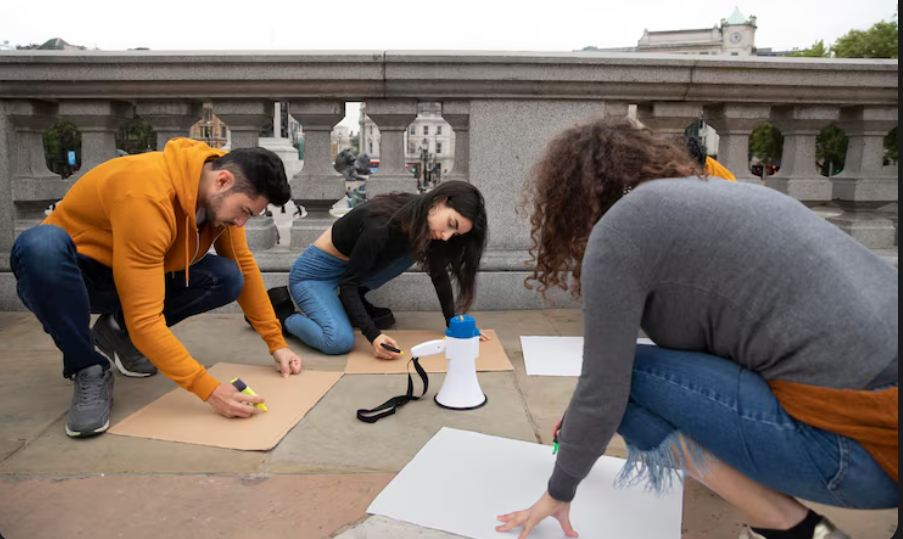
“Coming to the Plains” is unique not only because of the stories it gathered but also because of how it did so. Participants had full control over how they were identified — anonymously, by first name, or full name. Spanish or English could be used for interviews. Questions were open-ended, designed to let people shape their own narratives. In addition to being research subjects, many UNK Latina students volunteered for the project, assisted with participant recruitment, and occasionally shared personal narratives. Community advisors in each represented region worked to bring more voices in. Weisse used the word “extractive,” which is frequently used in oral history research, and the team took great care to ensure that the process was not extractive.
While pursuing her Master’s degree in Spanish education at UNK, Sammy Jarquín Palacios Fox joined the project. Being a first-generation immigrant from Mexico, she contributed to the translation work with an understanding of what is lost when sentiment shifts between languages that no technical training can fully replicate. “The stories touched my heart,” she said. “Just to know the way people came here for a better life to help their kids and the many reasons they had, that was heartbreaking.” There’s a feeling that the project would have been linguistically correct but emotionally lacking if individuals like her hadn’t been involved.
It’s important to take a step back and consider what this type of work truly accomplishes. A university archive recording of an interview does not constitute a change in policy. It does not ensure a child’s access to bilingual education or address an underfunded rural health clinic. However, telling a community that its history should be preserved and that its existence is genuine, recorded, and permanent has some significance. Not everything is resolved by that kind of acknowledgment. Whether initiatives like this result in long-lasting institutional change is still up for debate. However, it’s difficult to ignore as a first step toward belonging.
Disclaimer
Nothing published on Creative Learning Guild — including news articles, legal news, lawsuit summaries, settlement guides, legal analysis, financial commentary, expert opinion, educational content, or any other material — constitutes legal advice, financial advice, investment advice, or professional counsel of any kind. All content on this website is provided strictly for informational, educational, and news reporting purposes only. Consult your legal or financial advisor before taking any step.
