

A specific type of scientific concern functions differently from a typical environmental concern. It has nothing to do with the severity of individual disasters, the accumulation of damage over decades, or the compounding costs of inaction. It concerns the point at which the earth begins to react to itself rather than to our actions. Fundamentally, a climate tipping point is a transfer of control rather than a worsening of conditions. Furthermore, it’s getting more difficult to ignore the evidence that a number of them are either on their way or already in motion.
A report compiled by 160 scientists from 87 institutions in 23 countries in October 2025 confirmed what many researchers had been hinting at for a number of years: warm-water coral reefs have already passed their thermal tipping point. Global warming of 1.2°C was the central estimate for that threshold. Right now, the temperature is about 1.4°C. The ecosystem structure that supported almost a billion people and a quarter of all marine life is, in any meaningful sense, committed to extensive loss, even though the reefs haven’t vanished overnight (some fragments may survive with vigorous local conservation). Between 2023 and 2025, mass bleaching events occurred on more than 80% of the world’s coral reefs. The bleaching was at an all-time high in the waters off Kenya, Senegal, Tanzania, and Mozambique. The tipping point did not pose a threat to the future. It was a reality of the present.
The feedback loop that tipping points initiate is what distinguishes them from typical climate damage. About twice as much carbon as is currently in the Earth’s atmosphere is stored in permafrost in Siberia, Alaska, and northern Canada. This carbon is trapped in frozen ground and was created over thousands of years by the breakdown of organic matter. The ground thaws and releases carbon when temperatures in the Arctic rise. CO2 and methane are released into the atmosphere. The air gets warmer. More thawing permafrost. Regardless of what people do next, the cycle quickens. When natural emissions from thawing ground surpass any reductions made by human society, this process will become essentially self-sustaining. This is not a far-off scenario that calls for catastrophic temperature increases. It starts at warming levels that some of the major emitting countries are currently headed toward in a few decades.
IMPORTANT INFORMATION TABLE — CLIMATE TIPPING POINTS
| Category | Details |
|---|---|
| Definition | Critical thresholds in the Earth’s climate system where small changes trigger large, self-sustaining, often irreversible changes |
| Current Global Warming | ~1.4°C above pre-industrial levels (as of 2025) |
| First Confirmed Tipping Point Crossed | Warm-water coral reefs (thermal tipping point ~1.2°C; over 99% probability of tipping even at 1.5°C) |
| Key Report | Global Tipping Points Report 2025, University of Exeter; 160 scientists, 87 institutions, 23 countries |
| Greenland Ice Sheet Threshold | ~1.5°C (range: 0.8–3.0°C); full melt would raise sea levels ~7.2 metres over millennia |
| West Antarctic Ice Sheet Threshold | ~1.5°C (range: 1.0–3.0°C); full collapse ~3.3 metres of sea level rise |
| Amazon Rainforest Dieback Threshold | Lower end now estimated at 1.5°C (revised downward); 20% already deforested |
| AMOC Collapse Threshold | Estimated 1.4–8.0°C; collapse could begin as early as the 2060s (August 2025 study) |
| Permafrost Carbon | Holds ~twice the carbon currently in Earth’s atmosphere; located mainly in Siberia, Alaska, Canada |
| Cascade Risk | One-third of 3 million computer simulations resulted in domino tipping effects even at 2°C (2021 study) |
| Overshoot Risk | Temporary temperature overshoot above 1.5°C increases cascade risk by up to 72% vs. non-overshoot scenarios |
| Positive Tipping Points | Solar PV, EVs, battery storage, heat pumps already crossing positive thresholds in leading markets |
| Policy Gap | Current national pledges still put world on track for ~2.7°C+ — well above safe tipping point thresholds |
| Hothouse Earth Threshold | Proposed risk of cascading self-reinforcing warming potentially activating around 2°C |
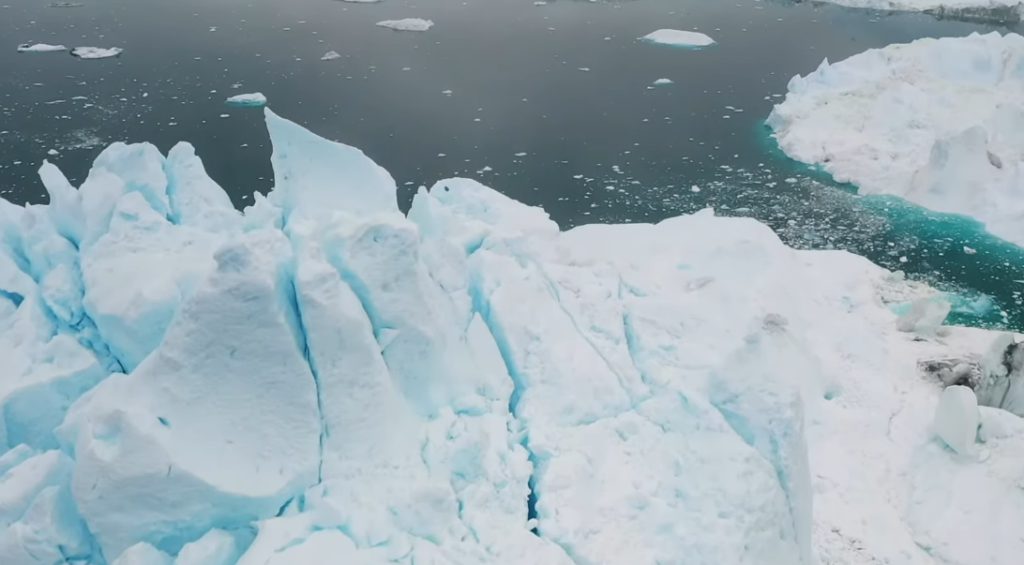
This dynamic is present in both the West Antarctic and Greenland ice sheets. The melt-elevation feedback drives Greenland’s tipping point: when ice melts and the surface drops, it sits at a warmer altitude, where it is exposed to higher temperatures, melts more, and then descends once more. In the absence of major policy changes, current global warming trajectories would surpass the estimated threshold for this process, which is 1.5°C above preindustrial levels. Over centuries, the total melting of both sheets would raise the sea level by about ten meters. Because of the inertia involved, ice loss would continue even if atmospheric CO2 were drastically reduced after the threshold was crossed. When crossing, rather than when flooding occurs, the commitment to that sea level rise is made.
Researchers who study these systems believe that the cascade problem is the aspect of public discourse that is consistently undervalued. Tipping points on their own are terrifying enough. They engage in a different kind of interaction. Even when warming was restricted to two degrees Celsius, the upper target of the Paris Agreement, nearly one-third of the three million computer simulations in a 2021 study produced domino effects. Sea level rise caused by Greenland’s melt destabilizes the West Antarctic ice sheet. The Atlantic Meridional Overturning Circulation, the ocean current system that controls temperatures throughout Europe and propels the monsoons that feed hundreds of millions of people in West Africa and South Asia, is weakened as a result of the freshwater inflow into the North Atlantic. By altering tropical rainfall patterns, a disrupted AMOC further dries out the Amazon, pushing the already-stressed rainforest—which has lost about a fifth of its original area due to deforestation—to the moisture threshold below which it can no longer support itself and starts to turn into savanna. Every transition intensifies the circumstances that lead to the subsequent one.
Given that the threshold estimate has been lowered, the Amazon dieback scenario merits special consideration. The largest tropical forest on Earth, which generates about half of its own rainfall through evapotranspiration and stores carbon equivalent to decades of global human emissions, is already operating within the margin of risk due to the lower end of the range, which is currently set at 1.5°C. A forest that used to have its own climate. There is a sense that two distinct processes are converging on the same threshold from different directions while neither is being reversed at nearly the necessary speed when one observes the trajectory of deforestation in the basin—incremental, legal and illegal, driven by cattle, soy, and timber—alongside the warming trend.
The exact location of each of these thresholds is still unknown, and there are legitimate scientific disagreements regarding the exact temperatures and timing involved. For example, conflicting research indicates that the AMOC’s collapse risk has been both overestimated and, according to a 2025 paper, possibly underestimated. According to some models, collapse may start as early as the 2060s. It is important to recognize that uncertainty exists. However, being unsure of a cliff edge’s precise location does not justify approaching it. The Global Tipping Point reports for 2023 and 2025 make it clear that every degree above 1.5°C and every year spent there significantly raises the likelihood of reaching thresholds that human civilization is unable to reverse on any timescale pertinent to any living person.
The scientific community has exercised caution to avoid declaring the situation hopeless, and this caution should not be written off as diplomatic ploys. There are also positive tipping points: in leading markets, the adoption of electric vehicles, solar photovoltaic systems, and battery storage have already surpassed self-reinforcing economic thresholds, and the shift is now primarily motivated by cost competitiveness rather than policy. These changes are actual and quickening. When evaluated honestly, the question of whether they accelerate quickly enough to remain below the thresholds where human decision-making is replaced by the climate system is still genuinely open.
