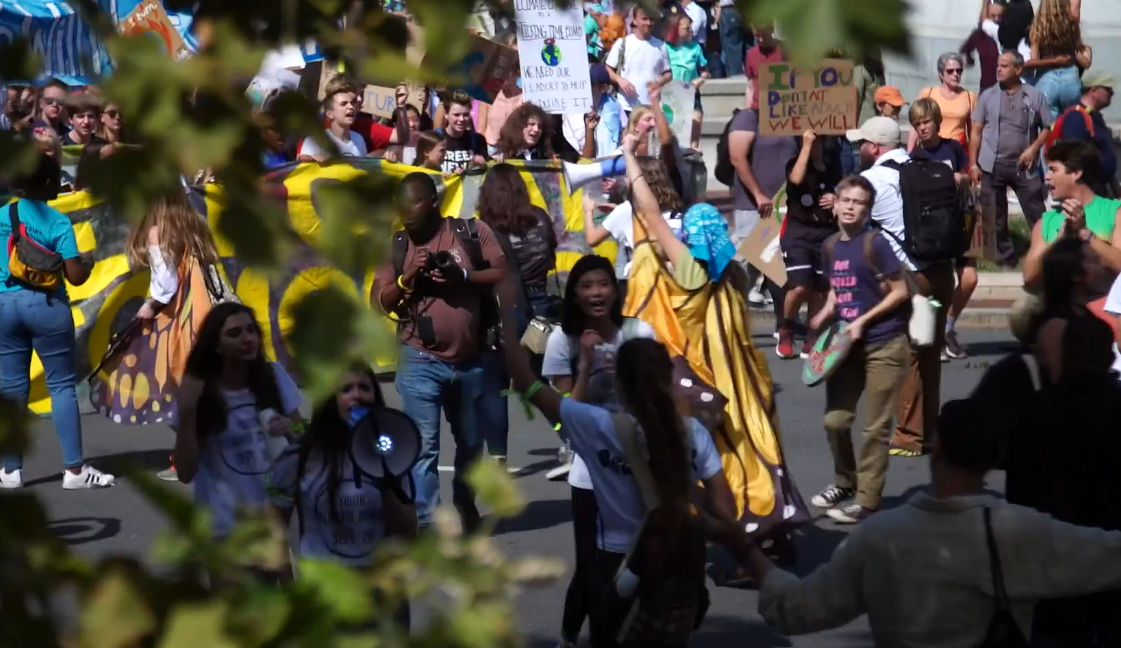
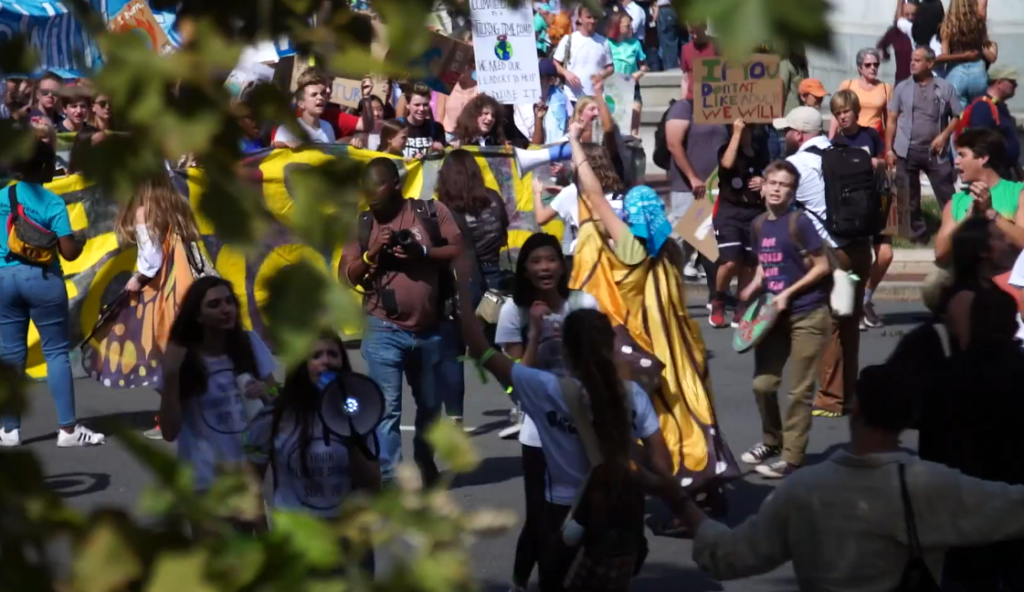
One image from the early 2010s climate marches is still making the rounds on activist forums: thousands of people crowding the streets of London, New York, or Berlin, holding signs aloft and chanting in unison. The entire event was peaceful, massive, and, depending on your point of view, either inspiring or completely predictable. Such protests continue to occur. However, at the same time, something else has been emerging that is much more difficult to capture on camera, quieter, and more deliberate.
A group going by the name Pipe Busters attacked a pipeline that ran from Southampton to London in 2022, making holes in it and demolishing construction equipment while it was dark. There was no press release. No live broadcast. Nobody is sticking their hand to a road. Just damage, done with care, by those who concluded that the loud and visible had ceased to function. Similar protests took place in North America and Germany, where demonstrators manually closed the valves on large oil pipelines to temporarily stop the flow and draw attention to how physically accessible this infrastructure is. The fossil fuel sector noticed. Law enforcement also did.
IMPORTANT INFORMATION TABLE — CLIMATE ACTIVIST RADICALIZATION
| Category | Details |
|---|---|
| Movement Stage | Shift from public protest to clandestine direct action (2022–present) |
| Key Ideological Influence | Andreas Malm, Swedish human ecologist; author of How to Blow Up a Pipeline |
| Active Groups | Pipe Busters (UK), Shut the System (STS), Tyre Extinguishers, Climate Direct Action |
| Notable Actions | Southampton-London pipeline sabotage (UK, 2022); fibre optic cable cuts at London/Leeds/Birmingham financial institutions (2025); Keystone Pipeline valve shutdowns (US) |
| Urban Tactics | “Tyre Extinguishers” — deflating SUV tires globally to raise cost of high-emission vehicle ownership |
| Trigger Factors | Anti-protest laws imposing felony charges; perceived political inaction on climate |
| Legal Response | Multiple US states passed laws making critical infrastructure trespass a felony |
| Internal Debate | Division over whether sabotage helps or harms the broader climate cause |
| Risk | “Eco-terrorism” labeling; public alienation; harsher prison sentences |
| Research Status | Academic studies ongoing (Taylor & Francis, Sage Journals, ScienceDirect, 2025–2026) |
| Current Phase | Described by researchers and activists as a distinct “new phase” in climate activism |
Surprisingly, this shift’s intellectual foundation can be traced back to a single book. In a brief book, Swedish human ecologist Andreas Malm argued that governments had learned to just wait out the climate movement because it had been too patient, too courteous, and too dedicated to a tradition of nonviolent protest. In essence, he argued that if the stakes are truly as high as the science indicates, it is not only justifiable but perhaps even past time to destroy the climate-destructive machinery. For a certain group of activists who had already started in that direction and were searching for words to support it, the book became something of a bible. The question of whether Malm foresaw the actual pipeline sabotage that ensued is unsettling in and of itself.
Even if you don’t agree with the response, you can still understand the frustration. The speed and severity of the tightening of anti-protest laws in the US and Europe have been astounding. Once considered a minor public order infraction, blocking a road now carries felony-level charges in many US states. Many observers felt that the sentences imposed on activists in the UK who disrupted traffic or sat in the streets were disproportionate to the actual costs of the protest. The idea is that the deterrent effect of turning into actual sabotage is diminished if the legal system views peaceful disruption as a serious crime. Either way, you’re already in danger of going to prison. You might as well make a lasting impression.
The internal discussion within the larger climate movement is perhaps just as fascinating to watch as the actual sabotage. For legal reasons as well as because their entire theory of change depends on public sympathy, organizations like Extinction Rebellion, which based their entire strategy on mass peaceful civil disobedience and calculated arrest, have been forced to publicly distance themselves from property destruction. In that context, the one thing you cannot afford to do is alienate common people. Disagreement is common among saboteurs. They contend that the pipeline is indifferent to public opinion and that the climate timeline does not provide the luxury of waiting for majority support.
A group known as Shut the System intensified the situation in 2025 by taking credit for cutting fiber optic cables at significant financial institutions in Birmingham, Leeds, and London. The target was specifically chosen to be the financial infrastructure that supports the fossil fuel economy rather than a pipeline or a refinery. It’s a more abstract kind of sabotage that requires a more abstract justification, but the reasoning is the same: if you can’t stop the fuel from flowing, you pursue the funds that fund the drilling. It’s still unclear if that reasoning truly disrupts anything significant or if it just makes headlines and leads to legal action.
The “Tyre Extinguishers” campaign, which targets private citizens rather than corporate infrastructure, falls somewhere in the middle. It deflates SUV tires in cities throughout North America and Europe. Depending on the particular car and the particular city block, it has been referred to as anything from petty harassment to principled direct action, and it’s likely both. Unquestionably, it has broadened the perception that climate activism is no longer a single movement with a cohesive set of strategies. These days, it’s a loose group of individuals with drastically different prescriptions and a common diagnosis.
Where this trajectory will go next is the more difficult question, which researchers in Germany and elsewhere are beginning to take seriously. There is no increase in the accommodation of governments.
Climate goals are not being fulfilled. Those activists who were once fervently devoted to traditional approaches and became genuinely convinced that those approaches failed are typically the most vulnerable to radicalization. Rather than dismissing it as extremism and moving on, it’s important to take that particular psychological profile seriously. Whether sabotage speeds up political change, delays it by giving opponents a handy villain, or just burns out in arrests and court costs without significantly altering a single carbon molecule is still up for debate. Anyone who claims to know the answer with certainty is probably not paying enough attention to the evidence. This uncertainty is real.
Disclaimer
Nothing published on Creative Learning Guild — including news articles, legal news, lawsuit summaries, settlement guides, legal analysis, financial commentary, expert opinion, educational content, or any other material — constitutes legal advice, financial advice, investment advice, or professional counsel of any kind. All content on this website is provided strictly for informational, educational, and news reporting purposes only. Consult your legal or financial advisor before taking any step.