

The storm didn’t wait for morning to rip across Bowling Green, Kentucky. Driving wind and lightning into areas that were still trying to sleep, it came in the dark. Not only was there structural damage, but it also served as a stark reminder that tornado patterns are changing.
Formerly strongly linked to the flat plains of Texas and Oklahoma, Tornado Alley is moving away. In recent years, data has consistently indicated an eastward movement. The most active zones are no longer dispersed throughout Kansas. Tornadoes are becoming more frequent and more serious in states like Alabama, Mississippi, and Kentucky, and they are now widespread throughout the Southeast.
There is no guesswork in this movement. Satellite data, touchdown logs, and confirmed meteorological research all support it. Analyzing data from the last 20 years reveals a particularly strong trend. In addition to increasing, tornado activity east of the Mississippi has surpassed historical hotspots by a considerable margin.
Science is responsible for the change. The warming of the Gulf of Mexico causes more humid, erratic air to move northward. When upper-level wind patterns combine with that moist air, the ideal environment for supercell production is created. On the other hand, the traditional Plains area has become drier, frequently capped by stable air that prevents storm formation.
| Category | Details |
|---|---|
| Traditional Region | Texas, Oklahoma, Kansas, Nebraska |
| New High-Risk Zone | Mississippi, Alabama, Tennessee, Kentucky (“Dixie Alley”) |
| Main Drivers | Climate change, warmer Gulf waters, eastward storm track |
| Deadlier Factors | Nocturnal tornadoes, dense forests, higher population, mobile homes |
| 2024–2025 Trends | Tornado frequency now highest east of the Mississippi River |
| Key Statistic | Southeast tornado touchdowns up 50% (2011–2020 vs. prior decade) |
| Recommended Action | NOAA weather radios, emergency shelters, year-round preparedness |
| Source Link | National Weather Service |
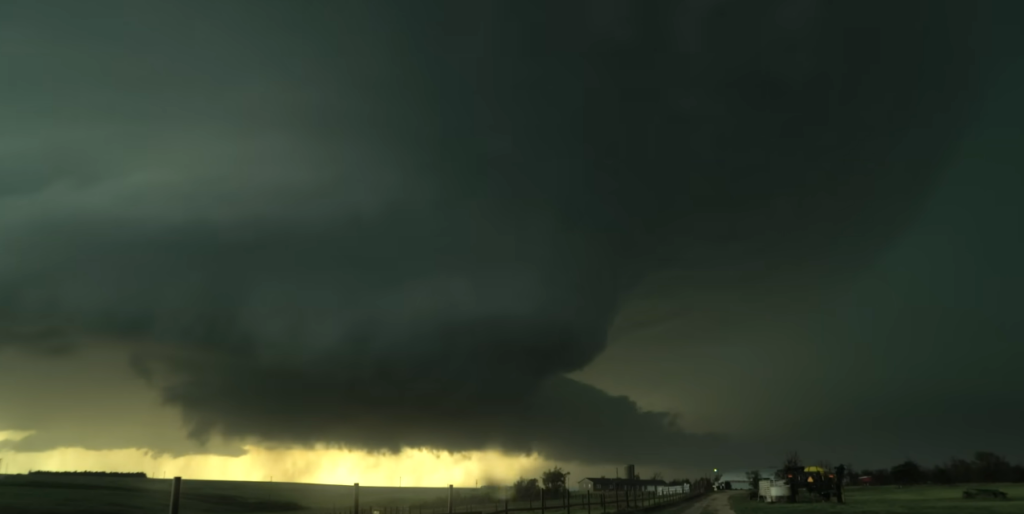
Previously a transitory phenomenon, the air “cap” over western states is now acting as a more persistent barrier. Storms that could have formed over Amarillo are now developing close to Tupelo as a result. In addition to changing the pattern, this is also changing the place and subtly rewriting decades of preparation for disasters.
The new risk zones are less structurally and culturally equipped, which makes this change especially risky.
There are more trees, night storms, and mobile houses in the southern sections. Together, these factors make tornadoes much more deadly and difficult to identify. People are either asleep or react more slowly during nighttime tornadoes, making them especially hazardous. This delay can be deadly when storms build up suddenly.
To make matters worse, many locals do not consider tornadoes to be a serious threat. Due to weather radios, siren drills, and storm shelters, the Midwest developed a tornado identity. However, belief and reality have not yet caught up in certain Southern states. Many houses don’t have basements. There are many counties with outdated radar coverage. To be informed in a timely manner, too many families continue to rely exclusively on antiquated siren systems.
A retired teacher from central Mississippi told me last year that she had only ever heard a tornado warning once in her life, even though she had experienced three. “Down here, they’re not called tornadoes,” she remarked. “Merely severe storms.” That kind of thinking is very risky, even when it seems sense.
In addition to a tendency in the weather, we are currently witnessing a vulnerability gap.
Some districts in Alabama are just now starting to construct safe shelters, while towns in Kansas have integrated responses into school procedures. Rural Kentucky still relies on electrical lines that often break during storms, while Oklahoma counties continue to give layered notifications through multiple platforms.
As hurricane zones continue to grow northward, the urgency of adapting is remarkably comparable. Though regulations, financing, and awareness have been slow to follow, people who formerly lived outside of the “red zone” are now in the eye of increasing storms.
The positive news? There is a growing awareness.
A number of Tennessee and Arkansas cities are starting to make investments in updated construction standards, radar infrastructure, and public education initiatives. Families are being advised by public safety officials to find shelter spots in advance, prepare emergency supplies, and purchase NOAA weather radios. These are very helpful measures in areas where mobile homes are still common.
Changing one’s perspective is as crucial for families in recently affected areas as modifying emergency plans. The main takeaway is that you must adapt your plan if tornado alley has moved.
The accuracy of forecasting models will increase in the upcoming years. This is already taking place. However, merely anticipating is insufficient. What saves lives is the reaction. Additionally, practice is crucial in areas where quick reactions are unfamiliar.
One positive indication is that local school systems are beginning to approach tornado safety in the same way that Midwest states have done for many years. Response times are practiced, drills are added, and parents are included. Though it’s a minor change, it’s really powerful.
Regarding nomenclature, some specialists advise doing away with the term “Tornado Alley” completely. They contend that we can’t fully comprehend risk if we continue to use antiquated terms. The name still inspires action in many people, nevertheless, since words has power.
What we call it doesn’t really matter. It’s whether we pay attention to the shifting data, the maps, and the real-life stories of towns that are now hearing sirens they never would have imagined.
The Plains are no longer at risk from tornadoes. In America, they are a fact.
Mentally, practically, and collectively, getting ready for that change is not just a good move. It’s vital. We can be prepared when the storm arrives, even though we cannot prevent it from happening.
