

Standing near an Alaskan fjord where spruce trees formerly clung to rocks now stripped bare, it’s simple to understand how raw and immediate nature can be. The sea was hurled by falling rock, like a bowl toppling violently in a child’s hands, rather than rising from distant tectonics.
In July 1958, a 7.8-magnitude quake created a large landslide into Alaska’s Lituya Bay. What followed wasn’t a ripple, but a wall of water taller than skyscrapers—524 meters high. The disaster didn’t only set records—it defined the phrase “megatsunami.” A name that still seems too gentle for a force that is so deeply upsetting.
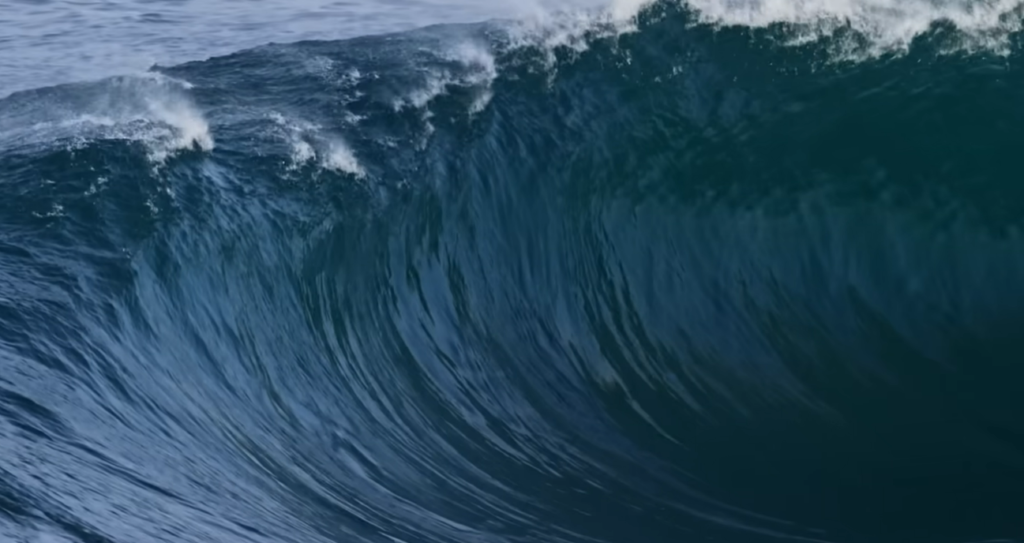
Megatsunamis are created by spectacular collapses, where land plunges into lakes or seas, displacing water with horrifying urgency. This is different from regular tsunamis. These waves don’t politely roll in; they detonate outward. And whereas normal tsunamis can travel huge distances, megatsunamis are incredibly focused, cutting damage into coastlines with terrible precision.
More recently, in 2023, Greenland’s Dickson Fjord witnessed a slope collapse that brought over 20 million cubic meters of rubble pouring into the sea. The ensuing wave surged more than 200 meters and resonated via seismic sensors across continents. But what astonished experts wasn’t just the height—it was the odd permanence of the wave’s energy. A low-frequency seismic hum remained for nearly a week, gently announcing the raw power nestled inside the fjord.
| Category | Detail |
|---|---|
| Definition | Exceptionally large tsunami caused by sudden massive displacement |
| Common Triggers | Landslides, volcanic collapse, asteroid impacts |
| Typical Run-up Heights | Exceeds 100 meters (can reach 500+ meters) |
| Most Famous Example | 1958 Lituya Bay, Alaska (524 meters high wave) |
| Recent Notable Event | 2023 Greenland landslide in Dickson Fjord (200m+ wave) |
| Potential Future Risks | Cumbre Vieja (Canary Islands), Alaska, British Columbia |
| Unique Characteristics | Shorter wavelength, immense height, localised destruction |
| Difference from Tsunamis | Caused by landmass collapse, not underwater seismic activity |
That occurrence, however relatively remote, spurred renewed urgency among researchers. By utilizing satellite interferometry and real-time radar, scientists traced slope instabilities that had developed silently over years. It turns out that these collapse zones rarely scream before they break. They whisper.
Through strategic partnerships between glaciologists, geologists, and data scientists, early warning systems are being substantially improved. Anticipation is more important than mere reaction. particularly in regions like Alaska or Norway, where glacier retreat and thawing permafrost are rapidly changing the landscape.
The problem for early-stage reaction teams is surprisingly straightforward: how do you get ready for a wave that is larger than a football field and doesn’t tremble or shake to alert you? The answer rests in precision monitoring and localized modeling. Soil movements that might normally go undetected are now detected by centimeter-level tracking in places like Southeast Alaska.
These dangers are becoming more frequent and widespread in the setting of a warming environment. Cliffs that were originally supported by thick ice become more unstable when glaciers retreat. With their natural buttresses gone, these cliffs droop, buckle, and sometimes collapse. It’s not drama—it’s science.
One especially unique monitoring technology leverages fiber-optic connections already implanted in telecommunication systems. Sprawling vibration detectors are being made out of these “dark fibers.” By examining their real-time data, geologists can detect minute ground shifts—days or even weeks before a disaster occurs.
This kind of technology could have assisted in identifying antecedents to the Greenland collapse. But even now, the data it provided is proving incredibly important. It showed the gradual accumulation of stress that resulted in the cliff’s collapse in addition to mapping the wave’s creation.
Long-term risk mapping has been a top priority for research stations located throughout steep coastal zones and volcanic islands since the introduction of these new methods. The Cumbre Vieja volcano in the Canary Islands—once feared for a potential westward flank collapse—has been re-evaluated. According to recent models, smaller consecutive landslides could still produce waves that are significantly destructive, even though a catastrophic occurrence is less likely.
All of this is excellent news, though, because we are catching up in our understanding. And where knowledge leads, readiness can follow. Accurate mapping of danger zones and more proactive protection of local communities are possible through the integration of diverse insights, ranging from maritime engineering to climate research.
Incredibly adaptable techniques, including as drone-based LiDAR scanning and hydroacoustic sensors, now form a vital arsenal in coastal resilience tactics. These technologies do more than just provide passive observation; they also provide extremely effective early alarms that feed into AI-driven simulations that make real-time predictions about wave patterns.
By integrating blockchain technology, even community-based data sharing platforms are being examined. These dispersed platforms guarantee that coastal cities and isolated villages receive timely warnings free from administrative hold-ups and bottlenecks.
What brings these varied efforts together is one stark truth: the next megatsunami may not start with a roar. It can start with a small fissure tucked away deep in a mountainside. But that voice no longer needs to be ignored because of science, teamwork, and incredibly sharp thinking.
And while we can’t keep back the sea, we can listen to the land.
And that—more than anything—is how we stay ready.
