

The secrets of Antarctica are rarely readily revealed. Researchers often describe the place as eerily quiet while standing on that huge white plateau, with snow floating like powdered glass under a pale sun and wind scraping across the surface. However, something more akin to an archive than a landscape can be found beneath that frozen silence. Year after year, century after century, layers of ice accumulated, silently preserving remnants of Earth’s atmospheric history.
For decades, researchers have been penetrating those layers. Theoretically, the process is straightforward: insert a hollow drill into the ice, extract a long, cylindrical core, and investigate the contents. However, they extract more than just frozen water. Real samples of ancient air are contained in tiny bubbles within the ice. It is the closest thing to a climate time machine on Earth.
And the message from those ice cores has been increasingly disturbing in recent years.
| Category | Details |
|---|---|
| Location | Antarctica, Southern Hemisphere |
| Scientific Focus | Climate history preserved in Antarctic ice cores |
| Research Projects | SWAIS2C (Sensitivity of the West Antarctic Ice Sheet to 2°C) and international ice-core studies |
| Key Discovery | Atmospheric CO₂ levels now exceed levels from the past ~3 million years |
| Ice Loss Data | About 7.5 trillion tonnes of Antarctic ice lost since 1997 |
| Ice Core Depth | Some drilling exceeds 500 meters through ice to reach sediment cores |
| Climate Timeline Studied | Up to 23 million years of climate records in sediment layers |
| Sea Level Risk | Collapse of the West Antarctic Ice Sheet could raise sea levels by 4–5 meters |
| Research Institutions | ETH Zurich, Victoria University of Wellington, Binghamton University and others |
| Reference | https://scitechdaily.com |
| Reference | https://www.antarcticglaciers.org |
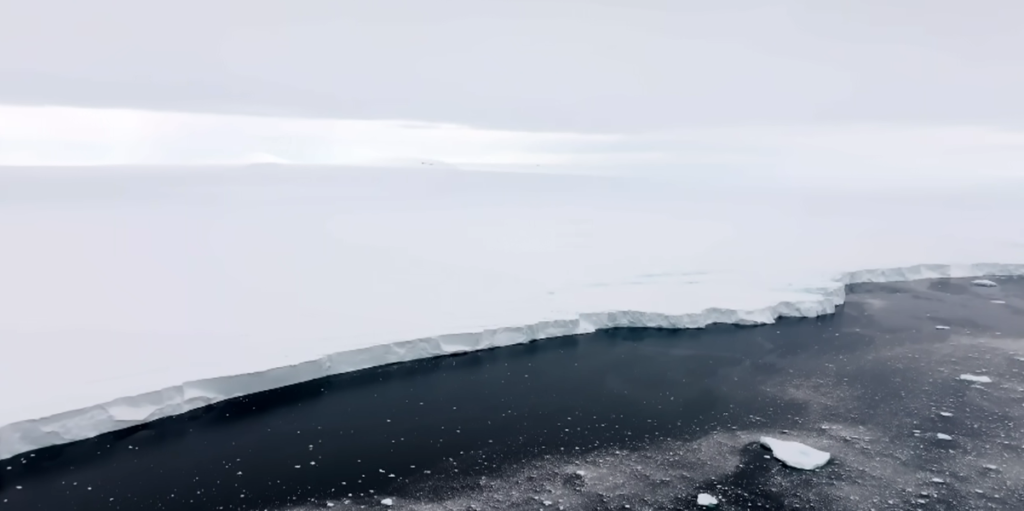
According to some of the most recent analyses, the amount of carbon dioxide in the Earth’s atmosphere has increased to levels not seen in about three million years. Even though the figure—more than 420 parts per million—may seem arbitrary, it has significance in the field of climate science. Researchers can compare current measurements with atmospheric conditions from hundreds of thousands of years ago using ice cores from Antarctica, and the comparison is not subtle.
Scientists believe that the planet is expanding beyond the bounds of its recent natural history.
The actual discovery was made using a combination of new and old tools. Sediment samples buried beneath the ice sheet, satellite imagery, and ocean measurements are combined with ice cores drilled throughout Antarctica. Recently, a particularly ambitious drilling project melted a hole through the ice that was more than 500 meters deep before removing layers of rock and mud from underneath.
The sediments were surprisingly illuminating. Microscopic marine fossils and tiny shell fragments found in some layers provide proof that portions of West Antarctica were formerly open ocean rather than frozen land. Large-scale ice retreat may have occurred in the area during previous warm periods, which raises challenging questions about what might occur if temperatures continue to rise.
Though not totally at ease, researchers have been cautious when examining the samples.
If the West Antarctic Ice Sheet completely collapsed, the amount of ice it contains would raise sea levels by four or five meters worldwide. Even though that kind of situation wouldn’t occur overnight, the prospect has prompted researchers to examine the past more closely for indications of how ice sheets behave in warmer climates.
It’s difficult to watch this research without picturing the field camps where a lot of it takes place. Hundreds of kilometers away from the closest research station, tiny groups of tents are set up on the ice. Drilling continuously and meticulously labeling each section of ice core before storing it in insulated boxes, teams of scientists work in rotating shifts.
A small chapter in Earth’s atmospheric history is symbolized by each slice of ice.
The readability of the ice is one aspect that researchers frequently discuss. The layers occasionally display seasonal variations, such as summer snow compressed against darker winter deposits, much like rings in a tree trunk. However, the layers compress and blur under tremendous pressure at deeper depths in the ice. It gets more difficult to interpret at that point.
Nevertheless, the general trend that emerges from the cores seems to be becoming more stable. In contrast to the natural fluctuations observed in previous centuries, Antarctica has warmed considerably in recent decades, and the rate of change appears unusual. Modern temperature increases are outside the typical range of variability, according to some ice core records dating back a millennium.
But that doesn’t mean that all scientists have the same ideas about what to do next.
Complex climate systems exist, and the behavior of Antarctica varies by region. Because of the colder ocean waters, parts of East Antarctica continue to be comparatively stable. On the western side, however, warmer currents are gradually thinning the floating ice shelves from below.
That gradual erosion is important. Glaciers are prevented from sliding into the sea by ice shelves, which function as enormous braces. Glaciers have a tendency to accelerate when those shelves deteriorate, dumping massive amounts of freshwater into the ocean.
Antarctica has already lost trillions of tonnes of ice in the last few decades. According to some studies, melting from the continent was responsible for almost a fifth of the rise in sea levels worldwide in some recent years.
Ocean research linked to the ice cores has revealed another twist. For a while, scientists thought that when glaciers melted, iron might be released into nearby waters, causing microscopic algae to bloom and absorb carbon dioxide from the atmosphere. It sounded almost like a partial safety valve provided by nature.
However, field measurements indicate that concept might have been too optimistic. It seems that much less iron is delivered by the meltwater than anticipated. Deep ocean water and seabed sediments appear to be the primary sources of iron for Antarctic marine ecosystems.
Some climate models have been subtly complicated by this realization.
The farther back the story goes, the deeper researchers go into Antarctica. Evidence of climate conditions from more than 20 million years ago may be preserved in sediment cores found beneath the ice. During some of those times, the planet was warmer, and the behavior of the ice sheets changed significantly.
These days, scientists want to know precisely how fast those ancient transitions occurred.
The disturbing reality is that Antarctica is more than just a secluded wilderness. It is among the most potent climate regulators on Earth. Globally, the ice sheet affects sea levels, weather patterns, and ocean currents.
