

Policymakers are frequently reminded by Pasi Sahlberg that education is about the quality of experiences rather than the amount of work. His position is remarkably similar to that of many other nations that have reduced or eliminated homework completely. Quebec, Finland, and Poland have all made bold moves, claiming that fewer homework assignments result in better learning outcomes and much higher levels of wellbeing. This change represents a redefinition of what real education ought to entail: more purpose, less pressure.
Sahlberg’s theories have influenced national policy in Finland, where the method of instruction is incredibly successful. Less homework, longer breaks, and shorter school days are all provided to students. Instead of becoming overwhelmed by homework, teachers trust their students to refuel at home. The findings are strikingly obvious: Finnish students continue to achieve academic success while expressing noticeably greater levels of happiness. It is a cultural statement about balance rather than merely an educational policy.
Many were taken aback by Poland’s Ministry of Education’s recent announcement that primary school homework would no longer be assigned, while older students would have the option to complete it. Early data indicates that children are more willing to participate, attendance has increased, and classrooms have become more engaging. This change, which transforms learning from a mechanical process to a collaborative, curiosity-driven activity, is characterized by teachers as especially innovative.
Bio Data and Professional Information: Pasi Sahlberg
| Category | Details |
|---|---|
| Full Name | Pasi Sahlberg |
| Born | June 26, 1959 |
| Nationality | Finnish |
| Occupation | Educator, Author, Policy Advisor |
| Known For | Architect of Finland’s modern education model emphasizing equity and reduced homework |
| Education | Ph.D., University of Jyväskylä |
| Major Works | “Finnish Lessons: What Can the World Learn from Educational Change in Finland?” |
| Reference Website | https://pasisahlberg.com |
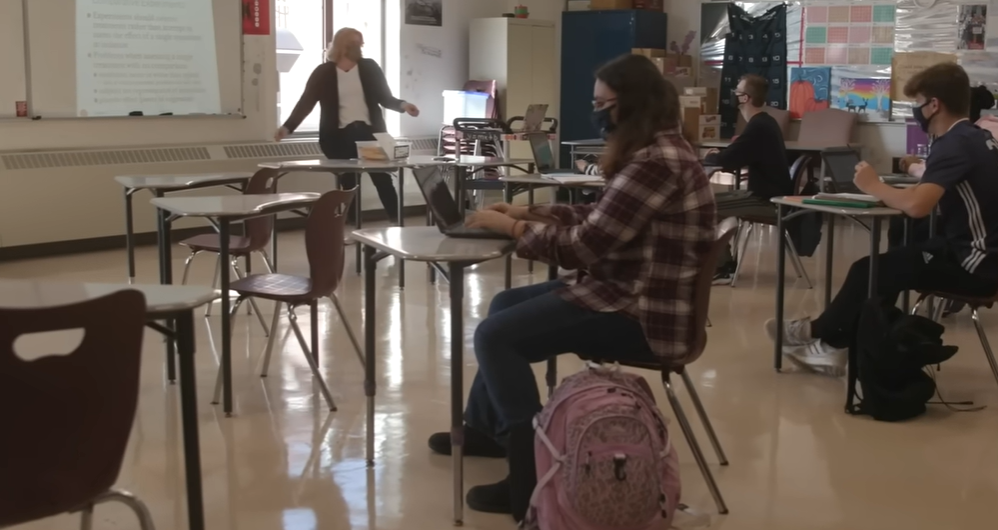
Excessive homework has been linked to student anxiety, sleep deprivation, and decreased motivation, according to studies conducted over the past ten years. The backlash got so bad in places like Spain that parents banded together to stage “homework strikes.” Their message was very clear: childhood should not only be a time for memorization but also for rest, creation, and connection. The sentiment resonated around the world, making teachers question whether traditional homework is really useful.
“No-homework weeks” have been tried in a number of Canadian provinces, with remarkably positive results. Students arrive at class more rested and ready to think critically, according to teachers. Families report peaceful evenings once more, complete with shared meals, rekindled hobbies, and restful sleep. These schools have achieved a highly effective balance without sacrificing academic integrity by placing a high priority on mental health.
The argument against homework is based on reasoning rather than laziness. Extending the six to eight hours that young minds spend absorbing structured instruction into the night frequently results in fatigue rather than mastery. The diminishing returns are obvious, much like when you ask an athlete to train past fatigue. Repetitive tasks are less effective than rest and variety in consolidating learning, according to cognitive scientists.
Many educators around the world agree with Vox when she says that “nobody really knows what the point of homework is.” Reform is also being driven by the gap between privileged and underprivileged students. Inequality is often exacerbated by homework; while some students have access to peaceful study areas and parental guidance, others must deal with noisy homes or part-time jobs. Schools can greatly lessen these gaps and establish more equal learning environments by doing away with homework.
Additionally, this movement is in line with a more comprehensive rethinking of education. Teachers are moving away from worksheets and toward meaningful discussion, and from quantity to quality. The method is especially helpful for creativity-based learning, in which students investigate concepts through technology, art, and teamwork as opposed to monotonous repetition. This is best illustrated by Finland’s emphasis on teacher autonomy. There, teachers use their professional judgment rather than strict policy to determine whether homework is necessary. The outcome has been successful and compassionate.
Pasi Sahlberg frequently makes the analogy that education ought to function similarly to a well-balanced ecosystem, where challenge, curiosity, and rest all coexist peacefully. In the same way that overfishing harms a sea, giving students too many assignments upsets that ecosystem. His ideas have encouraged educators everywhere to view education as more than just a means of production; it is a sustainable endeavor. Students’ performance and happiness have significantly increased as a result of this strategy.
These thoughts have begun to be echoed by public figures and thinkers. The well-known education reformer Emma Watson hailed Finland’s method as “the most human model of learning.” Even though they run fast-paced businesses, tech titans like Elon Musk and Bill Gates stress that creativity flourishes in freedom rather than in rigid schedules. Their opinions are in line with a growing realization that curiosity, rather than repetitive tasks, is what develops the brightest minds.
The dialogue is slowly changing in the United States. Programs for less homework are being piloted by districts from Massachusetts to California. Some teachers now only assign assignments that support what is learned in class, or they no longer grade homework. Others have substituted in-class collaboration sessions for customary homework, guaranteeing that every student receives the same level of assistance. According to preliminary reports, student participation is increasing and stress levels are declining, which is especially positive in diverse school systems.
According to psychologists, the homework-free method improves emotional fortitude. Without constant pressure, children naturally develop time management and self-motivation skills. This independence encourages accountability and equilibrium, two qualities that are frequently lacking in overworked learning settings. Happy and well-rested students exhibit increased cognitive flexibility, a quality that is highly valued by employers today.
In many schools, homework is no longer equated with learning thanks to deliberate reforms and teacher-led discretion. Rather than being applied consistently, it becomes optional reinforcement that is customized to need. Because of its great versatility, education systems can change to keep up with social and technological advancements.
The results of a year-long experiment in Quebec where one elementary school banned homework were remarkably encouraging. Students showed a greater interest in their subjects, their grades improved, and their stress levels decreased. Parents who had previously expressed skepticism later said that their homes were “peaceful for the first time in years.” This change exemplifies how eliminating a single institutional habit can significantly enhance one’s quality of life.
These changes don’t mean that ambition or structure should be abandoned. They merely emphasize equality, creativity, and health as essential components of academic achievement. Instructors are finding that reducing homework frees up time to concentrate on creating lessons that are interesting, individualized, and profoundly meaningful. Students react well to that sincerity; learning becomes more about curiosity than compliance.
