

During a conference panel, I once overheard a tenured lecturer whisper to himself, “Online learning just doesn’t teach the same.” Many of his peers shared this view, particularly those who had previously viewed classrooms as hallowed places rather than user interfaces. However, after a few years, the situation has changed significantly due to data, perseverance, and a subtle, group change in academic culture.
Nowadays, a number of extensive studies provide comprehensive information about the performance of online learning in comparison to its traditional equivalent. More than 18,000 students and 1,000 teachers were examined in a study conducted by Auburn University, Southern Mississippi, and American University to see how performance changed in both online and offline settings. It found that although online grades seem to be higher, this increase frequently results from laxer control and more liberal grading rather than from real knowledge gains.
However, that is not the entire picture.
The situation is different at colleges that place a higher priority on instructor training and digital infrastructure. For instance, to facilitate seamless hybrid learning, the University of Texas at Austin outfitted classrooms with touch-screen tools, interactive whiteboards, and camera monitoring. In addition to being empowered, faculty members attended numerous cooperative workshops and even practiced lectures with family members to improve their delivery. Both in-person and remote students’ learning experiences were significantly enhanced by this intentional planning.
| Topic | Details |
|---|---|
| Core Debate | Whether online learning delivers inferior academic outcomes |
| New Data | Studies show outcomes are now comparable to or better than in-person |
| Key Institutions Studied | Auburn University, UT Austin, McCombs School of Business |
| Main Factors Changing Perceptions | Technology investment, faculty training, hybrid models, flipped classes |
| Persistent Concerns | Grading inflation, academic integrity, lack of social interaction |
| Notable Contradiction | Higher online grades may reflect leniency, not deeper understanding |
| External Source (Credible Link) | UT Austin – Online Learning Opinion |
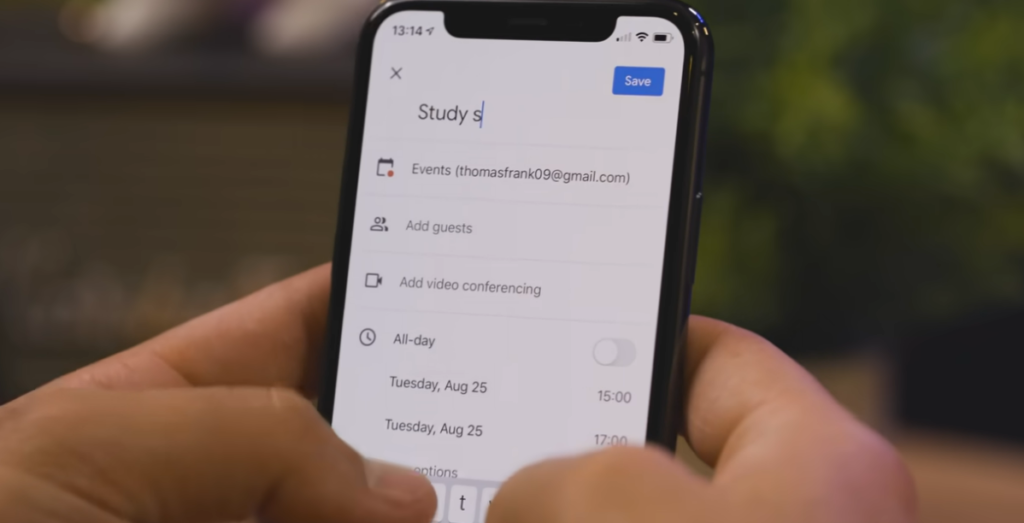
The move wasn’t hurried or ostentatious. It was motivated by pragmatism and a thorough comprehension of the evolving demands of pupils.
The misconception that online education is intrinsically inferior has greatly diminished, particularly when educational institutions make the necessary investments in resources and instruction. Higher levels of student engagement and retention are reported by educators who use flipped classroom models, which record lectures for asynchronous learning while allocating live sessions to problem-solving. These formats allow students to rewatch content at their own pace and meet varying learning speeds.
Many educators were taken aback by the rise in interactions between students and professors. Video calls made office hours, which were previously strict and frequently underutilized, more accessible. This minor adjustment has greatly enhanced mentoring and rapport. The digital door proved to be much less daunting for students who would have been hesitant to approach a lecturer in person.
Of course, there are still difficulties. Perceptions are still distorted by academic dishonesty and grading inflation. Online cheating is simpler, and without aggressive measures, it is more difficult to be caught. Students scored higher when teachers used antiquated tools or didn’t enforce rigorous anti-cheating regulations, but this wasn’t always because they learned more. Although this issue is not exclusive to digital education, it is significantly exacerbated by it.
However, results between modalities start to closely match after those integrity controls are put into place. This is arguably the strongest case that the system surrounding the screen is the problem rather than the screen itself.
I recall going over a course syllabus that had been modified for hybrid learning. Real-time peer feedback tools, scenario-based tasks, and interactive polls were all incorporated by the instructor. Students were active participants rather than passive listeners. Additionally, the professor wasn’t naturally tech-savvy. She had just matured with the format, making conscious adjustments to make it work.
I was affected by that.
For non-traditional students who find it difficult to attend classes on campus, such as parents, part-time workers, or residents of rural locations, the flexibility of online learning is especially advantageous. Online forms broaden the reach of education rather than merely replicating it. People can fit learning into lives that don’t match the normal 18–22-year-old timetable thanks to this reach’s extreme versatility.
However, some faculties are resistant. And that makes sense. Teaching online involves a change in rhythm, focus, and pedagogical approach in addition to a change in location. Reworking decades of content into dynamic modules that feel personal rather than pre-recorded takes time, frequently without compensation.
This change was brought about by the epidemic, but the most creative instructors have accepted it as a long-term development.
Additionally, online learning has proven to be very effective in gathering data, enabling teachers to monitor students’ mistakes in real time and take action sooner. Such revelations are frequently overlooked in conventional lectures until test time. Chalkboards were never able to deliver the clarity that dashboards provide now.
It’s interesting to note that even when teaching in person, many educators still use some internet resources. They now know what promotes deeper learning, what detracts from it, and what enhances it. The hybrid model is becoming the norm rather than a compromise. One that adapts to the topic matter, student background, or educational objective while combining the finest aspects of both settings.
It’s important to remember that the interpersonal value of traditional classroom settings should not be replaced by online learning. A spontaneous understanding brought on by an off-script analogy or a group conversation that catches fire cannot be replaced by a digital tool. However, data indicates that those experiences are simply reframed rather than completely lost online.
Learning still occurs at a deep emotional level. It’s simply passing through several routes.
The most successful organizations are those who intentionally create these systems rather than using them as PR gimmicks or budget tricks. They understand that the designers have a greater influence on quality than the format. And the outcomes speak for themselves when people are given the proper resources, time, and trust.
Online education no longer needs to be justified.
