

A quiet revolution in leadership is emerging somewhere between proposing venture-backed ideas and troubleshooting a hardware schematic. This revolution begins around a long table in Sunnyvale, where engineers get together every Wednesday night to reconsider the true nature of influence, rather than in an MBA program.
The UC Berkeley ELPP appears to be a well-designed executive workshop at first appearance. However, the output it is generating is much more ambitious. It is preparing engineers to assume leadership roles by developing them into highly adaptive, communicative, and ambiguity-averse individuals rather than by discarding their technical identities.
Teaching engineers how to “fake” leadership is not the goal here. Giving them a strategic vocabulary that corresponds with their technical accuracy is the goal. They have years of expertise, frequently over ten years, developing systems, managing technical teams, or introducing new products. They are currently looking for a new set of levers, such as strategic risk-taking, communication under pressure, and influence without authority.
The curriculum appeals to a disciplined and problem-solving demographic by concentrating on engineers. Executive presence, financial fluency, and storytelling are being introduced. What about the approach? Former C-level executives, startup founders, and innovation pioneers who have been in the trenches of scaling companies—rather than merely studying them—lead weekly high-density sessions.
Key Context: The Engineering Program That’s Teaching Future CEOs to Lead
| Program | UC Berkeley’s Engineering Leadership Professional Program (ELPP) |
|---|---|
| Focus | Leadership development for engineers and technical professionals |
| Duration & Format | In-person, 22-week program with evening sessions, group projects, and networking |
| Skills Taught | Innovation management, strategic thinking, communication, finance, influence |
| Notable Features | Led by Silicon Valley entrepreneurs, venture partners, and industry veterans |
| Goal | Prepare engineers to transition from technical contributors to executive leaders |
| Comparable Programs | MIT Tech CEO, Stanford Engineering Leadership, Wharton Global C-Suite |
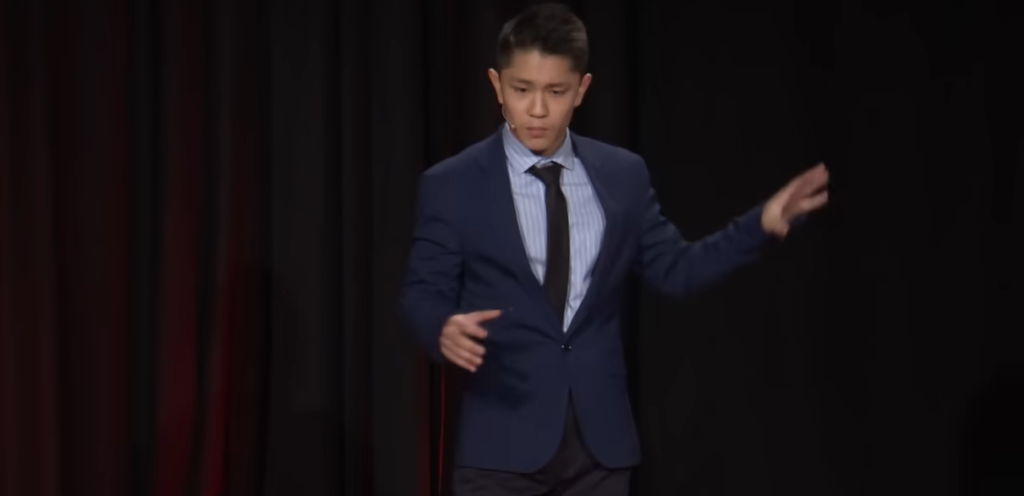
During one of the sessions I attended, I was more impressed by how a discussion about a product failure swiftly turned into one about internal misunderstanding than by the technical intricacy. That change seemed slight, yet it was quite enlightening.
Participants are asked to implement the leadership philosophy they have learned over the 22 sessions. Cross-functional teams are formed from each cohort to work on innovation challenges derived from actual business issues. It’s similar to being inside a startup accelerator, which is intended for people learning how to lead inside established companies or developing unicorns rather than founders.
Engineers construct. Future executives, however, will need to convince, defend, and refocus. Through this curriculum, participants practice such situations—how to champion a daring new idea without being overly specific, how to coach rather than correct, and how to defend a budget in front of a group of skeptics.
One of the attendees, a robotics lead with more than ten years of field deployments, informed me that the change wasn’t about giving up his strengths. Making those strengths understandable to non-engineers was the goal. “Now,” he stated, “I influence the roadmap in addition to leading my team.”
That is a very creative change in the way that leadership is perceived.
There are many other programs that perform this than the ELPP. Stanford’s totally online, remarkably flexible Engineering Leadership Program emphasizes negotiation and decision-making. The Tech CEO program at MIT expands on AI integration, resilient enterprise architecture, and new technologies. The pace and immersion of ELPP, however, are what distinguish it; it is quick, face-to-face, and strategically anchored in the networked environment of Silicon Valley.
A boardroom failure is more likely to be cited by its professors than a case study from a textbook. They have the advantage of having overseen layoffs, reorganized teams, and approved product changes. These tales are blueprints, not just anecdotes.
The fact that many of the participants view leadership as a shift in accountability rather than an ego boost is helpful. Because of their training, engineers are accustomed to limitations. Because they are familiar with the system from the inside out, these programs teach students how to turn those limitations into opportunities.
It was long believed that attending business school was necessary if one wished to become a CEO. Data, however, has been noticeably changing. For good reason, an increasing proportion of Fortune 500 CEOs have engineering degrees. A degree in engineering teaches you to think systematically, test concepts under duress, and iterate purposefully. These are the foundational elements of successful leadership.
That foundation is activated with amazingly remarkable clarity by programs such as ELPP. They assist these specialists in transitioning from resolving technical issues to leading intricate organizations—all while maintaining their fundamental ways of thinking.
In businesses where the distance between policy and product is narrowing, this type of leadership education is especially advantageous. Businesses that are shaped by their technology require executives who know what is truly feasible and what isn’t worth pursuing. Suddenly, there is a great need for engineers who are conversant in strategy.
The fact that these programs are still fairly inexpensive when compared to standard MBA programs is perhaps the most encouraging. ELPP drops to about $14,000 with an early application discount, which seems reasonable given the access to senior leaders and talks that will shape the future it offers.
The program does not guarantee rapid change. Better yet, it offers long-lasting skill development via peer accountability, live coaching, and hard-earned feedback. “It’s not about being the loudest voice,” one instructor said. Being the person that people turn to in times of need is the goal.
I’ve seen more engineers take on leadership roles in recent years than at any other time, and their success rates have significantly increased. They are reinventing what it means to lead with accuracy, humility, and purpose rather than merely adapting.
