

In Weimar, Germany, there was a building that is now gone. Under pressure from the Nazi government, the original Bauhaus school was closed in 1933; its walls were eventually destroyed, its faculty banished, and its furniture dispersed. It was only in operation for fourteen years. However, if you walk into practically any American design studio, architectural office, or technology company today, you will see its imprints everywhere: in the furniture, the typefaces, and the logic of every phone screen’s interface.
Standing in the space between 1933 and the present, it is difficult to ignore the fact that nothing quite like it has been created since. There has never been a movement that has so thoroughly restored the connection between human purpose, technology, and creativity. Until now, maybe.
In an article that garnered a lot of attention earlier this year, Abi Meats, co-founder of the London-based creative agency Rude, made it clear. She contended that we are experiencing what she called a “systems collapse”—a complete civilizational pressure point rather than a design fad or curriculum update. climate breakdown. AI fear. A generation of students who have been left with £40,000 in debt and no job guarantee. “Young people disengage,” she said, “when the system feels hopeless.” She might be correct. It’s also possible that she’s underestimating how urgent the situation is.
| Topic | The Next Bauhaus: Rebuilding Creative Education for the AI Age |
|---|---|
| Original Bauhaus Founded | 1919, Weimar, Germany |
| Original Founder | Walter Gropius |
| Original Duration | 14 years (1919–1933) |
| Core Philosophy | Unity of art, craft, technology, and social purpose |
| Key Modern Advocate | Abi Meats, co-founder of Rude (London) |
| Other Key Voices | Dr. Barnaby Taylor (LinkedIn); Andrea Cooper (Design Praxium); Ben Rowell, UK i.AI |
| Contemporary Movement | New European Bauhaus (EU-funded, 2025–2027) |
| Primary Challenge | AI disruption of creative industries and outdated education models |
| Core Argument | Technical execution is no longer the differentiator — judgment, ethics, and meaning are |
| Relevance to US Education | Growing pressure on arts curricula, creative workforce gaps, AI integration in schools |
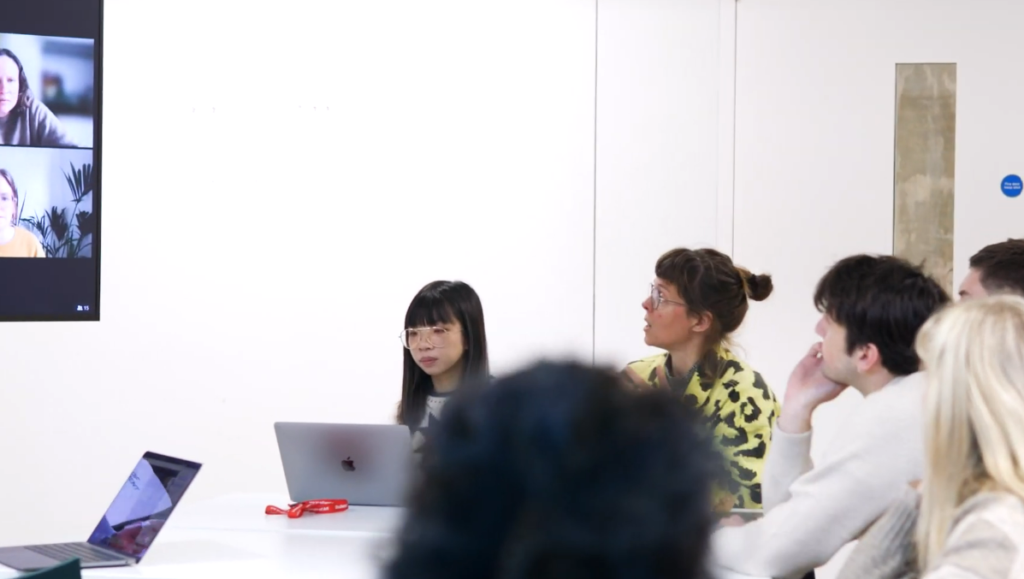
The aftermath of World War One gave rise to the original Bauhaus. After observing a shattered Germany, Walter Gropius concluded that rebuilding the connection between creating, thinking, and living was the better course of action. Boundaries of discipline were not valued at his school. Painters taught weavers about color theory. Industrial engineers provided architects with inspiration. The workshops were not classrooms, but labs. To demonstrate that good design could be democratic, László Moholy-Nagy once ordered five paintings over the phone, sending a factory manager only graph coordinates. Now that AI can create an image from a sentence, that stunt reads completely different.
That’s exactly the point. The question of what creative education is really for becomes genuinely challenging when machines can create a logo, write a brief, compose a melody, or render an architectural facade in a matter of seconds. The industry doesn’t seem to have fully recovered from what transpired. Software that AI is rendering obsolete is still taught in schools. Technical skills that will be automated in ten years are still being hired by studios. Meats describes the graduates as “curious, open, and ready to be developed” when they arrive at agencies, but the system that receives them was designed for a different world.
In a more recent piece on the subject, Dr. Barnaby Taylor made an observation that stuck. He claimed that the Bauhaus was significant because it reconstructed education around the interrelationship of theory, craft, technology, and social purpose. None of those things. At the same time, all of them. Growth was recorded as a record of thinking rather than as a grade, and it followed the person. In a time when the majority of creative schools still validate creativity through exam results and final outputs rather than the process of arriving at them, that framing feels almost radical.
Ben Rowell, a Lead Applied AI Engineer at the UK’s Incubator for Artificial Intelligence, extended the analogy in an unexpected way. He mapped the difficulties facing AI development onto the Bauhaus masters, including Albers, Gropius, Itten, Moholy-Nagy, and Klee, and found the accuracy of the overlap to be unsettling. Johannes Itten’s practice of having students work silently with raw materials before allowing them to make anything? Rowell contended that this is precisely what data scientists ought to do prior to developing a model. Prioritize understanding the subject. Its biases, its stress points, and its grain. Then start. He pointed out that most teams don’t do this.
The changes made to the previous model are just as significant as the additions. Meats is direct about it. Over-evaluation must end. Fine art, design, and craft must no longer be falsely separated. Perhaps most urgently, the fixation on the final result rather than the thought process that led to it must end. Fear, not a lack of content, is failing a generation of students. Fear of making a mistake. fear of producing subpar work. Despite its inconsistencies, the Bauhaus was a place where glorious failure served as a teaching opportunity rather than a grade.
This conversation still has unresolved issues, and it would be dishonest to act otherwise. The terms “sustainable,” “inclusive,” “transdisciplinary,” and “hands-on” are appropriate for the EU-funded New European Bauhaus project, which is currently underway through 2027. However, radical ideas are often absorbed by institutions and made safe. Only by operating outside the mainstream long enough to gain true conviction did the original Bauhaus transform the world. In the era of AI, it’s still unclear if any existing institution has the guts or the appetite to take the same action.
Bob and Roberta Smith, two artists, are quoted by Meats as saying, “All schools should be art schools.” Similar views were held by the Bauhaus, which saw creativity as an operating system that addressed all significant issues rather than a subject. AI is capable of producing. It cannot determine who something is for, why it should exist, or how much it costs the world. This is not a minor distinction. Right now, it might be the only one that counts.
Disclaimer
Nothing published on Creative Learning Guild — including news articles, legal news, lawsuit summaries, settlement guides, legal analysis, financial commentary, expert opinion, educational content, or any other material — constitutes legal advice, financial advice, investment advice, or professional counsel of any kind. All content on this website is provided strictly for informational, educational, and news reporting purposes only. Consult your legal or financial advisor before taking any step.
