

The timing of all of this is subtly ironic. Teachers tapped desks and gave students who couldn’t sit still a warning look for decades. It was disorder to wiggle. Tapping served as a diversion. These restless children, who rocked on their chairs and clicked their pens during every lecture, may have been doing something truly beneficial, according to evidence being produced by a Stanford research team.
A study conducted by Stanford’s Accelerator for Learning, which was published in late 2025, examined the effects of allowing middle school students to move freely during class while seated on “wiggle stools” rather than being confined to the courteous posture that most classrooms subtly require. The outcomes weren’t subtle. Students who relocated came up with more original ideas. Their level of creativity increased. The part that usually surprises people is that their memory and attention were unaffected. There was no competition between the thinking and the movement. They were working together.
According to researchers, the explanation has to do with how movement provides the brain with a type of low-grade sensory input that pushes it in the direction of a more alert, open state that is loose and associative rather than wired and distracted. It’s the mental equivalent of a sandbox, where strange combinations begin to seem feasible and the rules feel more lenient. Although the precise reason why the brain reacts in this manner is still unknown, the evidence that it does is becoming more convincing.
When you add the concurrent developments in AI research, the picture becomes even more intriguing. Researchers at Stanford’s computer science department and Institute for Human-Centered Artificial Intelligence are tackling a very particular issue: generative AI is strong but a difficult collaborator. It will give you a contemporary duplex if you ask for a suburban home. The majority of the creative potential is lost in the gap between what humans can envision and what AI can create. Stanford computer science professor Maneesh Agrawala put it bluntly: the models appear fantastic, but they are terrible collaborators.
Thus, the researchers are developing an alternative. tools that allow artists to truly direct AI outputs. systems that mimic the actual workflow of human creatives, beginning with rough work and adding detail as any skilled designer or illustrator would. Shared conceptual grounding, or a common language between human creativity and machine execution, is the aim. It’s an ambitious project that is still developing. However, the path is obvious. The goal is to prevent human vision from being lost in translation, not to replace it.
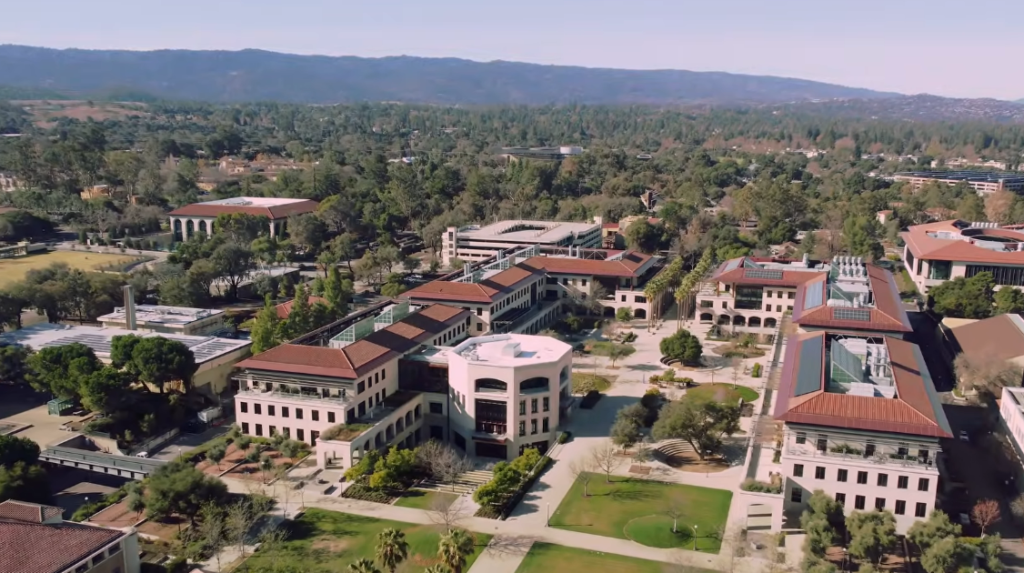
When you combine these two threads, you get something that would have seemed excessive a few years ago: a moving brain that generates ideas and an evolving AI that is prepared to carry them out. In essence, the argument is that the current generation is simultaneously confronted with two historically uncommon circumstances. If researchers and educators pay attention, their surroundings may enable them to think more freely and divergently than any classroom has in the past. Additionally, the instruments on the other end of those concepts are becoming more adept at capturing them before they disappear.
There’s a sense that the discussion of AI and creativity has been too narrowly focused. People frequently wonder if AI will take the place of creative people. The Stanford study suggests that the real spark of invention is still stubbornly biological, physical, and a little restless, and that AI functions best as an execution engine. AI is moving creativity upstream rather than replacing it, as one Forbes contributor recently noted. Dreams now occur earlier. The action picks up speed. Additionally, someone who is good at dreaming—someone who can hold onto an odd idea long enough to pass it on—becomes more valuable rather than less.
The tiny revolution concealed within all of this is difficult to ignore. A student who is half-daydreaming while drumming their fingers on a desk may not be disengaged. According to the research, they may be precisely where they should be.⁖※
Disclaimer
Nothing published on Creative Learning Guild — including news articles, legal news, lawsuit summaries, settlement guides, legal analysis, financial commentary, expert opinion, educational content, or any other material — constitutes legal advice, financial advice, investment advice, or professional counsel of any kind. All content on this website is provided strictly for informational, educational, and news reporting purposes only. Consult your legal or financial advisor before taking any step.
