

After leaving Barstow, head east on Interstate 40, past the solar farms, outlet stores, and long, flat nothing, and eventually the terrain begins to rise. The Clark Mountains, dark volcanic ridgelines that are abrupt and steep and contain pockets of moisture that support plant life found almost nowhere else in California, rise out of the Mojave floor like something that wasn’t supposed to be there. Early in the morning, bighorn sheep travel through those canyons. Botanical surveys show that the rare plant density in those mountains is second only to one other range in the entire state. It is an impressive piece of land by all standards.
Additionally, it is currently at the center of a federal lawsuit that challenges the US government’s commitment to safeguarding its national parks against industrial exploitation.
The National Parks Conservation Association filed a lawsuit on April 15 in the U.S. District Court for the Central District of California, claiming that the National Park Service violated the law by approving the resumption of mining operations at the Colosseum Mine, an open pit located inside the Mojave National Preserve in San Bernardino County. Since 1993, the mine had been shut down. For almost thirty years, it remained silent. Then, in 2021, Dateline Resources Ltd., an Australian company, purchased it, and things quickly became complicated.
Here, history is important, and it’s worth taking a moment to look at the timeline. The Mojave National Preserve had been in place for 27 years when Dateline acquired ownership of the Colosseum Mine. It was created by Congress in 1994 and encompasses 1.6 million acres of cultural land and desert habitat, making it one of the largest units in the lower 48 states’ National Park System. Dateline would later attempt to rely on the original Bureau of Land Management approval, which was granted in 1985—nearly ten years before the Preserve was created—when the land was administered under completely different regulations. It is, to put it simply, an inventive legal argument to use that approval to support operations within a national park that is protected by Congress. It is now up to a federal court to determine whether it is legitimate.
| Mojave National Preserve Mining Lawsuit — Key Information | |
|---|---|
| Location | Mojave National Preserve, Clark Mountains, San Bernardino County, California |
| Mine Name | Colosseum Mine (gold and silver; decommissioned 1993) |
| Mining Company | Dateline Resources Ltd. (Australia; acquired mine 2021) |
| Preserve Established | 1994, California Desert Protection Act (1.6 million acres) |
| Original BLM Approval | 1985 — nearly a decade before the Preserve was created |
| DOI Policy Reversal | April 2025 — Interior reversed course; waived damage claims of $213,387 |
| Lawsuit Filed By | National Parks Conservation Association (NPCA), represented by Earthjustice |
| Court | U.S. District Court, Central District of California |
| Named Defendants | NPS, Interior Dept., Sec. Doug Burgum, Acting NPS Director Jessica Bowron, Acting Preserve Supt. Kevin Schluckebier |
| Ecological Significance | 2nd highest rare plant density of any CA mountain range; critical bighorn sheep habitat |
| Dateline’s Other Plans | Now exploring for rare earths near Joshua Tree National Park (20,520 acres staked) |
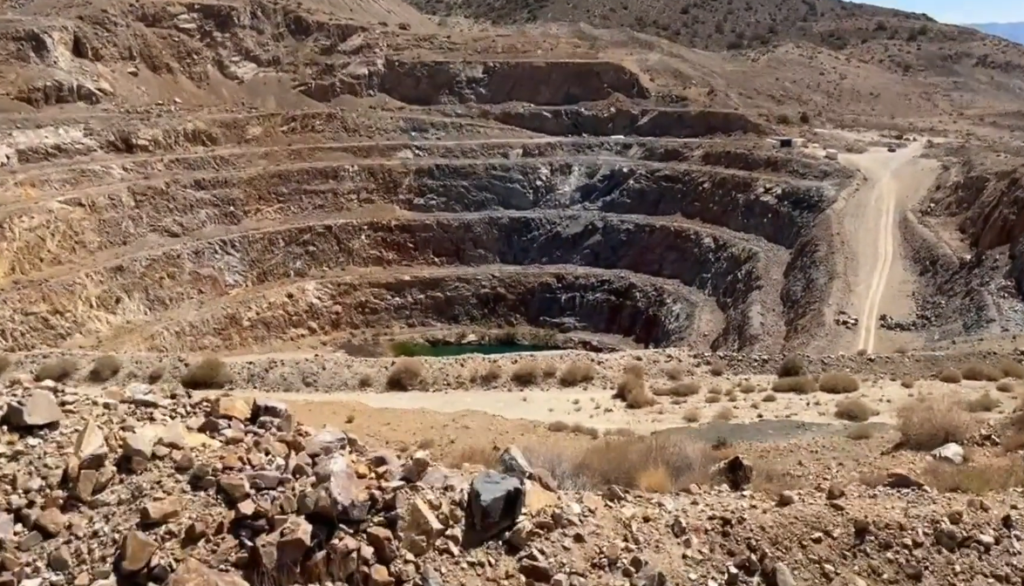
The Park Service reportedly acknowledged that it was invalid between 2021 and 2024. Dateline was repeatedly informed by agency officials that the mine was operating without permission. They also demanded that Dateline submit a new plan of operations, which would allow park managers to add protective conditions and require an environmental review of the proposed work. Dateline resisted,
Claiming that its current approvals were adequate. The Park Service refused to back down. After the Trump administration took office in January 2025, the Interior Department completely changed its direction by April of that year, telling Dateline that it was no longer required to obtain agency authorization in order to continue mining. Additionally, the agency withdrew its demand that Dateline pay $213,387 in damages related to two instances of unapproved roadwork, which were said to have destroyed hundreds of plants and leveled sensitive habitat.
The lawsuit revolves around that sudden reversal. Earthjustice lawyers are representing the NPCA, which is requesting that the court overturn the Park Service’s approval and reinstate the legal framework that had controlled the mine’s status for the preceding three years. The Earthjustice lawyer in charge of the case, Katrina Tomas, gave a direct description of the circumstances: a little more than a year ago, the Park Service was directing Dateline to immediately stop all operations. The switch then flipped.
In May of last year, President Trump publicly supported the project on Truth Social. In an interview with Fox News, Interior Secretary Doug Burgum praised it. Dateline’s stock value reportedly skyrocketed after those endorsements, which provides insight into the significance of political support for junior mining firms. Perhaps this was always about more than just silver and gold. The Clark Mountains site may be relevant to the administration’s larger minerals agenda because Dateline had informed shareholders from the beginning that it would also search for rare earth elements, such as those used in electric vehicle batteries, wind turbines, and defense systems.
There is something especially remarkable about the mechanism the administration employed when observing this situation from a distance. The Interior Department essentially dusted off a 40-year-old BLM permit and declared it still in effect, eschewing the environmental review procedure that would typically be required for a reopened mine inside a national park, instead of enacting new legislation or formally changing the regulations governing park mining. Conservationists contend that procedures are in place specifically to avoid situations like an administration choosing to approve industrial operations on protected land by relying on documentation that predates the legislation that protects that land.
The federal court’s response is still unknown. The administration has been aggressive in defending its energy and minerals policies on several fronts at once, and environmental lawsuits against executive branch actions have had varying degrees of success in recent years. Despite opposition from tribes, the Bureau of Land Management is moving forward with a contentious uranium mine in South Dakota. The buffer that protects Chaco Canyon is in danger. There will be changes to the Grand Staircase-Escalante management plan. There is a serious doubt about whether individual lawsuits can keep up with the rate of change, and the Mojave case is just one part of a much wider pattern.
The American public’s position on this matter is unquestionable, according to polling done by YouGov and the NPCA. Bipartisan majorities are against allowing mining and drilling on national park lands because they understand that once harm is done to areas like the Clark Mountains, it is often difficult or impossible to reverse. Permit timelines are not followed by the bighorn sheep that travel through those canyons. It took centuries for the rare plants to establish themselves in those rocky soils. It takes a long time for a road that has been bulldozed through delicate desert habitat to heal, if at all. That is the physical reality at the heart of this legal dispute, and it is important to keep in mind that the landscape itself will ultimately decide what was lost, even if the courts rule in favor of the government.
Disclaimer
Nothing published on Creative Learning Guild — including news articles, legal news, lawsuit summaries, settlement guides, legal analysis, financial commentary, expert opinion, educational content, or any other material — constitutes legal advice, financial advice, investment advice, or professional counsel of any kind. All content on this website is provided strictly for informational, educational, and news reporting purposes only. Consult your legal or financial advisor before taking any step.
